













When an emergency happens, knowing who to call matters just as much as staying calm. Across Europe, the main emergency number is widely recognised, but different countries may still use additional national numbers for police, ambulance, or fire services.
This guide explains the Europe emergency numbers, highlights the key emergency numbers used in different European countries, and shows how to make an emergency call clearly and correctly. It also covers a few practical tips on handling emergencies in general, including why having reliable backup power, such as a Jackery Solar Generator, can be useful during outages or urgent situations.
|
Key Takeaways: |
|
Europe Emergency Numbers: 112
112 is the single European emergency number. You can call it free of charge from a mobile phone or landline to reach the police, ambulance, or fire brigade anywhere in the EU. It is the one emergency number travellers and residents can rely on across borders, even when local national numbers are different.
When you dial 112, your call is answered by a trained operator or routed to the most appropriate emergency service, depending on how that country organises its system. In many EU countries, operators may also be able to assist in English or French, and caller location information can be used to help emergency services find you faster.
112 was introduced as the single European emergency number in 1991. The main idea was simple: people were travelling more often between European countries, and relying on different national emergency numbers created confusion in urgent situations. A shared number makes emergency access easier, especially when you are abroad and do not know the local system.
Where Is 112 Available in the EU?
112 is available everywhere in the EU, which means all 27 member states. That includes Austria, Belgium, Bulgaria, Croatia, Cyprus, Czechia, Denmark, Estonia, Finland, France, Germany, Greece, Hungary, Ireland, Italy, Latvia, Lithuania, Luxembourg, Malta, the Netherlands, Poland, Portugal, Romania, Slovakia, Slovenia, Spain, and Sweden. In some countries, national emergency numbers still exist alongside 112, but 112 is the one number that works across the whole EU.
112 is for real emergencies only. It is not meant for general enquiries, local information, or minor non-urgent issues. In a serious situation, though, it is one of the simplest numbers to remember in Europe, and that is exactly why it matters.

Emergency Numbers in European Countries
Although 112 is the best number to remember when travelling in Europe, several countries still use long-established national emergency numbers alongside it. In some places, 112 handles almost everything. In others, separate numbers for police, medical help, or fire services are still widely used.
France
In France, 112 connects you to the main emergency system and can be used for ambulance, fire, or police. France also keeps separate service numbers that locals still use regularly: 15 for SAMU (medical emergencies), 17 for the police, and 18 for the fire brigade. If you are deaf, hard of hearing, or unable to speak safely, 114 can be used by SMS and other accessible methods.
Germany
In Germany, the system is simple but important to remember: 112 is for ambulance and fire, while 110 is the police emergency number. That distinction matters because many travellers assume 112 covers every service in exactly the same way everywhere. For urgent medical help that cannot wait until the next day but is not life-threatening, Germany also uses 116117 for the medical on-call service.
Spain
In Spain, 112 is the main nationwide emergency number. It works across the whole country, is free from landlines and mobiles, and does not require an area code. Spain’s official information also notes that calls to 112 can be made even if a mobile phone is blocked, has an inactive SIM, or has no coverage from the user’s own provider.
Alongside 112, Spain still has other service numbers in use, including 091 for the National Police, 062 for the Guardia Civil, and 061 for some urgent health services, depending on the system involved.
Netherlands
In the Netherlands, 112 is the emergency number for urgent, life-threatening situations or when you witness a crime in progress. The operator alerts the correct service, whether that is the police, fire brigade, or ambulance. If the situation is not urgent but you still need the police, the Dutch non-emergency number is 0900 8844.
United Kingdom
In the UK, both 999 and 112 work as national emergency numbers. 112 is recognised as the pan-European equivalent, but 999 remains the number most people in the UK know first. When you call, the operator asks which service you need and routes the call to the correct control room based on your location. In practice, this can include the police, ambulance, fire service, or coastguard.
Ireland
In Ireland, both 112 and 999 are official emergency numbers, and both are free to call from mobile phones and fixed lines. The operator can connect you to the ambulance, Gardaí, fire brigade, or coast guard. Ireland also provides an emergency SMS/Text service to 112 for people with speech or hearing impairments, or in situations where making a voice call is not possible.
For anyone travelling across Europe, 112 is still the most useful single number to memorise, but knowing the local backup numbers can make a stressful situation feel a little more manageable.
|
Country |
General emergency |
Ambulance / medical |
Police |
Fire |
|
France |
112 |
15 |
17 |
18 |
|
Germany |
112 |
112 |
110 |
112 |
|
Spain |
112 |
112 / 061 |
091 / 062 / 112 |
112 |
|
Netherlands |
112 |
112 |
112 |
112 |
|
United Kingdom |
999 / 112 |
999 / 112 |
999 / 112 |
999 / 112 |
|
Ireland |
999 / 112 |
999 / 112 |
999 / 112 |
999 / 112 |
The 5-W Questions in an Emergency
When you call 112 or another emergency number, the operator will usually guide the conversation, but it helps to remember the 5 W questions. These are a simple way to explain the situation clearly and quickly, which helps emergency services send the right support without delay.

1. Where Did It Happen?
Start with the exact location. Give the full address if you know it, including street name, building number, floor, campsite pitch, motorway, exit number, or any nearby landmark. In an emergency, location is often the most important detail because help cannot reach you quickly if they do not know where to go.
2. What Happened?
Explain the situation in one clear sentence. For example: there has been a car accident, someone has collapsed, there is a fire in the kitchen, or a person is having trouble breathing. The operator needs a straightforward description so they can decide which service to send and how urgent the response needs to be.
3. Who Is Affected?
Say who needs help. Is it an adult, a child, an elderly person, or several people? If you know, mention whether the person is conscious, breathing, bleeding, trapped, or unable to move. These details help emergency teams prepare before they arrive.
4. How Many People Are Involved?
Tell the operator how many people are injured, ill, or at risk. Even a rough number is useful. A different response may be needed for one person who has fallen than for several people injured in a road collision or affected by smoke in a building.
5. Wait for Questions
The fifth “W” is often explained as wait. Do not hang up as soon as you have given the basic facts. The operator may need extra details, may tell you what to do while help is on the way, and may ask you to stay on the line. Listening carefully and following instructions can make a real difference before emergency crews arrive.
In a stressful moment, you do not need to speak perfectly. Just stay as calm as you can and focus on the order: where, what, who, how many, and wait. That structure makes your call easier for the operator to understand and gives emergency services the best chance to respond quickly and appropriately.
How to Make an Emergency Call Correctly?
In an emergency, the best approach is not to panic and not to over-explain at the start. Operators are trained to lead the call, but you can make the process much smoother by giving the right information in the right order.
Across Europe, 112 is the key number to remember, and in some countries national numbers such as 999 also work. Calls to 112 are free from mobile and fixed phones in the EU.

Dial the Correct Emergency Number
If you are in the EU, call 112. In the UK and Ireland, 999 also works, while 112 remains valid as well. The most important thing is to call the emergency service number that is recognised where you are and to do it immediately when there is a real threat to life, health, safety, or property.
Stay Calm and Speak Clearly
As soon as the call connects, try to slow down your speech. You do not need to sound perfect. You just need to be understandable. Emergency operators deal with stressed callers every day, so a calm, simple explanation helps more than a long, emotional one. Official emergency guidance consistently stresses staying calm, listening carefully, and speaking clearly.
Say Which Emergency Service You Need
In some systems, the first operator will ask which service you want, such as ambulance, police, fire, or coastguard. In the UK, for example, callers to 999 are first asked which emergency service they need before the call is transferred.
Give Your Exact Location First
Your location is often the most important part of the call. Say the full address if you know it. If you do not, give the road name, motorway number, exit, campsite name, apartment block, floor, nearby landmark, or postcode.
In Ireland, official travel guidance specifically notes that operators may ask for the exact address, noticeable landmarks, directions to the scene, and even the Eircode if available. NHS guidance also highlights location, postcode, and landmarks as key details.
Explain What Happened in One Clear Sentence
After location, briefly explain the emergency itself. Say something direct such as: there has been a car crash, someone is unconscious, there is smoke coming from the kitchen, or a person is not breathing. The operator needs the main problem quickly so they can assess urgency and send the right help.
Say How Many People Are Involved and Their Condition
Tell the operator how many people need help and what condition they are in. Mention whether someone is unconscious, bleeding heavily, trapped, having chest pain, struggling to breathe, or still inside a burning building. Ireland’s official emergency guidance specifically says callers may be asked about the number of people involved, visible injuries, and any known medical conditions.
Give Your Phone Number If Asked
The call handler may ask for the number you are calling from in case the line drops or they need to call back. This is specifically mentioned in NHS guidance and Ireland emergency guidance. Even if the system can sometimes identify the number automatically, you should still be ready to say it out loud.
Answer the Operator’s Questions Directly
Do not guess, and do not add extra detail unless it helps. Just answer what you are asked. If you do not know something, say so. Operators often follow a structured script, so even questions that seem repetitive are usually there for a reason. They are gathering the exact details needed to send the right response.
Follow Instructions While Help Is on the Way
The operator may tell you what to do before emergency crews arrive. That could mean moving to a safer place, unlocking a door, turning on outdoor lights, starting basic first aid, or staying with the injured person. NHS ambulance guidance and general 112 guidance both note that callers may receive instructions while waiting for responders.
Do Not Hang Up Until You Are Told to
Many people think the call is over once they have reported the emergency, but the operator may still need more details. The call handler will tell you when they have all the information they need. Ending the call too early can delay the response or force the operator to call back.
If You Can Not Speak Normally, Use Available Accessibility Options
In some countries, there are extra ways to reach emergency services if speaking is difficult or unsafe. Ireland offers emergency text access to 112 for registered users, and the UK provides services such as Relay UK and the 999 BSL interpreter route. France also has 114 for deaf and hard-of-hearing users through SMS and other accessible channels.
How to Deal with Emergencies?
Different emergencies look different, but the first priorities are usually the same: protect life, reduce immediate danger, call for help, and follow clear instructions. In Europe, that usually means calling 112 for a real emergency, then focusing on what is most urgent right in front of you rather than trying to solve everything at once.

Start With the Basics
First, check whether the scene is safe enough to approach. If there is fire, live electricity, floodwater, gas, traffic, or falling debris, move yourself and others to a safer place if you can do so without creating more risk.
Then call emergency services, give your location, explain what happened, and follow the operator’s instructions. If it turns out not to be life-threatening, some countries also direct people to non-emergency medical or advice services instead of the main emergency line.
If It Is a Medical Emergency
Treat a situation as urgent if someone is unconscious, not breathing normally, having severe breathing difficulty, showing signs of stroke or heart attack, or seriously injured in a road crash. If a person is unconscious but still breathing, NHS first-aid guidance says they should be placed in the recovery position if there are no injuries preventing movement. If they are not breathing normally, call emergency services and start CPR straight away if you know how or if the call handler guides you through it.
If There Is a Fire
With a fire, the safest rule is usually get out, stay out, and call from outside. Government fire guidance says to get everyone out as quickly as possible, close doors behind you if you can, and avoid wasting time collecting belongings.
If There Is a Road Accident
After a road accident, think in this order: safety first, emergency help second, paperwork later. If anyone is injured or the scene is dangerous, call the emergency services and, if relevant, the police.
When you are travelling abroad, getting a copy of the police report, taking notes and photos, exchanging insurance details, and collecting witness details if possible. In Europe, the European Accident Statement can also help record the facts of the incident for insurers, but it should only be signed when you understand what it says.
If You Smell Gas or Suspect Carbon Monoxide
Do not treat a gas smell as a minor household issue. Official gas-safety guidance says to open doors and windows, shut off the gas supply at the meter if you know how, and leave the property if needed. Do not keep using an appliance you believe may be unsafe, and do not ignore possible carbon monoxide risks.
If Flooring, Storms, or a Power Cut Are Involved
For floods, official guidance says do not walk or drive through floodwater because it can hide sewage, debris, open drains, and damaged road surfaces. If flooding is expected, move people, pets, and important items to safety, and only turn off utilities if it is safe to do so.
During a power cut, stay away from damaged cables or power lines, use safe lighting, and wait for professional checks before turning utilities back on after flood damage.

A Simple Emergency Checklist
A good emergency kit does not need to be fancy, but it should cover the basics you are most likely to need at home, in a car, or while travelling:
- Paper list of emergency contacts and key numbers
- Torch and spare batteries, or a wind-up torch
- Battery or wind-up radio
- First aid kit and essential medication
- Bottled water and ready-to-eat food for at least a short disruption
- Copies of important documents in a waterproof bag, plus cash if possible
- Phone charger, warm clothing, and extra supplies for children or pets when relevant
It also helps to agree a family meeting point, choose an out-of-area contact person, and learn in advance how to turn off electricity, gas, and water if an emergency affects your home.
Power cuts and temporary disruptions often create a second problem: suddenly you cannot charge a phone, keep lights on, power a radio, or run small essentials. A Jackery Solar Generator can fit naturally into an emergency setup.
Jackery Solar Generators for Emergencies
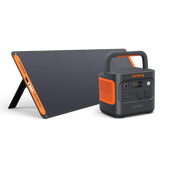
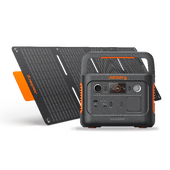
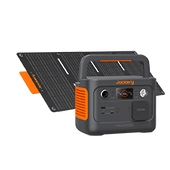
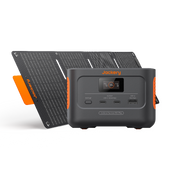
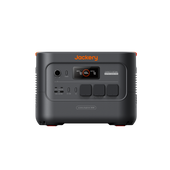
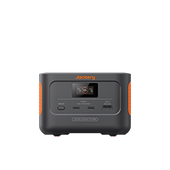
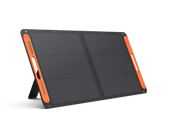
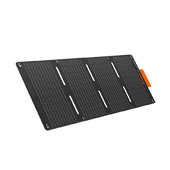
A good emergency generator should do more than simply provide extra electricity. It should help you keep the essentials running, stay connected, and manage short-term disruptions with less stress. That is where a Jackery Solar Generator fits naturally into an emergency plan. Jackery Solar Generator is a combination of a Portable Power Station and Solar Panels, designed for backup use at home and during outages.
It can cover the devices people usually care about first during a blackout: phones, routers, lights, laptops, and selected household appliances. For emergency use, battery chemistry and safety design also matter. Both the 3000 v2 and 2000 v2 are presented with LiFePO4 batteries.
Jackery Solar Generator 3000 v2
Choosing the Jackery Solar Generator 3000 v2 as an emergency backup in Europe is a move toward "energy insurance." While the previous Pro model was impressive, the v2 introduces critical upgrades—specifically in battery chemistry and integration—that make it much more reliable for long-term home or apartment backup during grid failures.

"Always Ready" LiFePO4 Chemistry
In an emergency, you need a battery that hasn't degraded while sitting in storage.
10-Year Readiness: The v2 uses LiFePO4 (LFP) cells, which can handle over 4,000 charge cycles. Unlike older lithium batteries that might lose capacity if left charged, LFP is much more stable.
Low Maintenance: You can leave it plugged into a wall (using its UPS mode) or check it every few months, and it will retain its charge far better than traditional generators.
High-Capacity Support for European Infrastructure
European homes often rely on high-wattage appliances (like 2000W+ electric kettles or induction hobs).
3000W Continuous Output: The 3000 v2 can run almost any standard European household appliance. In a blackout, it can simultaneously power a full-sized refrigerator, a CPAP machine, Starlink/Router, and a microwave or induction hotplate.
7000W Peak Power: This "surge" capacity is vital for starting appliance compressors (like a fridge or a small water pump) which briefly pull double their rated power when kicking on.
Indoor Safety (The "Gas Generator" Alternative)
In many European cities, apartments and terraced houses make petrol generators impossible due to noise and carbon monoxide risks.
Zero Emissions: You can safely run the 3000 v2 inside your living room or kitchen. There are no fumes, no fuel to store, and no fire hazard from liquid gasoline.
Whisper-Quiet Operation: During a night-time power outage, it won't disturb you or your neighbors, operating at levels as low as 30dB (quieter than a low hum).
Hybrid Charging for "Sunless" Winters
European winters are notoriously cloudy, which can be a challenge for solar generators. The 3000 v2 addresses this with flexibility:
Ultra-Fast AC Charging: If a storm is forecasted, you can top it from 0% to 100% in roughly 1.8 hours from a standard wall outlet.
Dual Solar Input: It supports up to 1200W of solar. Even in weak winter light, a large array of Jackery’s bifacial panels can still trickle-charge the unit enough to keep your phones and lights running indefinitely.
Jackery Solar Generator 2000 v2
While the 3000 v2 is a "whole-house" solution, the Jackery Solar Generator 2000 v2 is often the smarter choice for European households looking for an "Essential Backup"—one that is easier to store in small apartments and faster to deploy in a pinch.

The Most Compact 2kWh Backup in the World
Space is a luxury in many European cities. The 2000 v2 is engineered with GaN (Gallium Nitride) technology and a Cell-to-Body design, making it roughly 41% smaller than its competitors.
Easy Storage: At just 17.5 kg, it can be stored on a high shelf or in the bottom of a wardrobe and brought out instantly when the lights go flicker.
One-Hand Portability: Unlike the 3000 v2 (27 kg), almost anyone in the household can carry the 2000 v2 from room to room without needing wheels.
"Super Charge" for Sudden Storms
If a winter storm or "DANA" is approaching and you realize your battery is low, the 2000 v2 has a specialized Emergency Super Charge mode (activated via the App):
0% to 80% in 52 minutes: This is industry-leading. You can fully prep your emergency power in less time than it takes to go grocery shopping for candles and water.
Standard Wall Charge: Even without the "Super" mode, it hits a full charge in 1.7 hours, ensuring you aren't left waiting when the grid is unstable.
Reliable LiFePO4 Safety & 10-Year Life
Like its bigger brother, the 2000 v2 uses LiFePO4 chemistry, which is critical for emergency gear that sits idle for months.
Safety First: It won't overheat or catch fire even if punctured—a massive peace-of-mind factor for indoor use in European apartment blocks.
4,000+ Cycles: Even if you use it for "peak shaving" (using stored solar during expensive European electricity hours) every single day, it will last over 10 years.
2200W Output: Runs 95% of Home Appliances
While it's smaller, it doesn't lack muscle. Its 2200W continuous output (4400W surge) is perfectly matched for European 230V circuits:
Kitchen Essentials: It can run a kettle, a toaster, or a portable induction hob to make hot food when the gas or electric stove is out.
Heating: In a winter blackout, it can run an electric blanket for 15+ hours or a small 500W space heater for about 4 hours to keep one room warm.
FAQs
The following are frequently asked questions about the European emergency numbers.
1. Does 112 work outside the EU in Europe?
Sometimes, yes. The European Commission notes that 112 is available in every EU Member State and is also used in some non-EU countries such as Switzerland, Iceland, and Turkey, but it is not universal across all of Europe.
2. Can a car call 112 automatically after a serious crash?
Yes, many newer cars in Europe use eCall, a system that automatically dials 112 after a serious road accident.
3. Can people with hearing or speech difficulties contact 112 in Europe?
Yes. The EU has rules to improve accessible emergency communications, and when travelling abroad in the EU you should also receive information about alternative ways to reach emergency services, such as real-time text or apps.
4. Do travellers get information about 112 when roaming in the EU?
Yes. Since June 2023, travellers in the EU should automatically receive a message when they go abroad reminding them about 112 and available alternative ways to contact emergency services.
Final Thoughts
European emergency numbers are easy to overlook until something goes wrong, but they are one of the most useful things to know before travelling, driving, camping, or living. Remembering 112, understanding that some countries still use additional national numbers, and knowing how to explain an emergency clearly can make a real difference when time matters.
A calm response, a basic emergency kit, and reliable backup power can all make difficult situations easier to manage. That is where a Jackery Solar Generator can fit in naturally, giving you a practical source of power for essentials.


