
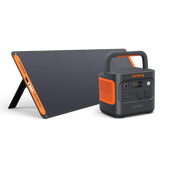


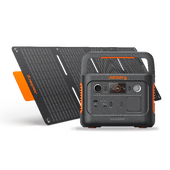
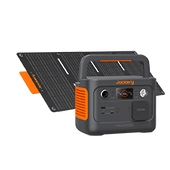
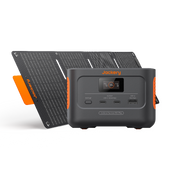













Power cuts are no longer something many people in Europe think of as rare or distant. In recent years, concerns about grid pressure, extreme weather, rising demand, infrastructure strain, and energy market instability have made electricity security a far more practical topic for households across the region. Even short outages can disrupt heating, lighting, cooking, internet access, and the ability to charge essential devices, while longer blackouts can quickly become expensive and stressful.
This article looks at what is behind power outages in Europe today, how the wider EU energy market shapes supply risks, and what recent blackouts show about the vulnerability of modern power systems.
It also explains how to prepare for outages at home, with simple steps that can make a real difference, including the role of a backup power solution such as a Jackery Solar Generator for more reliable emergency support.
|
Key Takeaways: |
|
Causes of Power Outages in Europe
Power outages in Europe are rarely caused by one issue alone. In most cases, blackouts happen when several risks overlap, such as extreme weather, high electricity demand, aging infrastructure, grid faults, power plant outages, fuel supply pressure, or cross-border transmission problems. Because Europe’s electricity system is highly interconnected, one serious fault in an important part of the network can spread quickly across a wider area.
Geopolitics Has Made Europe’s Energy System More Sensitive
One major reason power security has become such an important issue in Europe is geopolitics. Russia’s invasion of Ukraine changed the European energy market by sharply reducing Russian pipeline gas supplies. This pushed Europe into an energy crisis and forced many countries to rely more on LNG imports, demand reduction, energy efficiency, and renewable generation.
Global Fuel Routes and International Politics Still Matter
Europe’s energy security is not shaped only by events inside Europe. Political instability in other parts of the world can also increase supply risk. For example, disruption in the Middle East can affect oil and gas markets and raise concerns about shipping routes and fuel deliveries.
Energy Storage Helps, but It Cannot Remove All Risk
Energy stocks play an important role in reducing the risk of shortages. Gas storage gives Europe a buffer when imports are interrupted or winter demand rises. This helps improve resilience, especially during colder months.
However, storage is not a complete solution. If inventories are lower than expected, if cold weather lasts longer than planned, or if fuel prices rise sharply, power systems can still come under pressure.
Price Volatility and Market Pressure Can Increase Outage Risk
The wider energy market also affects grid stability. Although energy prices in Europe eased compared with the peak crisis period, gas and electricity markets remain volatile. Electricity prices can swing sharply during the day, especially when renewable output changes quickly or fuel supply concerns return.
Extreme Weather Is Becoming a Bigger Threat to Power Supply
Weather is one of the most direct causes of power outages in Europe, and climate change is making this risk more serious. Storms, floods, heatwaves, wildfires, and heavy snow can all damage power lines, substations, transformers, and other equipment.
Cybersecurity Is Now Part of Energy Security
Another growing concern is cyber and hybrid attacks. Europe’s energy sector is increasingly digital, which improves efficiency but also creates new risks. Attacks on grid operators, control systems, software providers, or critical infrastructure may not always cause a blackout directly, but they can raise the chance of disruption.
Technical Failures Can Still Trigger Major Blackouts
Even in a modern energy system, technical failures remain an important cause of outages. Major incidents show that faults in transmission networks or system operations can still lead to sudden and large-scale blackouts.
The 2025 blackout affecting Spain and Portugal is a strong reminder that a single severe technical failure can have major consequences, even when the wider European system remains stable.

Energy Market in Europe
Europe’s energy market is in a calmer position than it was at the height of the 2022 crisis, but it is not back to being simple or fully predictable. The broad picture in early 2026 is one of greater stability, stronger clean-energy output, and better preparedness than during the worst supply shock, yet prices and system conditions still move with gas markets, weather, storage levels, and grid constraints.
EU gas and electricity markets in the second quarter of 2025 showed a further return to more stable and predictable conditions, helped by stronger LNG imports and record solar generation. At the same time, ACER’s 2026 monitoring report says EU energy markets in 2025 still showed strong interaction between gas and electricity, which means the power market remains sensitive whenever fuel costs or supply conditions shift.
Renewable energy now plays a much bigger role in that market than it did just a few years ago. The European Commission says clean energy generated 70% of EU electricity in 2025, and that wind and solar alone produced 30%, overtaking fossil fuels at 26%.
Wholesale electricity prices in the European Union averaged around USD 90/MWh in the first half of 2025, about 30% higher than in the same period of 2024, while natural gas prices were also higher on average than in 2024.
France stands out for having one of Europe’s lowest-carbon electricity mixes. RTE says French electricity generation reached 547.5 TWh in 2025, with low-carbon electricity accounting for more than 95% of the total.
Germany’s market looks different. It is further along in the shift toward wind and solar, but it also faces the challenge of balancing a system with high renewable penetration, no nuclear generation, and continued industrial demand.
Official UK Energy Trends releases show renewables provided 54.7% of electricity generation in one 2025 quarterly snapshot, and 53.3% in the February 2026 statistical release. The Netherlands is another interesting case because it has made fast progress in renewable electricity, especially solar and wind, while still showing how fossil generation can return when market conditions change.
Across all four countries, the same pattern keeps appearing. Renewable energy is no longer a side story in Europe’s electricity market.
For households, that is one reason backup solutions connected to solar have become more appealing. A Jackery Solar Generator fits naturally into that conversation because it can use solar energy to charge stored power for later use, giving people a practical way to keep essential devices running during outages or periods of grid uncertainty.

Notable Power Outages in Europe
Europe has seen several major blackouts over the past two decades, and each one shows a slightly different weakness in the power system. Some started with technical faults, some were made worse by grid conditions, and others revealed how quickly a local disturbance can grow into a much wider disruption.
Iberian Blackout on 28 April 2025
The most recent major example was the Iberian blackout on 28 April 2025. According to ENTSO-E, Spain and Portugal experienced a total blackout at 12:33 CEST, with a small part of south-west France also briefly affected. The rest of the Continental European system remained stable, but the event was still described as the most significant power system incident in Europe in more than two decades.
Great Britain Power Outage of 9 August 2019
The Great Britain power outage of 9 August 2019 was shorter than some of the older blackouts, but it was still highly disruptive. Ofgem found that the event was triggered after a lightning strike, followed by the near-simultaneous loss of two large generators, Hornsea One and Little Barford, along with smaller local generation losses.
Italian Blackout of 28 September 2003
The Italian blackout of 28 September 2003 is still one of the best-known national blackouts in Europe. The UCTE investigation found that the outage was not caused by some extraordinary event such as a severe storm or cyberattack. Instead, it developed after line failures on key interconnections feeding Italy, followed by a system collapse.
Taken together, these outages show that Europe’s blackout history is not just about old infrastructure or bad weather. Some incidents were caused by technical failures, some by operational mistakes, and some by a combination of faults that overwhelmed the system’s ability to recover cleanly.
How to Prepare for Power Outage in Europe?
The best way to prepare for a power cut in Europe is to think beyond a one-hour inconvenience and plan for at least 72 hours of disruption. That is now the direction of travel at EU level: households should be ready to cope for a minimum of 72 hours, and Belgium’s National Crisis Center uses the same three-day benchmark for a home emergency kit.

Step 1: Know How to Get Power Outage Info
When the power goes out, the first problem is often not the blackout itself but the lack of reliable information. The practical fix is simple: save your electricity network operator’s website, outage checker, and phone number before you need them.
In the UK, 105 is the free national number that connects you to your local network operator.
In France, Enedis lets households check outages by entering an address or postcode.
In the Netherlands, gasenstroomstoringen.nl and Netbeheer Nederland’s fault service direct users to their local network operator, and the national outage number is 0800-9009.
In Germany, there is no single state-run national outage map, but many operators publish reports through Störungsauskunft.de, and official local guidance such as Wiesbaden’s points residents there for operator-reported faults.
Step 2: Build a Proper 72-hour Outage Kit
A good outage kit is not dramatic or expensive. It is mostly a collection of ordinary items kept together in one easy-to-reach place.
European official guidance repeatedly points to the same basics: water, non-perishable food, prescription medicines, a first aid kit, a torch, spare batteries, a battery-powered or wind-up radio, a charged power bank, copies of important documents, and some cash in case card payments or cash withdrawals stop working.
The most useful version of this kit is the one that matches your home. If you have a baby, include ready-to-use formula and wipes. If someone depends on regular medication, keep a small reserve where it is legal and practical to do so.
If you have pets, add food, bowls, and transport items. If you live in a cold part of Europe or in a property that loses heat quickly, keep blankets, extra layers, gloves, and simple ways to stay warm without depending immediately on the mains.
Step 3: Prepare Your Home Before the Outage Happens
Preparation works best when it is done before the weather turns bad or the grid comes under pressure. Keep phones and power banks charged when storms are forecast. Know where your fuse box or consumer unit is and how to check whether the issue is inside your home.
Checking whether neighbours still have power and whether your trip switch has moved before assuming it is a wider outage.
If somebody in your household relies on electricity for health reasons, do not leave this until the day of the outage. Irish network guidance for customers using life-supporting electrical equipment recommends having the battery backup fully charged and making a relocation plan if needed, while UK energy guidance says eligible households should join the Priority Services Register or equivalent support scheme where available.
Step 4: Know What To Do When the Power Actually Goes Out
Once the outage starts, avoid wasting time. First check whether it is only your property. Then report it or confirm it through your network operator. After that, move into power-saving mode. Switching off or unplugging appliances that should not restart unattended, especially cookers, irons, washing machines, and sensitive electronics.
For lighting, use a torch or battery lamp rather than your phone flashlight where possible, because phone batteries disappear faster than most people expect. Keeping a battery or wind-up torch at home and says candles or other naked flames are not recommended because of the fire risk.
Food management matters as well. A fridge will generally keep food safe for about 4 hours if the door stays closed, while a full freezer can hold temperature for about 48 hours and a half-full freezer for about 24 hours. So the easiest rule is to open the fridge and freezer as little as possible.
Water is one of the things people forget about until they need it. In some buildings or longer outages, pumping and drainage can be affected.
Step 5: Plan Your Backup Power Rather Than Improvising It
A power cut feels much more manageable when you already know what you want to keep running. For many households, the priority list is short: phones, a lamp, internet router, radio, and maybe a few small essentials. For longer outages, a battery-based backup system can be more practical than trying to manage everything through power banks alone.
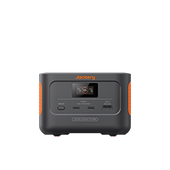
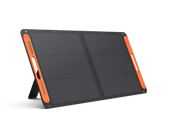
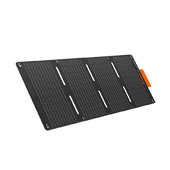
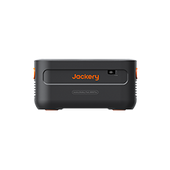
That is where a Jackery Solar Generator can fit naturally into the plan. Is is a combination of Solar Panels and a Portable Power Station, designed for emergency or home backup use.

A useful Europe-ready checklist would include:
Enough water and easy, non-perishable food for 72 hours.
Prescription medicines, basic first aid supplies, and hygiene items.
A torch or battery lamp, spare batteries, and a battery-powered or wind-up radio.
Charged phones, charging cables, and at least one fully charged power bank.
Cash, spare keys, and paper copies of important documents or prescriptions.
Blankets, warm layers, and baby or pet supplies if needed.
Saved contact details for your electricity network operator, local authority, and water supplier.
A backup power option for essentials, such as an appropriately sized Jackery Solar Generator.
Preparing for a power outage in Europe does not mean expecting the worst every week. It simply means removing avoidable stress. If you know where to get outage news, have a realistic 72-hour kit, and keep a backup power option ready for the essentials, a blackout becomes much easier to handle.
Jackery Solar Generators for Power Outages in Europe
A backup power solution is most useful during an outage when it is simple, quiet, and ready to support the essentials without much hassle. That is why a solar generator can feel like a practical fit for European households. Unlike fuel-based generators, a solar generator can be used without petrol storage, engine noise, or exhaust fumes, and it gives you a cleaner way to keep key devices running during a blackout.
Another reason people choose a Jackery Solar Generator is flexibility. During a short outage, it can power everyday essentials such as phones, laptops, lighting, or internet equipment. During a longer disruption, the solar charging side becomes more valuable because it lets you top up the stored battery using sunlight rather than relying only on the grid.
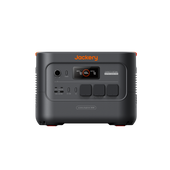
Jackery Solar Generator 2000 v2
Choosing the Jackery Solar Generator 2000 v2 for power outages in Europe is a strategic move, especially as energy grid stability becomes more of a talking point across the continent. While Jackery is a global brand, the v2 (released in late 2024/early 2025) specifically addresses the common pain points of older portable power stations: weight, battery lifespan, and charging speed.

Superior Portability (The "Apartment" Factor)
In many European cities where living spaces are compact or require navigating stairs, the v2 is a game-changer. Size & Weight: It is 41% smaller and 34% lighter than its predecessor (the 2000 Pro). Weight: At just 17.5 kg, it’s one of the few 2kWh units that a single person can realistically carry from a storage closet to the kitchen during a sudden blackout.
Emergency-Ready Charging
If a storm is forecasted or a "rolling blackout" is announced, you don't have all day to charge.
Emergency Super Charge: Using the Jackery App, you can activate a mode that charges the unit from 0 to 80% in just 52 minutes (and 100% in about 1.3 hours) via a standard European wall outlet. Solar Efficiency: In the European winter, sun hours are limited. The v2 supports up to 400W of solar input, allowing you to top up during those short windows of daylight.
UPS Functionality (Protecting Electronics)
Power surges or sudden drops can fry sensitive European appliances or disrupt home offices. 20ms Switchover: The 2000 v2 features a UPS (Uninterruptible Power Supply) mode. If it's plugged into the wall and the grid goes down, it switches to battery power in less than 20 milliseconds—fast enough to keep a Wi-Fi router, desktop computer, or CPAP machine from resetting.
Long-Term Reliability (LiFePO4)
Older Jackery models used Lithium-ion (NMC), which typically lasted 500–800 cycles.
LiFePO4 Chemistry: The v2 uses Lithium Iron Phosphate, rated for 4,000+ charge cycles before hitting 70% capacity. 10-Year Lifespan: Even if you used it every single day, it would last over a decade. For occasional emergency use, it’s essentially a "buy it once for life" product.
|
Feature of Jackery Solar Generator 2000 v2 |
|
|
Combo |
|
|
Capacity |
2042Wh |
|
Cell Chemistry |
LiFePO4 4000 cycles to 70%+ capacity |
|
Operating Temperature |
Charge: 0°C~45°C(32°F~113°F) Discharge: -10°C~45°C(14°F~113°F) |
|
Efficiency Rate of Solar Panel |
25% |
|
Output Ports |
AC Output 2 Ports, 230V~ 50Hz, 2200W nominal power, 4400W peak power USB-A Output 1 Port, 5-6V⎓3A, 6-9V⎓2A, 9-12V⎓1,5A USB-C Output 2 Ports, 30W Max, 100W Max Car Port 12V⎓10A |
|
Recharging Methods |
Emergency Charging via App: 1.33 Hrs Wall Charging: 1.7 Hrs Car Charging: 24 Hrs 1 x SolarSaga 200W: 15 Hrs 2 x SolarSaga 200W: 7.5 Hrs |
|
Working Hours |
Refrigerator (15-520W): 3.2-72 Hrs Electric Oven (1600W): 1.1 Hrs Light (5W): 155 Hrs Heater (1800W): 1 Hrs |
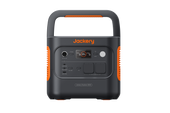
Jackery Solar Generator 3000 v2
If the Jackery 2000 v2 is the "commuter" of home backup, the Jackery Solar Generator 3000 v2 is the "heavy-duty SUV." The 3000 v2 is specifically engineered for European households that need to sustain multiple major appliances (like a full kitchen or heating systems) during multi-day outages.

High-Wattage Output (The "Everything" Power)
European homes often use high-energy appliances like electric kettles, induction hobs, or space heaters that require a high continuous draw.
3600W Continuous Output: This is significantly higher than most portable units. It can run a 2500W electric heater and a coffee machine simultaneously without tripping. 7200W Surge: This "peak" power allows it to start up heavy motor-driven appliances, such as a large European fridge-freezer or a sump pump, which often require a massive burst of energy to kick in.
Massive Capacity for Multi-Day Outages
During a serious winter storm or grid failure in Europe, you may be without power for 48 hours or more. 3072Wh Capacity: On a single charge, this unit can keep a standard 200W refrigerator running for up to 2 days.
Industry-Leading Weight-to-Power Ratio
Historically, 3kWh power stations were "permanent" fixtures because they weighed 45kg+.
Compact Tech: The 3000 v2 is roughly 47% smaller and 43% lighter than older industry standards in the 3kWh class. Weight: At approximately 27 kg and featuring integrated wheels and a suitcase-style handle, it is mobile enough to be moved between rooms—crucial for European flats or multi-story homes.
ZeroDrain™ Technology (Storage Ready)
The biggest risk with emergency gear is finding it dead when you actually need it. 1-Year Standby: Jackery’s "ZeroDrain" tech allows the unit to retain 95% of its charge for a full year in storage. You can charge it in October and know it will be ready for a February snowstorm.
|
Feature of Jackery Solar Generator 3000 v2 |
|
|
Combo |
Jackery Explorer 3000 v2 + SolarSaga 200W |
|
Capacity |
3072Wh |
|
Cell Chemistry |
LiFePO4 4000 cycles to 70%+ capacity |
|
Operating Temperature |
Charge: 0°C~45°C(32°F~113°F) Discharge: -15°C~45°C(5°F~113°F) |
|
Efficiency Rate of Solar Panel |
25% |
|
Output Ports |
AC Output 3 Ports, 230V~ 50Hz, 16A Max USB-A Output 2 Ports, 18W Max, 5-6V⎓3A, 6-9V⎓2A, 9-12V⎓1.5A USB-C Output 2 Ports, 100W Max, 5V⎓3A, 9V⎓3A, 12V⎓3A, 15V⎓3A, 20V⎓5A Car Port 12V⎓10A |
|
Recharging Methods |
Wall Charging: 1.8 Hrs 1 x SolarSaga 200W: 22 Hrs Solar Input 1000W Max: 3.5 Hrs AC+DC (54V) Charging: 1.4 Hrs Car Charging 12V: 36 Hrs |
|
Working Hours |
Refrigerator (200W): 24-48 Hrs Electric Oven (960W): 2 Hrs WiFi Router (10W): 66 Hrs Water Pump (60W): 30 Hrs |
FAQs
The following are frequently asked questions about the power outage in Europe.
1. How long do power outages usually last in Europe?
It depends on the cause. A small local fault may be fixed within an hour or two, while storm damage, major grid faults, or wider blackouts can last much longer.
2. Do power outages happen more often in winter in Europe?
They can feel more serious in winter because electricity demand is often higher and cold weather can put extra pressure on energy systems, but outages can happen in any season, especially during storms, heatwaves, or network faults.
3. Can a solar generator help during a blackout in Europe?
Yes, a solar generator can help power essential devices during a blackout, such as phones, lights, routers, and small appliances. It can also be recharged by solar panels when sunlight is available.
4. What should I unplug during a power outage?
It is smart to unplug sensitive electronics and high-load appliances such as TVs, computers, kitchen appliances, and chargers. This can help protect them from possible power surges when electricity comes back.
Final Thoughts
Power outages in Europe are no longer seen as rare, one-off disruptions. Between grid pressure, extreme weather, market volatility, infrastructure strain, and wider geopolitical tensions, they have become something households should take seriously and prepare for in a practical way.
While governments and grid operators continue to strengthen energy security, everyday readiness at home still matters, especially when even a short blackout can disrupt heating, lighting, internet access, food storage, and basic comfort.
The good news is that preparation does not have to be complicated. A clear outage plan, a simple emergency kit, and a reliable backup power solution can make a big difference when the lights go out. For households that want a quieter and cleaner way to stay prepared, a Jackery Solar Generator offers a useful backup option.


