
























How Is the Net Metering Scheme Evolving?
A Net Metering Scheme is the billing mechanism that allows solar system owners to receive credit for the electricity they add to the grid. Historically, this system acted as a virtual battery, letting users store excess summer energy on the grid to use during winter. However, the mechanics of these schemes are changing to reflect the maturing renewable energy market.
|
Scheme Type |
Mechanism |
Financial Implication |
|
1:1 Net Metering |
Credits exported energy at the full retail rate. Export 1 kWh, import 1 kWh = zero cost. |
"Gold Standard" - Treats the grid as free storage. Currently phasing out as it strains utility infrastructure. |
|
Net Billing |
Exports credited at a lower wholesale rate; imports charged at full retail rate. |
Reduced Benefit - Incentivizes immediate self-consumption rather than exporting. |
|
Gross Metering |
All generation sold to the grid at a set tariff; all consumption bought at retail price. |
Separated Revenue - No direct netting. Generation revenue is distinct from consumption costs. |
What Are the Risks?
The transition from 1:1 Net Metering to Net Billing creates a cliff where the ROI of a solar system can drop overnight. Homeowners relying heavily on exports to pay off their system face extended payback periods. Grandfathering terms vary significantly by country. Some nations offer 20-year fixed terms for existing installations, while others may implement retroactive changes or shorter transition periods.
How Do Policy Shifts Impact Households Globally?
Policy adjustments in different European markets directly affect household economics and necessitate adapting consumption habits.
What Is Happening in the Netherlands?
The Dutch market is currently navigating the gradual phase-out of its salderingsregeling (netting scheme). As full netting diminishes, households face lower compensation for exports. This shift forces a move away from oversized arrays designed for export revenue toward systems sized strictly for self-consumption.
How Are Spain and Italy Adapting?
Southern European markets have already matured past the initial subsidy phase. In Spain and Italy, the focus has shifted entirely to autoconsumo (self-consumption). Homeowners in these regions prioritize immediate use of solar power over grid exports. Their experience demonstrates that financial viability now relies on maximizing the percentage of solar energy used directly by the home.
Key Takeaway
As subsidies drop, the financial viability of residential solar relies heavily on storage and load shifting. The grid can no longer be viewed as a limitless, free battery.
What Are the Financial and Operational Consequences?
The evolution of the Net Metering Scheme requires a complete recalibration of how ROI is calculated. Payback periods will inevitably extend for users who continue to export the majority of their generation during the day.
Why Is Self-Consumption Valuable?
The self-consumption rate determines solar profitability. This percentage represents the portion of solar energy used directly by the household without passing through the grid. A higher self-consumption rate shields the owner from retail price hikes and low export credits.
What Operational Shifts Are Required?
To maintain profitability, homeowners adopting clean energy for homes in Europe must prioritize active energy management:
- Load Shifting: Running high-draw appliances like washing machines, dishwashers, and heat pumps during peak solar production hours (typically 11:00 AM to 3:00 PM).
- Smart Metering: Real-time data is essential. You cannot manage what you cannot measure. Smart meters provide the visibility needed to align consumption with generation.
- Grid Equity: Policy changes aim to balance costs. Non-solar ratepayers often bear the cost of grid maintenance. New tariffs ensure solar owners contribute their fair share for grid access, shifting the economic logic from "profit" to "savings."
What Are Practical Strategies to Adapt?
Adapting to the new energy landscape requires a combination of behavioral changes and hardware upgrades.
Should You Start with Behavioral Changes?
Optimizing current usage precedes hardware investment. Use timers and smart plugs to schedule appliances. Ensure your electric vehicle charges only when solar production is at its peak.
How Should You Design a Hybrid System?
New solar arrays should be sized based on consumption profiles rather than roof space. A smaller system with high self-consumption often yields a better ROI than a massive system that exports cheap power to the grid.
What Is the Role of Battery Storage?
Batteries bridge the gap between daytime generation and evening consumption. They capture excess solar energy that would otherwise be sold for pennies, allowing you to use it when grid prices are highest. Storage should be sized to cover your evening peak loads, typically occurring between 4:00 PM and 9:00 PM.
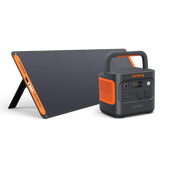
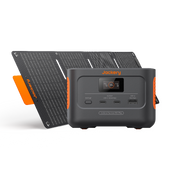
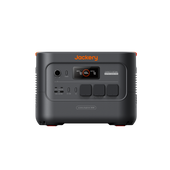
Illustrative Example: Jackery Solar Generator 2000 v2
For many households, a modular solution offers a flexible path to increased self-consumption without complex hardwiring.
- Capacity: 2042Wh
- Battery Chemistry: LiFePO4
- Lifespan: 4000 Charge Cycles
- UPS Function: <20ms switchover time
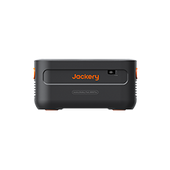
The Jackery Explorer 2000 v2 serves as a robust buffer for daily load-shifting. This 2042Wh unit runs essential evening appliances, effectively capturing solar energy for later use. The LiFePO4 battery chemistry ensures longevity, allowing for daily charging and discharging for over a decade. Households seeking reliable power backup solutions for grid outages benefit from the UPS function, which provides resilience during grid instability.
- Capacity: 3072Wh
- Application: High-demand households
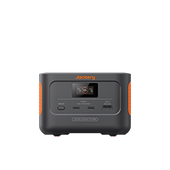
For larger homes with higher energy demands, the Jackery Explorer 3000 v2 offers expanded capacity. This 3072Wh generator allows for more aggressive load shifting, covering energy-intensive devices for longer durations.
Smart Energy Management (EMS)
Look for systems that automate battery usage. An effective EMS monitors time-of-use tariffs and automatically decides whether to store solar energy, consume it, or export it based on current prices.
How Should You Plan Your Solar Investment?
Use this checklist to validate your energy strategy.
- Verify Local Policy: Contact your local Distribution System Operator (DSO). Confirm the current status of net metering in your region. Specifically ask about grandfathering clauses and upcoming tariff changes.
- Model the "Worst Case": Calculate your ROI assuming a low export rate. If the system makes financial sense with a wholesale export price (e.g., €0.04 - €0.08 per kWh), your investment is safe regardless of policy shifts.
- Evaluate Storage Needs: Analyze the ratio between import and export rates.
- Scenario A: If export rates are less than 50% of import rates, battery storage is likely essential for a positive ROI.
- Scenario B: If export rates remain high, a grid-tied system may still suffice, though this is becoming rare.
- Future-Proofing: When planning how to build your home power backup system, ensure any new inverters or batteries are interoperable. They should support open communication standards like OpenADR to communicate with future smart grid applications.
What Trends Should You Watch in the Future?
The energy landscape will continue to evolve. Preparing for these trends now will safeguard your investment.
- Dynamic Pricing: Fixed rates are disappearing. Expect hourly energy pricing where electricity is cheap (or even negative) during sunny, windy afternoons and expensive during peak hours. Batteries will become arbitrage tools, charging when energy is cheap and discharging when it is expensive.
- Virtual Power Plants (VPP): Aggregated home batteries will soon earn revenue by stabilizing the grid. By joining a VPP, your battery can provide services to the grid operator, generating a secondary income stream beyond simple bill savings.
- Technology Maturation: Lithium Iron Phosphate (LFP) batteries are becoming the standard for longevity. Their safety profile and high cycle life make them the preferred choice for residential storage.
- Regulatory Fragmentation: Rules will likely vary significantly between EU member states. Strategies for sustainable winter energy solutions are crucial as regulations fragment. While the EU sets broad directives, implementation is national.
Conclusion
The era of install and forget solar systems is ending. The future of the Net Metering Scheme demands active management and strategic planning. While the loss of 1:1 metering may seem like a setback, it incentivizes true energy independence and resilience.
Policy changes should be viewed not as a penalty, but as a signal to take control of your energy production and consumption. By shifting focus from exporting to self-consuming, you insulate your household from market volatility. Start with efficient consumption habits, then integrate modular storage solutions like the Jackery Explorer 2000 v2 as economics dictate. This approach ensures your solar investment remains a valuable asset in a changing world.
Glossary
- Net Metering: A billing mechanism that credits solar energy system owners for the electricity they add to the grid.
- Gross Metering: A system where all generated electricity is sold to the grid at a set rate, and all consumed electricity is bought at the retail rate.
- Self-Consumption: The practice of using solar energy directly in the home at the moment of generation, avoiding the grid entirely.
- Time-of-Use (TOU): A utility rate structure where electricity prices vary based on the time of day, typically higher during evening peaks.
Modelling Worksheet: ROI Calculation Inputs
To calculate your new ROI, gather the following data points:
- Import Rate: Cost per kWh to buy from the grid (check your bill).
- Export Rate: Credit per kWh for sending to the grid (check your contract).
- Daily Usage: Average kWh consumed per day.
- Solar Production: Estimated daily kWh generation.
- Self-Consumption Ratio: Estimated % of solar used immediately (typically 30% without battery, 60-80% with battery).
External Sources
Frequently Asked Questions
How do I calculate my current self-consumption rate?
Calculate self-consumption by subtracting your total grid exports from your total solar generation, then dividing that number by the total generation. Most modern smart inverters and monitoring apps provide these figures automatically in their daily reports.
Can I upgrade my existing solar system to include battery storage?
Yes, upgrading via "AC coupling" involves adding a battery inverter alongside your existing solar inverter. However, you must ensure your current electrical panel has sufficient capacity and that the new battery system is compatible with your home's wiring.
How does dynamic pricing affect battery charging strategies?
Dynamic pricing allows you to charge your battery from the grid during hours when prices are lowest (often late night or mid-day) and discharge it when prices spike. This strategy, known as price arbitrage, maximizes savings even when solar production is low.
Are there community solar or virtual net metering options emerging in the EU?
Yes, Energy Communities are being promoted under EU directives, allowing neighbors to share energy generation without installing individual panels. These models enable apartment dwellers or those with unsuitable roofs to participate in the renewable transition.


