


















European electricity prices in 2026 are defined by extreme intra-day volatility despite high retail baselines. While wholesale rates often dip into negative territory, households rarely see these savings immediately due to fixed levies. Instead, families navigate a landscape of unpredictable bills and grid anxiety.
European electricity prices have become a source of confusion and stress. Sudden price spikes complicate monthly budgeting, while fears regarding blackouts threaten heating, medical devices, and food preservation. Many consumers feel a sense of unfairness, bearing the cost of grid upgrades and system inefficiencies while energy companies report profits.
This volatility is structural, not temporary. Understanding the mechanics of negative pricing and the drivers of volatility is the first step toward independence. This guide explains why costs fluctuate and how practical home backup strategies empower you to take control of your energy security.
Understanding European Electricity Price Volatility
Volatility refers to the rapid fluctuation of electricity costs. In Europe, we must distinguish between short-term hourly volatility and broader seasonal price swings.
Negative Wholesale Prices
Negative wholesale prices occur when renewable generation exceeds demand. This typically happens on sunny, windy days when output surges. Grid operators effectively pay consumers or storage facilities to take energy off the grid to prevent system overloading. However, keeping inflexible power plants online during these periods' costs money, creating a paradox of too much energy.
Retail Bills Remain High
Retail bills remain high because fixed taxes, network charges, and levies dominate the final cost. These fixed components mask wholesale dips. Furthermore, standard tariffs often do not reflect real-time negative price windows. Unless a household has a dynamic tariff and a smart meter, the consumer pays a flat rate regardless of the spot price.
Key Drivers of Volatility
- Renewable Intermittency: Negative prices correlate strongly with high wind and solar production hours. Industry analysis from S&P Global confirms this is a structural shift known as price cannibalization —where solar success drives its own value to zero during peak hours.
- Fossil Fuel Reliance: Gas prices still set the marginal cost of electricity during periods of low renewable output.
- Grid Congestion: Local bottlenecks prevent cheap energy from reaching high-demand areas, forcing operators to pay for expensive redispatch measures.
- 15-Minute Settlement: Shifting to shorter pricing periods increases volatility but allows for more precise demand response mechanisms.
European Electricity Prices: A Detailed Look
Electricity Prices in Europe by Country
- Regional Variance: Northern and Central Europe often see higher retail prices due to substantial taxes and network charges.
- Policy Impact: National VAT rates and subsidies dictate the financial viability of home storage.
- Comparison: Highly taxed regions like Germany contrast sharply with subsidized markets where the government absorbs more of the volatility.
Europe Electricity Prices Chart: The Wholesale-Retail Gap (2025-2026)
The table below illustrates the disconnect facing European consumers in early 2026. While renewable generation has driven wholesale costs down (and frequently negative), retail prices remain stubbornly high due to non-energy components like grid fees, taxes, and levies. This gap highlights why passive consumption is no longer financially viable.
|
Country |
Avg. Retail Price (c/kWh) |
Avg. Wholesale Price (c/kWh) |
The Fixed Cost Gap* |
Impact on Household |
|
Germany |
41.2 c/kWh |
6.8 c/kWh |
~83% |
High savings potential via self-consumption (solar + battery). |
|
Denmark |
38.5 c/kWh |
5.9 c/kWh |
~85% |
Heavy taxation makes grid reliance the most expensive option. |
|
Italy |
33.1 c/kWh |
9.2 c/kWh |
~72% |
High wholesale volatility requires batteries to bridge evening peaks. |
|
United Kingdom |
34.0 c/kWh |
7.5 c/kWh |
~78% |
High standing charges reduce the benefit of low usage; batteries are essential. |
|
Spain |
21.4 c/kWh |
3.8 c/kWh |
~82% |
Massive solar surplus crashes daytime prices, but evening rates spike. |
|
France |
25.6 c/kWh |
5.1 c/kWh |
~80% |
Rising regulatory costs are slowly eroding the historic nuclear advantage. |
*The Fixed Cost Gap represents the percentage of the bill comprised of taxes, levies, and network charges, which cannot be avoided without off-grid capabilities.
Source: Data projections derived from Eurostat Statistics and ACER Market Monitoring Reports (2024-2025), highlighting the divergence between spot market rates and final household costs.
Key Insight: In countries like Germany and Denmark, the raw energy cost is less than 20% of your bill. The remaining 80% effectively penalizes you for using the grid. This data proves that generating and storing your own power is the only way to bypass these fixed structural costs.
Europe Electricity Prices Map: Regional Grid Stress Zones
Rather than a static map, we categorize Europe into Grid Stress Zones based on congestion, price volatility, and blackout risk as of 2026.
This categorization mirrors the live Capacity Maps published by operators like Netbeheer Nederland, which now designate large grid areas as locked due to physical congestion. Identifying your zone helps determine the necessary size of your home backup system.
|
Zone Intensity |
Geographic Regions |
Primary Risk Drivers |
Recommended Strategy |
|
Red Zone(Critical Congestion) |
Netherlands, Germany (South), Ireland |
Grid Saturation: The grid is physically unable to transport northern wind power to industrial centers. Redispatch costs are passed to consumers. Queue Backlogs: New connections are frequently denied or delayed. |
Maximum Independence: Aim for >70% self-sufficiency. Large capacity units (e.g., 3kWh+) are required to bridge frequent curtailment periods. |
|
Orange Zone(High Volatility) |
Spain, UK, Southern Italy |
The Duck Curve: Prices crash to negative at noon (solar peak) but skyrocket after sunset. Interconnection Issues: Limited capacity to export excess renewable energy creates erratic pricing. |
Smart Arbitrage: Use automated batteries to charge at noon (free/negative) and discharge at night. Medium capacity (2-3kWh) is sufficient. |
|
Yellow Zone (Rising Uncertainty) |
France, Poland, Baltics |
Transition Pains: Aging nuclear fleets (France) or rapid shifts away from coal (Poland) create supply gaps during extreme weather. Import Reliance: Prices spike when neighboring countries cannot export power. |
Security Focus: Backup is primarily for outage protection during storms or maintenance rather than daily price arbitrage. |
Strategic Planning: If you live in a Red Zone, you are effectively in a grid bottleneck. The high costs here are not just about energy; they are penalty fees for grid congestion. Residents in these areas see the fastest Return on Investment (ROI) for larger storage systems.

The Home Backup Power Revolution
Households are investing in backup power to protect against outages and mitigate exposure to price spikes. This is no longer just about camping; it is about grid resilience.
The Hybrid Approach
The most resilient homes use a hybrid strategy:
- Solar: Generates free power.
- Batteries: Store energy for use when the sun sets or prices peak.
- Grid/Generators: Provide redundancy for extended outages.
- Overbuilding Solar: Installing more solar capacity than immediately needed acts as a hedge against low winter production. As panel prices drop, this becomes a financially viable strategy.
Battery Storage Systems (BESS) Sizing Guide
1. Audit Critical Loads
Identify what must stay on.
- Fridge: 1–2 kWh/day.
- Router: 0.5 kWh/day.
- Medical Devices: Variable (check specific wattage).
2. Determine Autonomy
- Essentials (24h): Requires ~2–3 kWh capacity.
- Heavy Duty (Multi-day): Requires ~3–6+ kWh and high output.
3. Account for Efficiency
Inverters are not 100% efficient. Factor in losses and reserve margins of approximately 15% when calculating needs.
Strategic Product Examples
Mid-Sized Resilience
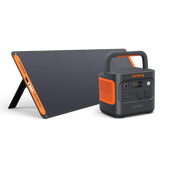
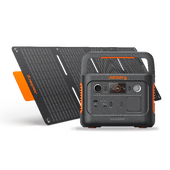
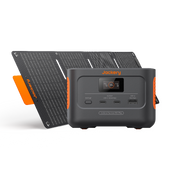
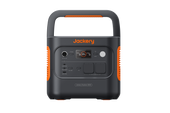
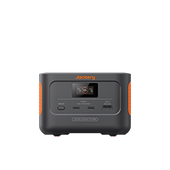
The Jackery Solar Generator 2000 v2 offers 2042Wh of capacity to fit essential 24-hour backup needs. This unit keeps a fridge and communication devices running during a standard outage. The generator features a LiFePO4 battery with 4,000 charge cycles and recharges from a wall outlet in 1.7 hours.
High-Demand Backup
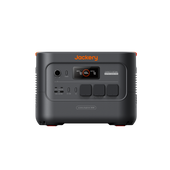
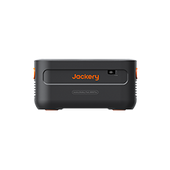
The Jackery Solar Generator 3000 v2 provides 3072Wh of capacity and 3000W power output for high-demand scenarios. This system supports high-wattage appliances like space heaters or coffee makers, making the unit suitable for larger homes or longer grid failures. Jackery's high-capacity model supports ultra-fast 1.8-hour AC charging and operates quietly at as low as 30dB.
Note: Choose capacity based on your specific kWh audit results.
Strategies for Managing Electricity Price Volatility
Load Shifting
Run heavy appliances like washing machines and EV chargers during negative or low-price windows. This simple habit change can significantly reduce costs.
Home Efficiency
The cheapest energy is the energy you don't use. Implementing sustainable winter energy solutions like improved insulation reduces baseline load, meaning you need less battery capacity for backup.
Smart Tariffs
Utilize time-of-use plans combined with battery storage. Charge your battery when prices are low (or negative) and discharge it to power your home when prices peak.
Automation
Smart plugs and battery management systems can react to price signals automatically, ensuring you never miss a window of cheap power.
Financial Planning
Calculate ROI based on local subsidies and avoid peak-pricing costs. In many high-cost regions, the system pays for itself through savings within a few years.
Practical Design Checklist: What to Look For
- Battery Chemistry: Prioritize LiFePO4 (LFP) batteries. They offer safety and long lifespans, often exceeding 4,000 cycles.
- Switchover Speed: Look for UPS functions with a switchover speed of <20ms. This protects sensitive electronics like desktops and modems from crashing during a blackout.
- Capacity & Output: Ensure the unit handles surge loads. A 3000W+ output is necessary for power tools or well pumps.
- Charging Speed: Fast AC charging is critical. The ability to charge from 0-100% in under 2 hours allows you to refill the battery quickly between recurring outages.
- Portability: Wheels and handles allow you to move the unit to power devices in different rooms as needed.
- Warranty: Look for 5-year warranties (often 3+2 years) to ensure long-term reliability and peace of mind.
Real-World Use Cases & Scenarios
Germany/Spain: Solar Arbitrage
Homeowners store excess midday solar energy to avoid peak evening rates. This maximizes self-consumption and reduces the payback period of the solar investment.
UK/Ireland: Winter Storm Resilience
Residents often ask, are power outages common in Europe? In these regions, weather-related disruptions make battery backup essential for powering heating controls and communications during winter storms.
Remote Work
Professionals ensure Wi-Fi and laptops remain powered during grid maintenance or failures, preventing income loss.
Medical Needs
CPAP users rely on silent, emission-free battery backup overnight. Unlike gas generators, these systems can safely run indoors.
Trade-offs & Common Pitfalls
Under-sizing
Buying too little capacity leads to early depletion during critical events. Always size for your worst-case scenario, not your average day.
Ignoring Surge Currents
Fridges and pumps require high startup power, often 2-3 times their running wattage. Check the inverter surge ratings before purchasing.
Subsidies
Do not rely solely on incentives. Policy changes happen quickly. Ensure the system makes financial sense independently of government grants.
Installation
Factor in the cost of transfer switches or professional wiring. Homeowners should review power backup solutions for grid outages to understand the specific installation requirements for different setups.
Conclusion
Volatility is structural. The days of predictable, cheap energy are gone. Resilience now requires personal investment in storage and efficiency.
Frequently Asked Questions
How do smart grids impact home backup system ROI?
Smart grids enable dynamic pricing, allowing battery owners to charge when rates are negative and discharge when expensive. This arbitrage significantly improves the return on investment for home backup systems.
Are there emerging technologies beyond batteries for home backup?
Yes, technologies like hydrogen fuel cells and thermal storage are in development. However, lithium-based batteries remain the most practical and accessible solution for residential use today.
What are the long-term environmental impacts of widespread home battery adoption?
Widespread adoption reduces reliance on fossil-fuel peaker plants, lowering overall grid emissions. While mining raw materials has an impact, recycling programs for LiFePO4 batteries are improving rapidly.
How does grid infrastructure development affect future price volatility?
Investments in grid interconnections and upgrades aim to smooth out supply imbalances. However, until these massive infrastructure projects are complete, volatility will likely persist or increase.
Can homeowners sell excess stored energy back to the grid?
Yes, prosumer models allow homeowners to sell energy back, though regulations vary by country. In some regions, Virtual Power Plants (VPPs) aggregate home batteries to stabilize the grid for profit.


