


























European energy bills remain volatile, and the gap between government ambition and household reality often feels wide. While policymakers discuss gigawatts and cross-border grids, homeowners and renters worry about next month's invoice and supply stability.
The REPowerEU plan is the European Commission's roadmap to bridge this gap, but it requires individual action to work effectively.
This guide translates high-level EU policy into practical steps for your home. We are moving past the jargon to evaluate real options—from efficiency upgrades to modular storage—that secure your energy independence. This is not about buying products you don't need; it is about understanding how to insulate your household from future market shocks.
The REPowerEU Plan: Origins, Goals, and Timelines
REPowerEU is the EU’s direct strategic response to the 2022 energy crisis, designed to end dependence on fossil fuel imports and accelerate the green transition. The initiative functions as both a climate policy and a security strategy.
Key targets define this shift. The plan increases the 2030 target for the share of renewables in final energy consumption, aiming toward 45%. This involves massive scale-up mandates. New buildings face requirements for rooftop solar installation, and the deployment rate for heat pumps must double to reduce gas consumption in heating.
Understanding the Roadmap
The roadmap targets a complete energy infrastructure overhaul by 2030. Implementation follows a phased timeline: the immediate phase focused on gas demand reduction and filling storage reserves, while the current phase accelerates permitting renewables.
However, implementation speeds vary by location. While the directive comes from Brussels, specific deadlines and subsidies for clean energy for homes in Europe depend on your Member State. The path to decarbonization differs from Berlin to Madrid, even if the ultimate goal is unified.
Practical Steps to Energy Independence Under REPowerEU
Policy provides the framework, but technology provides the solution. Households must adopt a mix of generation, storage, and efficiency to align with these new standards.
The Reality of Rooftop Solar and Storage
Solar panels require battery storage to guarantee independence because of the Duck Curve phenomenon. Panels generate peak power at midday when household demand is often lowest, and production drops to zero in the evening when demand spikes. Without intervention, homeowners sell cheap excess power to the grid by day and buy expensive power back at night.
True independence requires batteries to shift daytime production to evening use. However, whole-home battery systems are expensive and require complex installation. A modular approach often makes more sense for immediate resilience.
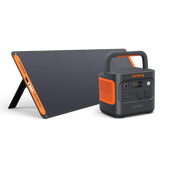
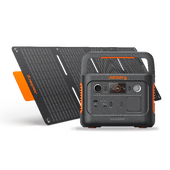
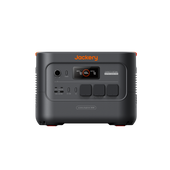
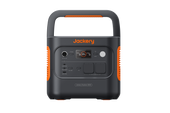
Jackery Explorer 2000 v2
- Capacity: 2042Wh (2kWh)
- Output: 2200W (Surge 4400W)
- Lifespan: 4000 Charge Cycles (LiFePO4 battery)
- Use Case: The Jackery Explorer 2000 v2 bridges the gap for critical evening loads (fridges, lights, routers) or serves as an emergency backup without requiring permanent wiring.
For households with higher power needs, such as running high-wattage tools or sustaining appliances during extended outages, scaling up is necessary.
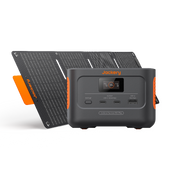
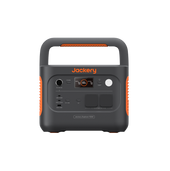
Jackery Explorer 3000 v2
- Capacity: 3072Wh
- Output: 3600W (Surge 7200W)
- Form Factor: World's Lightest and Most Compact 3kWh LFP Power Station (47% Smaller & 43% Lighter)
- Use Case: The Jackery Explorer 3000 v2 is a robust solution capable of powering 99% of household appliances, acting as a comprehensive off-grid power center.
Looking forward, bidirectional charging will play a role. Electric vehicles with V2H (Vehicle-to-Home) capabilities may eventually serve as household batteries, though regulatory support for this is still developing across the EU.
Heat Pumps and Efficiency First
Building fabric improvements must precede heat pump installation. The fabric first approach dictates that you must conduct an energy audit and improve insulation before investing in generation. A drafty house will drain a battery in hours; a well-insulated one can run for days on the same charge.
Cold climates present specific challenges. While heat pumps are efficient, extreme cold can reduce their Coefficient of Performance (COP). In these regions, implementing sustainable winter energy solutions may require hybrid setups or units specifically rated for low temperatures.
Demand reduction is the most cost-effective battery. Smart thermostats and efficient appliances significantly reduce the required size of your solar-plus storage system, lowering your upfront investment.
Solutions for Renters and Apartments
Renters do not need to own a roof to participate in the REPowerEU transition. The plan strongly encourages Energy Communities, allowing non-owners to buy shares in local solar farms or community batteries. This democratizes access to renewable generations.
Actionable alternatives for renters include:
- Virtual Net Metering: Subscribing to off-site solar farms where generation is credited to your utility bill.
- Portable Backup: Using standalone units like the Jackery Explorer 2000 v2 allows you to maintain resilience and store grid power when it is cheap, without permanent installation.
- Plug-in Home Battery: In some jurisdictions, small-scale plug-and-play solar options are permitted and effective for offsetting base loads.

Broader Infrastructure: Biomethane and Hydrogen
The REPowerEU plan looks beyond electricity to decarbonize gas networks. Understanding this helps you decide whether to keep a gas boiler or switch immediately.
The Role of Biomethane
Biomethane production targets of 35 billion cubic meters (bcm) by 2030 aim to replace natural gas imports. For households, this is relevant because it stabilizes gas supply. Biomethane offers a lower-carbon option for homes that cannot yet switch to heat pumps due to structural constraints or cost. It utilizes existing gas infrastructure, preventing immediate obsolescence of current heating systems.
The Future of Hydrogen
Renewable hydrogen targets heavy industry rather than residential heating. The EU aims to produce and import hydrogen primarily for hard-to-decarbonize sectors like transport. Manage your expectations regarding hydrogen for home heating. It is unlikely to be a direct heating solution for individual households in the near term due to efficiency losses and high costs. The benefit of hydrogen is systemic industrial decarbonization, not domestic use.
Financial Support and ROI Analysis
The Recovery and Resilience Facility (RRF) provides cash backing for REPowerEU. Funding is available, but you must know where to look. You should search for national government portals for grants specifically tied to energy efficiency and renovation.
Calculating ROI Realistically
ROI calculations for solar depend on three variables: electricity rates, feed-in tariffs, and system longevity.
- Electricity Rates: Higher grid prices shorten your payback period.
- Feed-in Tariffs: These are dropping in many areas. Self-consumption is now more valuable than exporting to the grid.
- System Longevity: A battery lasting 10 years offers better ROI than a cheaper one lasting 3.
There is also a resilience premium. The ROI of a battery includes the non-monetary value of security. Since are power outages common in Europe? is a question asked more frequently due to extreme weather, the value of keeping your freezer running and your phone charged during a blackout is part of the investment return.
Warning: Do not over-leverage based on current policies. Feed-in tariffs and net metering rules can change abruptly. Design your system for self-sufficiency, not for profit from the grid.
Real-World Use Cases and Cautionary Tales
Success Story (Community): A village in Southern Europe utilized the Energy Community model to install shared solar on a municipal building. Residents who could not afford individual systems bought shares. The result was a 30% reduction in bills and a localized grid that remained stable during regional voltage fluctuations.
Success Story (Resilience): A suburban household installed rooftop PV but found the grid export rates negligible. They integrated a Jackery Explorer 3000 v2 into their setup. By charging the unit with solar during the day and using it to run heavy evening loads, they maximized self-consumption. During a winter storm that knocked out local power lines, this home power backup system kept their pellet stove and lights running for 48 hours.
Cautionary Tale: Early adopters in some regions faced extended payback periods when governments retroactively cut solar subsidies. Homeowners who sized their systems purely for export lost money. This reinforces the need to prioritize self-consumption and storage over massive generation capacity.
Actionable Checklist for Households
- Audit First: Do not buy generation capacity until you have minimized consumption via insulation and efficiency.
- Define Your Goal: Decide if you want bill reduction (solar priority) or outage resilience (storage priority).
- Size Correctly: Calculate your daily critical kWh usage. A 2kWh unit like the Jackery Explorer 2000 v2 covers essentials; a 3kWh Jackery Explorer 3000 v2 covers high-draw tools and appliances.
- Check Local Rules: Verify permitting for panels and eligibility for REPowerEU funded grants before purchasing.
- Start Modular: You do not need to go 100% off-grid immediately. A scalable approach is often more financially prudent.
Conclusion
The REPowerEU plan provides the necessary political framework, but household independence requires personal initiative. You cannot wait for the grid to fix itself. By focusing on efficiency first and adopting modular storage solutions, you insulate yourself from volatility.
Balance ambition with realism. Leverage subsidies where available but prioritize systems that offer immediate resilience. The combination of decentralized storage and community energy will define the next decade of European power.
Frequently Asked Questions
How do REPowerEU targets translate to my country's specific initiatives?
National governments interpret and implement REPowerEU directives through their own policies and funding programs. You must check your local energy ministry's website for specific grant applications and regulations.
What are the long-term impacts of REPowerEU on energy prices?
Increased renewable energy and reduced fossil fuel dependence are expected to stabilize or reduce long-term energy costs. However, short-term volatility may persist as infrastructure is upgraded.
Can REPowerEU help fund smart home technologies for energy management?
While not directly funded, smart tech complements REPowerEU goals and may be eligible for related efficiency grants. Check out national renovation schemes that include digitalization or smart readiness.
Are there any REPowerEU programs specifically for low-income households?
Yes, many national implementations of REPowerEU funding prioritize vulnerable households for energy efficiency upgrades to combat energy poverty.
What if I live in a historic building; can I still participate in REPowerEU initiatives?
Specific regulations for historic buildings might apply, but solutions like internal insulation or community energy schemes could still be viable as alternatives to external modifications.


