















Travelling across Europe sounds simple until you realise that “European plug” does not mean just one single plug. Different countries use different socket types, voltage standards, and plug shapes, so it is easy to get confused when packing chargers, adapters, and electronics for your trip.
Once you know what EU plugs look like, which plug types are used in different parts of Europe, and whether you need an adapter or a converter, you can avoid charging problems and use your devices more safely and easily.
This guide breaks down the main plug types used across Europe and also looks at practical power solutions, including Jackery Portable Power Station options for more flexible charging on the go.
|
Key Takeaways: |
|
Why Do Electrical Outlets Differ from One Country to Another?
Electrical outlets differ from one country to another mainly because national power systems developed separately rather than under one shared international standard. When electricity was first introduced, each country built its own infrastructure, adopted its own safety rules, and worked with local manufacturers to design plugs and sockets that suited domestic needs at the time. That early independence is the main reason so many outlet types still exist today.
Another factor is that countries made different decisions about voltage, frequency, grounding, and safety protection. Some preferred compact two-pin plugs, while others introduced grounded systems for extra safety. In some places, plugs were designed with insulated pins, recessed sockets, or built-in fuses. These choices were not random. They reflected local engineering standards, building practices, and safety priorities.
Once a plug system becomes widely used, it is very difficult to replace. Homes, hotels, offices, public buildings, and electrical appliances are all built around the existing socket type. Changing an entire country to a new system would be expensive, slow, and disruptive, so most countries kept the standards they had already established.
European Standard Plug: What Does an EU Plug Look Like?
When people talk about a “European standard plug”, they usually mean the familiar two-round-pin plug used across much of continental Europe. In practice, though, Europe does not rely on one single socket type.
The most common ones you are likely to come across are Type C, Type E, Type F, and Type G, with a few regional variations in countries such as Italy, Switzerland, and Denmark. Most European countries use 230V and 50Hz, which means the main difference for travellers is usually the plug shape, not the voltage.
What an EU Plug Usually Looks Like?
The plug most people recognise as the standard continental European plug is Type C, often called the Europlug. It has two round pins, no earth pin, and is commonly used for low-power devices such as phone chargers, cameras, and small electronics. It is compact and widely accepted in many European sockets.
That said, many wall sockets in Europe are actually Type E or Type F, which are grounded systems. These are also designed around two round pins, but they add earthing in different ways. Because of that, a simple two-pin Europlug often fits many continental European sockets, while larger grounded appliance plugs need the correct matching format.
The Main European Plug Types You May Encounter
- Type C is the slim two-pin plug used widely across Europe. It is ungrounded and commonly found on chargers and small appliances.
- Type E is common in countries such as France, Belgium, Poland, Slovakia, and Czechia. It has two round pins and uses a grounding pin in the socket. Type E sockets are generally compatible with Types C, E, and F.
- Type F is used across a large part of Europe, including Germany, the Netherlands, Spain, Portugal, Austria, Greece, and many others. It also has two round pins, but grounding is provided through metal earth clips on the sides. Type F sockets also tend to accept Types C, E, and F plugs.
- Type G is different from the continental European styles. It has three rectangular pins in a triangular layout and is used in the United Kingdom and Ireland, as well as Malta and Cyprus. In the UK, Type G is used with 230V, 50Hz, and Electrical Safety First notes that adaptors only change the plug shape, not the voltage or frequency.
Regional Variations and Compliance
Although continental Europe is often treated as one charging zone by travellers, there are still regional differences. For example, Italy commonly uses Type L alongside C and F, while Switzerland uses Type J, and Denmark may use Type K in addition to C and F. That is why checking your destination country before travel still matters, especially if you are carrying larger grounded appliances rather than just USB chargers.
From a safety point of view, it is also important to remember that a travel adaptor is not a voltage converter. If your appliance is not dual-voltage rated, you may need a converter or transformer as well, depending on the destination. It also notes that, for travel within most of Europe from the UK, the key issue is usually the socket type because voltage and frequency are generally the same.

European Countries, Voltage, Frequency, and Socket Types
The table below shows the plug types used in a broad range of European countries. In nearly all cases, the supply is 230V / 50Hz, but socket formats differ. Older buildings and some hotels can occasionally vary, so this works best as a practical travel guide rather than a guarantee for every single property.
|
Country |
Voltage |
Frequency |
Common Plug Types |
|
Albania |
230V |
50Hz |
C, F |
|
Andorra |
230V |
50Hz |
C, F |
|
Austria |
230V |
50Hz |
C, F |
|
Belarus |
230V |
50Hz |
C, F |
|
Belgium |
230V |
50Hz |
C, E |
|
Bosnia and Herzegovina |
230V |
50Hz |
C, F |
|
Bulgaria |
230V |
50Hz |
C, F |
|
Croatia |
230V |
50Hz |
C, F |
|
Czechia |
230V |
50Hz |
C, E |
|
Denmark |
230V |
50Hz |
C, K |
|
Estonia |
230V |
50Hz |
C, F |
|
Finland |
230V |
50Hz |
C, F |
|
France |
230V |
50Hz |
C, E |
|
Germany |
230V |
50Hz |
C, F |
|
Greece |
230V |
50Hz |
C, F |
|
Hungary |
230V |
50Hz |
C, F |
|
Iceland |
230V |
50Hz |
C, F |
|
Ireland |
230V |
50Hz |
G |
|
Italy |
230V |
50Hz |
C, F, L |
|
Kosovo |
230V |
50Hz |
C, F |
|
Latvia |
230V |
50Hz |
C, F |
|
Liechtenstein |
230V |
50Hz |
C, J |
|
Lithuania |
230V |
50Hz |
C, F |
|
Luxembourg |
230V |
50Hz |
C, F |
|
Malta |
230V |
50Hz |
G |
|
Moldova |
230V |
50Hz |
C, F |
|
Montenegro |
230V |
50Hz |
C, F |
|
Netherlands |
230V |
50Hz |
C, F |
|
North Macedonia |
230V |
50Hz |
C, F |
|
Norway |
230V |
50Hz |
C, F |
|
Poland |
230V |
50Hz |
C, E |
|
Portugal |
230V |
50Hz |
C, F |
|
Romania |
230V |
50Hz |
C, F |
|
Serbia |
230V |
50Hz |
C, F |
|
Slovakia |
230V |
50Hz |
C, E |
|
Slovenia |
230V |
50Hz |
C, F |
|
Spain |
230V |
50Hz |
C, F |
|
Sweden |
230V |
50Hz |
C, F |
|
Switzerland |
230V |
50Hz |
C, J |
|
United Kingdom |
230V |
50Hz |
G |
(Source: World Standards)
Germany Standard Plug
Germany mainly uses Type C and Type F plugs with 230V / 50Hz. In everyday use, the grounded Type F socket is the main standard for household power, while smaller two-pin Europlugs are also widely accepted for lighter electronics. For travellers coming from the UK or Ireland, this means a Type G plug will not fit without an adaptor.
UK Standard Plug
The UK uses Type G, which is one of the easiest plug types to identify because it has three rectangular pins in a triangular pattern. The supply is 230V / 50Hz. Electrical Safety First also points out that a travel adaptor for the UK changes only the plug format, not the voltage or frequency, so single-voltage appliances still need extra care.
France Standard Plug
France uses Type C and Type E plugs with 230V / 50Hz. Type E is the grounded French-style system, recognisable because the socket includes a projecting earth pin. In practice, many travellers with small two-pin devices can use them easily, but grounded appliances need the right compatible plug.
Netherlands Standard Plug
The Netherlands uses Type C and Type F with 230V / 50Hz. This is very similar to Germany, so travellers moving between those countries usually do not need to change adaptors. For most visitors from outside continental Europe, especially from the UK, Ireland, or North America, an adaptor is still necessary.
Ireland Standard Plug
Ireland uses Type G at 230V / 50Hz, the same basic socket family as the UK. That means UK plugs are generally compatible in Ireland without needing a different adaptor. For travellers arriving from continental Europe, however, the usual two-round-pin European plug will not fit Irish sockets directly.

What Type of Plug Is Used in Internal Outlets?
There is no single plug type used in internal outlets across Europe. In most continental European countries, indoor sockets are usually designed for Type C, Type E, or Type F plugs, while the UK and Ireland use Type G. That means the plug you use in one country may not fit the wall outlet in another, even within Europe.
For many travellers, the most familiar continental option is the two-round-pin plug. Type C is common for smaller devices such as phone chargers and travel adapters, while Type E and Type F are widely used for grounded household appliances and everyday electronics. These plug types look quite similar, but they are not always fully interchangeable in every situation.
The main difference appears when travelling to the UK or Ireland, where internal outlets use Type G, the three-rectangular-pin-plug. This design is very different from the round-pin plugs used across most of mainland Europe, so visitors often need an adapter when moving between these regions.
In simple terms, internal outlets in Europe are not all the same. Most countries on the continent rely on Type C, E, or F, while the UK and Ireland rely on Type G. That is why it is always worth checking the plug type of your destination before you travel.
Practical Considerations for Using Europe Power Plugs: Check Voltage Requirements
Before you focus on plug shape, check the voltage and frequency your device can handle. In most European countries, the mains supply is 230V and 50Hz, including countries such as Germany, France, the Netherlands, Ireland, and the UK. That means many travellers moving around Europe only need to think about the socket type, not a major change in power supply.
The easiest way to check is to look at the label on your charger, plug, or power brick. If it says something like 100–240V, 50/60Hz, your device is dual voltage and will usually work in Europe with just the correct plug adapter. This is common for phones, laptops, tablets, cameras, and many modern USB-charged devices.
If your appliance is rated for only 110V or 120V, a simple adapter is not enough. In that case, you may need a voltage converter or transformer, because the wrong voltage can damage the appliance or create a safety risk. This is especially important for older electronics and some high-heat appliances such as hair tools or personal care devices.
Checking voltage requirements takes only a few seconds, but it can save you from burnt-out devices, charging problems, and unnecessary stress during your trip. If the voltage range on the label includes 230V, you are usually fine with the right adapter. If it does not, check whether you need a converter before you plug it in.

Adapters vs Converters: What You Need, Safety Standards
When travelling in Europe, it is important to know the difference between a plug adapter and a voltage converter. People often use the two terms as if they mean the same thing, but they do very different jobs.
A plug adapter only helps your plug fit into a different wall socket. It does not change the electricity coming from the outlet. A converter or transformer, by contrast, is used when your appliance cannot safely handle the local voltage. For travel within Europe from the UK, the main issue is usually the socket type, because voltage and frequency are generally the same.
If your charger or device is marked 100–240V, 50/60Hz, it is usually dual voltage. That means you normally only need the right travel adapter, not a converter. This is common for phones, tablets, laptops, cameras, and many modern chargers.
A converter becomes necessary when a device is single voltage and its rated voltage does not match the local supply. For example, if an appliance is built only for 110V or 120V, plugging it straight into a European 230V outlet may damage it or create a safety problem. In that case, a converter or transformer may be needed so the appliance can operate properly and safely.
Safety matters just as much as compatibility. Adapters and converters should be bought from reliable sellers and used exactly as intended. It is also worth checking that your device, charger, or power supply is properly rated for the country you are visiting.
|
Important Note* |
|
Use an adapter when the plug shape is different but your device already supports 230V. Use a converter when the plug fits or can be adapted, but the device itself is not designed for Europe’s voltage. Taking a minute to check this before your trip can help you avoid damaged appliances, charging issues, and unnecessary risk. |
Jackery Portable Power Stations Explained
For travellers in Europe, a portable power station can be useful for a very simple reason: you do not always have the right outlet exactly when you need power.
Even if you pack the correct adapter, there are still times when wall sockets are limited, inconvenient, or not available at all, such as during road trips, camping stays, outdoor work, festival weekends, or long hours in transit.
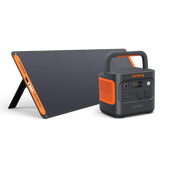
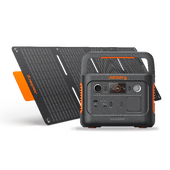
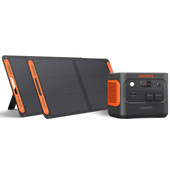
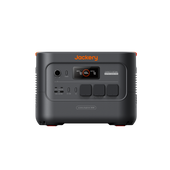
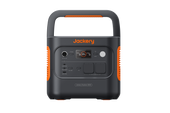
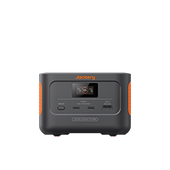
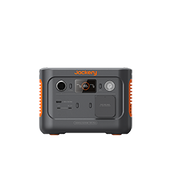
A Jackery Portable Power Station gives you a more flexible way to charge and run devices without depending entirely on fixed indoor sockets. They are sold with Europlug outlets featuring two round pins, which makes them more practical for continental European use.
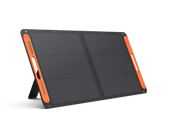
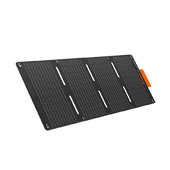
Another reason people choose the Europe version is that it can be recharged by sunlight when paired with Jackery SolarSaga panels. The solar generator system as a setup that captures sunlight with solar panels, converts that energy, stores it in the portable power station, and then supplies usable electricity for everyday devices.
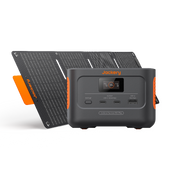
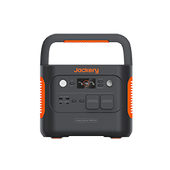
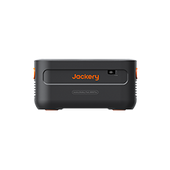
Jackery Explorer 3000 v2
The Jackery Explorer 3000 v2 is the higher-capacity option for people who need more serious power support. It has a 3072Wh capacity and 3600W output, along with 7200W peak power and 8 output ports. It is also equipped with Europlugs featuring two round pins, which suits continental European users better than a non-EU plug configuration.
This model makes sense for longer trips, heavier power needs, and situations where several devices may need to run at once. It also supports several charging methods, including solar input up to 1000W max, and charging options such as wall charging, solar charging, car charging, and AC+DC charging.

3072Wh Capacity, 3600W Output
Engineered for Off-grid & home power needs, this New Explorer 3000 v2 delivers 3,072Wh capacity with 3,600W pure sine wave output (7,200W surge) – enough to run kettles, power tools and other outdoor electrical appliances. It features 3*230V~13A UK sockets, 2*100W USB-C (for laptops), 2*18W USB-A, and a 12V Car Port to simultaneously charge appliances, electronics and camping gear.
Portable Power Solution for Camping, RV, Motorhome
The Jackery 3000 v2 provides the ideal power solution for RV camping, ensuring you can run essential appliances like a mini-fridge, a portable heater, and charge devices like smartphones and laptops without worry. With 3600W output and multiple ports, it offers uninterrupted power for your outdoor needs, giving you freedom and flexibility wherever your journey takes you.
47% Smaller – Power Uncompromise
Delivers a massive 3072Wh while being 47% more compact and 43% lighter than similar models—easy to store at home or pack in your car for off-grid adventures.
Built with advanced CTB (Cell-to-Body) tech—also used in EVs—for a stronger, more compact design. With inverter and PV combined, and battery cells built into the base, it boosts space efficiency by 14% (vs. Explorer 3000 Pro) and enhances durability for safer travel.
Long-Lasting LiFePO4 Battery
Enjoy up to 4,000 charge cycles with advanced LiFePO4 cells — delivering 10 years of reliable power for everyday and emergency use. With patented low self-discharge tech, the unit retains up to 95% charge after a full year in storage - always ready when you need it.
Stay powered during outages with built-in UPS support—switches in under 20ms to keep essentials like lights and fridges running. Combined with passthrough charging, it’s a dependable emergency power solution.
|
Features of Jackery Explorer 3000 v2 |
|
|
Capacity |
3072Wh |
|
Cell Chemistry |
LiFePO4 4000 cycles to 70%+ capacity |
|
Weight |
27kg (59.5 lbs) |
|
Dimension |
41.6 x 32.5 x 30.5 cm (16.4 x 12.8 x 12 in) |
|
Operating Temperature |
Charge: 0°C~45°C (32°F~113°F) Discharge: -15°C~45°C(5°F~113°F) |
|
Output Ports |
AC Output 3 Ports, 230V~ 50Hz, 16A Max USB-A Output 2 Ports, 18W Max, 5-6V⎓3A, 6-9V⎓2A, 9-12V⎓1.5A USB-C Output 2 Ports, 100W Max, 5V⎓3A, 9V⎓3A, 12V⎓3A, 15V⎓3A, 20V⎓5A Car Port 12V⎓10A |
|
Input Ports |
AC Input 220V-240V~ 50Hz, 10A Max, L+N+PE DC Input 2 x DC 8mm Ports: 12-16V⎓8A Max, Double to 8A Max; 16-60V⎓12A Max, Double to 24A/1000W Max |
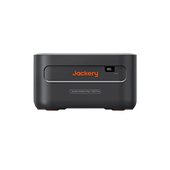
Jackery Explorer 2000 v2
The Jackery Explorer 2000 v2 is a more compact option, but it still offers substantial power for travel and backup use. It provides 2042Wh capacity and 2200W output, and the product is sold in an EU plug version. It is the lightest and smallest 2kWh LiFePO4 power station in its class, which makes it easier to carry and more travel-friendly for people who want strong output without moving up to a larger 3kWh unit.

2042Wh Capacity, 2200W Output
The Jackery Explorer Portable Power Station 2000 v2 delivers an impressive 2042Wh capacity and 2200W output, capable of powering most of your household appliances. It also features 2*AC outlets, 1*USB-A 18W, and 2*USB-C ports (100W + 30W), allowing you to charge multiple devices like phones and laptops simultaneously.
Reliable Power Supply for Camping, RV or Motorhome
Explorer 2000 v2 delivers reliable power for your RV camping trips, allowing you to seamlessly operate essential appliances like portable refrigerators, microwaves, and coffee makers. Say goodbye to frequent recharging and power limitations, ensuring a more comfortable and hassle-free adventure.
Travel-Ready for Your Next Adventure
Introducing the world’s first 2kWh LiFePO4 power station with advanced EV-grade CTB (Cell to Body) Structure technology⁵, designed to be lighter and more compact at just 17.5kg — about the weight of a suitcase. With a foldable handle for easy carrying, it’s the perfect power solution for road trips, camping, and off-grid living.
Fast Charging in Less 1 Hour
With Emergency Super Charge Mode, easily activated via the Smart App, the power station charges from 0% to 80% in just 52 minutes—perfect for when you need power in a hurry. Even in regular AC charging mode, a full charge takes only 103 minutes. You need activate or deactivate the emergency charge function through the Jackery app.
|
Features of Jackery Explorer 2000 v2 |
|
|
Capacity |
2042Wh |
|
Cell Chemistry |
LiFePO4 4000 cycles to 70%+ capacity |
|
Weight |
17.5 kg (38.6 lbs) |
|
Dimension |
33.5 × 26.4 × 29.2 cm (13.2 × 10.4 × 11.5 in) |
|
Operating Temperature |
Charge: 0°C~45°C (32°F~113°F) Discharge: -10°C~45°C (14°F~113°F) |
|
Output Ports |
AC Output 2 Ports, 230V~ 50Hz, 2200W nominal power, 4400W peak power USB-A Output 1 Port, 5-6V⎓3A, 6-9V⎓2A, 9-12V⎓1,5A USB-C Output 2 Ports, 30W Max, 100W Max Car Port 12V⎓10A |
|
Input Ports |
AC Input 220-240V ~ 50Hz, 10A Max DC Input 2 Ports, 11-16V⎓8A Max, Double to 8A Max; 16-60V⎓12A, Double to 21A/400W Max |
FAQs
The following are frequently asked questions about the European standard plug.
1. Is the EU plug 110 or 220?
The plug itself is not 110V or 220V. In most of Europe, the power supply is 230V / 50Hz, so people often loosely say “220V”, but the modern standard is generally 230V.
2. Is the EU plug the same as Type C?
Not always. People often use “EU plug” to mean the common two-round-pin Type C Europlug, but Europe also uses other plug types, including Type E, Type F, and Type G, depending on the country.
3. What happens if I plug 110V into 220V?
If a device is designed only for 110V and you plug it into a 220–230V supply without a converter, it can overheat, fail, or be permanently damaged. If the label says 100–240V, it is usually dual voltage and normally only needs the correct adapter.
4. Does Europe use 220V?
Yes, in everyday language many people say 220V, but across most of Europe the standard supply is 230V.
Final Thoughts
Understanding the European standard plug can make travel across Europe much easier. While many countries share similar two-pin systems, Europe does not use just one single plug type, which is why it helps to check socket formats, voltage requirements, and adapter needs before you go.
For everyday travel, the key is simple: know your destination, check whether your device supports 230V, and bring the right adapter or converter if needed. If you want more flexibility beyond hotel rooms or indoor wall sockets, a portable power solution such as a Jackery Portable Power Station can also make charging more convenient, especially when travelling, camping, or spending time outdoors.


