



























Vehicle to Grid (V2G) technology enables electric vehicles (EVs) to export power back to the grid or home, theoretically turning cars into massive batteries on wheels. While European homeowners increasingly view EVs as a path to energy independence, the reality often falls short of expectations. Most EVs currently lack the bidirectional hardware or software required to export power reliably to a home. Furthermore, regulatory fragmentation across European borders creates significant uncertainty regarding connection rules.
Owners also face battery anxiety, fearing that frequent discharge cycles for home backup will accelerate degradation and void vehicle warranties. While an EV battery is large, most setups provide only hours of essential power, not the continuous multi-day backup required during severe weather events. This guide clarifies vehicle to grid capabilities, exposes the current limitations, and outlines reliable backup alternatives for true energy resilience.
The Promise and Reality of Vehicle to Grid in Europe
Bidirectional energy flow allows EVs to discharge electricity back to the grid or a home, but the specific application determines the hardware required. Terminology matters, as not all bidirectional charging is the same:
- V2G (Vehicle-to-Grid): Exports energy to the utility grid to balance supply and demand, often generating revenue.
- V2H (Vehicle-to-Home): Powers the home during outages or offset peak tariffs. This requires specific islanding hardware to disconnect from the grid safely.
- V2L (Vehicle-to-Load): A simple socket on the car allows you to plug in devices directly, like a laptop or kettle.
The reality is that vehicle to grid technology is primarily designed for grid services—such as frequency response—rather than serving as an indefinite home backup generator.
Adoption of Vehicle to Grid in Europe
V2G adoption varies wildly across the continent based on local regulatory frameworks. The UK, Netherlands, and Denmark lead with active pilots and supportive frameworks, while other nations lag significantly in regulation. Local Distribution System Operators (DSOs) often enforce strict grid codes that prevent unauthorized export or islanding, making legal installation difficult in many regions. Consequently, market maturity remains low; most available programs focus on fleet aggregation for commercial use rather than individual household resilience.
Technical and Infrastructure Realities
Bidirectional charging requires specific inverters often missing from standard home chargers, meaning implementation involves more than just plugging in your car. Hardware gaps remain a primary hurdle because standard EV chargers are typically unidirectional.
Standardization is improving, with reliance on ISO 15118 for secure communication increasing, but it is not yet universal across all manufacturers. Homeowners also face efficiency losses. Converting DC power from the battery to AC for the home, and potentially back again, incurs significant energy loss. Finally, installation hurdles are steep, requiring specialized bidirectional chargers and often lengthy utility approval processes for grid connection.
Vehicle Compatibility Limitations
Only a specific subset of Vehicle-to-grid cars supports bidirectional AC export, meaning not every EV can power a house. Historically, the CHAdeMO connector led V2G capabilities (common in older Nissan Leafs), while the European standard CCS is catching up but requires updated protocols to function reliably. Even if the hardware exists, firmware locks often prevent usage. Some vehicles have the physical capability locked via software, pending future manufacturer updates.
Regulatory, Market, and Cost Barriers
Policy lag creates regulatory barriers regarding double-taxation on energy and feed-in tariffs, which remain unresolved in many European regions. Bureaucracy often moves slower than technology. Interconnection rules can be a nightmare; getting permission to push power back to the grid is often bureaucratic and slow. Additionally, utilities require strict cybersecurity protocols for any device controlling grid loads, adding another layer of compliance complexity.
Financial Implications and Costs
High upfront costs for bidirectional chargers often outweigh revenue from grid services. The investment for bidirectional chargers makes them significantly more expensive than standard smart chargers. A proper Vehicle to grid cars cost analysis must include expensive wiring upgrades and transfer switches required for safe operation.
ROI uncertainty further complicates the decision. Revenue generated from grid balancing services often fails to offset the premium paid for V2G hardware. There are also hidden costs to consider, specifically the potential impact on vehicle resale value due to increased battery cycle counts recorded by the vehicle's computer.
Battery Degradation and Operational Practices
Frequent deep discharging for grid support accelerates the chemical aging of battery cells, impacting the vehicle's lifespan. Cycle life concerns are valid; using your car to power your house adds wear beyond standard driving. You must also check if your manufacturer’s warranty covers non-driving discharge cycles, as some explicitly void coverage for this type of usage.
To mitigate these risks, experts recommend shallow cycling—limiting discharge depth (e.g., never dropping below 50%) to preserve battery health. Smart scheduling is also critical; systems should only export during peak pricing windows rather than providing continuous baseload support.
Real-World Use Cases and Lessons
Grid balancing remains the most viable use case over home backup, according to current data. Aggregated fleets stabilize frequency effectively, providing valuable utilities rather than individual homeowners. For personal use, V2H can serve as short-term backup to bridge gaps of 2–4 hours but struggles with multi-day outages due to energy limits and the need to reserve range for driving.
Solar integration offers a middle ground. Smart charging (V1G)—timing your charge when solar production is high—often yields better financial returns than full V2G exports. The core lesson is clear: treat the EV as a mobility asset first and a power asset second.
Technical Documentation Resources
You must consult technical resources for detailed specifications regarding bidirectional capabilities. Always review the official Vehicle-to-grid technology PDF from your specific EV manufacturer to confirm capabilities. Standard documentation regarding ISO 15118 provides the necessary communication protocol specifications. Additionally, download local DSO connection guides to understand the specific safety requirements for your region.
Practical Recommendations for Home Resilience
Assess whole-home backup needs versus critical appliance support before attempting to use your EV for power. Determine if you require a whole-home backup or just support critical appliances. Check compatibility by verifying that your specific EV model and charger support bidirectional energy flow.
For many, a hybrid approach is best. Use V2L (the plug socket in the car) for small loads during emergencies rather than attempting full V2H integration. However, for guaranteed power, reliability focus is key: separate your backup system from your mobility vehicle.

Complementary Backup Power Solutions
Dedicated storage solutions eliminate single points of failure inherent in relying solely on a vehicle. Stationary or portable batteries offer dedicated cycles without impacting car warranties. Portability is another advantage; unlike an EV tethered to a driveway, portable power stations can move to where power is needed, such as a bedroom or kitchen. They also offer ease of use, requiring no complex grid codes, permits, or bidirectional charger installations.
Understanding how common power outages are in Europe is essential for assessing specific risks and determining the right backup capacity.
Recommended Portable Solutions
For robust energy resilience that doesn't compromise your vehicle, dedicated portable power stations are the superior choice.
For Essential Devices (Router, Laptop, Lights)
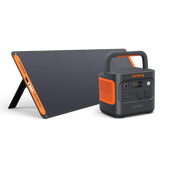
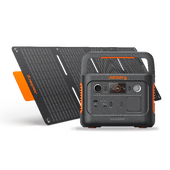
Jackery Explorer 1000 v2 Portable Power Station
- Capacity: 1070Wh LiFePO4 battery ensures safety and longevity (4000 cycles).
- Output: 1500W AC output handles essentials like fridges and medical devices.
- Speed: Emergency Super Charge (0-100% in 1 Hour) ensures readiness.
- Portability: Compact design fits easily in apartments or vehicles.
Jackery Explorer 1000 v2 is ideal for keeping communication lines open and food fresh during short to medium outages. The unit provides reliable power without the installation complexity of V2G systems.
For High-Load Appliances (Heaters, Tools, Coffee Makers)
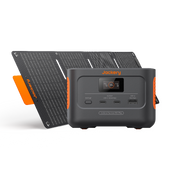
Jackery Explorer 2000 v2 Portable Power Station
- Capacity: 2042Wh offers extended runtimes for larger households.
- Power: 2200W output (Surge 4400W) runs high-wattage appliances effortlessly.
- Reliability: UPS function (<20ms switch) keeps devices running instantly during outages.
- Quiet: Operates under 30dB, making it suitable for indoor use during storms.
Jackery Explorer 2000 v2 provides the power necessary to run space heaters or kitchen appliances, bridging the gap between comfort and survival. When building your home power backup system, high-capacity units like this generator offer a plug-and-play alternative to complex vehicle integration.
Conclusion — Realistic Expectations
Vehicle to grid technology is evolving but is not yet a plug-and-play home backup solution for most Europeans. While promising for grid stabilization, mobility priority must remain the focus; relying solely on your car for power risks leaving you stranded with a flat battery when you need to evacuate or travel.
The best practice for true resilience is a combination of smart EV charging for mobility and a dedicated Jackery Explorer 1000 v2 or Jackery Explorer 2000 v2 for home power. Audit your energy needs, check local regulations, and invest in reliable, independent backup to ensure your home stays running regardless of the state of your car battery.
Integrating renewables requires understanding solar energy household battery backup options to maximize independence.
Frequently Asked Questions
Can V2G reduce my electricity bill significantly?
V2G revenue opportunities are often limited by market conditions, regulatory frameworks, and the high cost of equipment, meaning savings rarely offset the initial investment quickly.
What specific EV models currently support full V2H functionality?
You should consult an up-to-date list of V2H-compatible vehicle models from your local utility or review available power backup solutions, as capabilities vary by firmware version and region.
How does V2G impact my EV's warranty beyond battery degradation?
Many warranties contain clauses that may void coverage for non-driving wear on power electronics or inverters if used for unauthorized grid export.
Is V2G a better investment than rooftop solar for energy independence?
No, a dedicated home solar power system offers better financial returns and true energy generation, whereas V2G is primarily a storage and balancing mechanism.
What are the cybersecurity risks associated with connecting my EV to the grid?
Bidirectional connections introduce data privacy and security vulnerabilities, as hackers could potentially manipulate charging loads or access vehicle data through the grid network.


