






















A road trip through Europe can feel completely different from one border to the next. In one day, you might drive smooth motorways through France, winding mountain roads in Austria, or narrow coastal routes in Croatia, all with different speed limits, toll systems, parking rules, and driving habits to keep in mind.
From road conditions and local driving rules to route planning, packing, and staying powered on the move, it is designed to help you travel with more confidence.
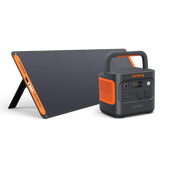
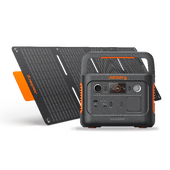
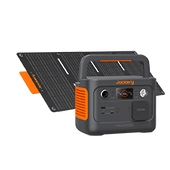
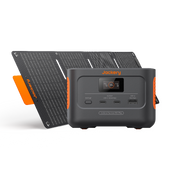
If you want a journey that balances freedom, scenery, and everyday convenience, a well-prepared road trip in Europe can be one of the best ways to see more in your own time. We will also highlight how a Jackery Solar Generator can be useful on road trips.
|
Key Takeaways: |
|
Why Go on a Road Trip Through Europe?
A road trip through Europe has a kind of freedom that few other holidays can match. You are not tied to one city, one hotel, or one timetable. You can start the morning in a vineyard region, stop for lunch in a medieval town, and end the day beside a lake, in the mountains, or on the coast. That sense of movement is part of the appeal.
The landscapes change quickly, yet each change feels meaningful. Alpine passes, Atlantic cliffs, Mediterranean roads, forest routes, rolling countryside, and historic villages can all be part of the same wider journey. Even the differences between countries add to the experience.
Languages, food, architecture, local customs, and road culture shift as you cross borders, so the trip itself becomes more than just getting from one place to another.
Road Conditions and Driving Laws You Must Know
Driving across Europe is usually straightforward, but it rarely feels the same from one country to the next. In general, major motorways and main intercity roads are well maintained, especially in Western and Central Europe, while rural roads, mountain passes, island roads, and older regional routes can be narrower, slower, and more uneven.
In some areas you may also run into steep gradients, sharp bends, cobbled town centres, seasonal snow, or roadworks during the summer travel period. That is why a route that looks short on the map can still take longer than expected in practice.
Europe does not operate under one single driving code. There are shared standards, but traffic laws still vary by country. Speed limits, toll systems, motorway stickers or vignettes, low-emission zone requirements, winter equipment rules, parking regulations, and rules on items you must carry in the vehicle can all change when you cross a border.
Seat belts are mandatory, children must use suitable child restraints, and using a mobile phone while driving without hands-free equipment is forbidden across EU countries.
Beyond that, drivers should be prepared for common practical differences. Some countries require or strongly expect equipment such as a warning triangle, reflective vest, first-aid kit, or winter tyres in certain seasons or conditions. Some countries rely heavily on toll booths, others use electronic tolling, and some require a vignette or similar road-use sticker for certain roads.
What Documents Do I Need for a European Road Trip?
The exact paperwork depends on where you live, where you are driving, and whether you are using your own car or a hire car, but there are a few core documents nearly every driver should have with them. At a minimum, you should carry a valid driving licence, your vehicle registration document, and proof of motor insurance.
You also need the travel documents required for crossing borders. For EU nationals travelling within the EU and Schengen area, that usually means a valid passport or national ID card. The document must be valid on the day of travel, and children need their own passport or ID card as well.
If you are travelling from the UK or another non-EU country, the paperwork can be a bit more specific. Drivers to carry their driving licence, certificate of motor insurance, and original vehicle log book, and a Green Card is no longer required for travel in the EEA and several nearby countries.
The Best 8 Road Trip Routes in Europe
Europe has no shortage of scenic drives, but the best ones are not all trying to do the same thing. Some are dramatic and mountainous, some are built around coastlines, and some are more about villages, food, or culture than pure driving challenge.
For this guide, I have chosen eight routes that fit the countries you asked for and also show the range of what a European road trip can feel like, from Alpine passes in France to coastal touring in Ireland and Wales.

France: Route des Grandes Alpes
The Route des Grandes Alpes is one of the most iconic drives in France, running from Thonon-les-Bains near Lake Geneva to Nice on the Mediterranean. It is roughly 720 km long, crossing some of the highest and most famous passes in the French Alps. This is not a fast road trip, and that is exactly why it works so well. The route is all about height, scenery, and the feeling of moving through serious mountain country rather than simply covering distance.
What makes this route special is the constant change in landscape. You move from alpine lakes and green valleys into sharper, higher, more dramatic terrain, then gradually descend towards the Riviera. Along the way, the route takes in famous mountain areas and passes such as Col de l’Iseran and Col du Galibier, with views that feel earned rather than staged.
Distance: about 720 km
Duration: around 5 to 7 days for a comfortable trip
Best Time to Go: June to September, when high passes are typically open
Starting Point: Thonon-les-Bains
Highlights / Best Stops: Col de l’Iseran, Col du Galibier, Vanoise area, Barcelonnette, Nice
Why I Love It: big mountain scenery, memorable driving roads, and a brilliant sense of journey from lake to sea.
Germany: Romantic Road
Germany’s Romantic Road is the classic choice for travellers who want a road trip built around history, fairytale towns, and easy-to-follow touring. The official route runs from Würzburg to Füssen and covers about 460 km, linking 29 towns. It is far less about wild remote driving than the French Alps and much more about atmosphere.
The beauty of this route is in its rhythm. You drive a manageable stretch, arrive in a place with towers or half-timbered streets, explore for a few hours, then carry on to the next one. Würzburg, Rothenburg ob der Tauber, Dinkelsbühl, Augsburg, and Füssen each bring something a little different, while Neuschwanstein Castle near the southern end gives the whole route a storybook finish. It is one of the easiest road trips in Europe to enjoy without overplanning every detail.
Distance: about 460 km
Duration: 3 to 5 days
Best Time to Go: late spring to early autumn
Starting Point: Würzburg
Highlights / Best Stops: Rothenburg ob der Tauber, Dinkelsbühl, Augsburg, Füssen, Neuschwanstein Castle
Why I Love It: relaxed driving, beautiful towns, and a route that feels charming from start to finish
Spain: Picos de Europa Road Trip
For Spain, I would choose a Picos de Europa road trip over a more predictable southern coastal drive. The national park sits across Asturias, Cantabria, and León in northern Spain, and it offers a very different side of the country: green valleys, limestone peaks, deep gorges, and mountain villages rather than dry plains or big resort areas. Spain’s official tourism site and the national park guidance both make clear that this is a region defined by dramatic landscapes and winding access roads.
This road trip works best as a loop rather than one fixed line. A strong version starts around Santander or Cangas de Onís, then includes Potes, Fuente Dé, the Valdeón area, and the Covadonga side of the park. Distances are not huge, but mountain roads slow everything down in the best possible way.
Distance: roughly 300 to 450 km depending on your loop
Duration: 4 to 7 days
Best Time to Go: May to October
Starting Point: Santander or Cangas de Onís
Highlights / Best Stops: Potes, Fuente Dé, Cangas de Onís, Covadonga, Lakes of Covadonga, mountain viewpoints
Why I Love It: it feels wild, green, and less obvious than many Spanish road trips
Ireland: Wild Atlantic Way
The Wild Atlantic Way is the giant of Irish road trips. Fáilte Ireland and route guides describe it as around 2,500 to 2,600 km long, stretching from the Inishowen Peninsula in Donegal down to Kinsale in County Cork. It is one of Europe’s great coastal drives, and it is not really about rushing from one end to the other. It is about strings of peninsulas, sea cliffs, beaches, small towns, and weather that can shift the whole mood of the drive in an hour.
Because it is so long, most people treat it as either a major multi-week trip or break it into sections. Donegal, Connemara, Clare, Kerry, and West Cork all have their own identity, so the route never feels repetitive even though it remains consistently coastal.
Distance: about 2,500 to 2,600 km
Duration: 2 to 3 weeks for the full rout
Best Time to Go: May to September
Starting Point: Inishowen Peninsula, Donegal
Highlights / Best Stops: Donegal coast, Connemara, Cliffs of Moher, Dingle Peninsula, Ring of Kerry, Kinsale
Why I Love It: huge variety, Atlantic scenery, and that unmistakable feeling of the edge of Europe

Netherlands: IJsselmeer and Old Dutch Towns Route
The Netherlands is not the place for a dramatic mountain road trip, but it is excellent for a slower route built around water, dikes, old harbour towns, and easy driving. For that reason, an IJsselmeer road trip is one of the best choices.
While the country’s tourism marketing often focuses on cities and cycling, the broader IJsselmeer area gives you classic Dutch scenery in a road-trip format: historic waterside towns, polders, causeways, ferries, and a landscape shaped almost entirely by water management.
A practical route can start in Amsterdam and loop through Marken, Volendam, Edam, Hoorn, Enkhuizen, the Afsluitdijk area, and parts of Friesland before returning via Flevoland or central Holland. It is less about “must-see” landmarks and more about the overall feel of the journey.
Distance: about 250 to 350 km, depending on your loop
Duration: 3 to 5 days
Best Time to Go: April to September
Starting Point: Amsterdam
Highlights / Best Stops: Marken, Volendam, Edam, Hoorn, Enkhuizen, Afsluitdijk, Friesland towns
Why I Love It: easy driving, distinctive landscapes, and lovely small-town stops without long daily distances
Scotland: North Coast 500
The North Coast 500 is easily Scotland’s most famous road trip, and for good reason. VisitScotland and the official NC500 site describe it as a 516-mile route, or roughly 830 km, usually driven over at least 5 to 7 days. Starting and ending in Inverness, it loops around the Highlands and combines coast, mountains, lochs, beaches, and some of the most remote-feeling roads in Britain.
The route has enough variation to keep the whole trip interesting. The east side feels gentler at first, but the west and north become more dramatic, with famous stretches near Applecross, Torridon, Assynt, and Durness. White-sand beaches, rugged passes, and constantly changing weather all add to the experience.
Distance: 516 miles / about 830 km
Duration: at least 5 to 7 days
Best Time to Go: May, June, or September often work best
Starting Point: Inverness
Highlights / Best Stops: Bealach na Bà, Applecross, Torridon, Ullapool, Durness, John o’ Groats area
Why I Love It: it feels expansive, dramatic, and unmistakably Highland from the first day
Italy: Amalfi Coast Drive
Italy has several great road-trip regions, but the Amalfi Coast remains one of the most iconic short scenic drives in Europe. The famous coastal road, often referred to as the SS163 Amalfitana, links a string of towns along cliffs above the Mediterranean and creates the kind of journey people imagine when they picture a classic Italian coastal escape.
This is a route where the actual driving is part of the story. The road curves above the sea, towns appear stacked into the cliffs, and viewpoints arrive one after another. A typical road trip starts around Sorrento or Salerno and takes in Positano, Amalfi, and Ravello, with optional detours inland.
Distance: around 50 to 80 km for the core coastal route, depending on start and detours
Duration: 2 to 4 days
Best Time to Go: late spring or early autumn
Starting Point: Sorrento or Salerno
Highlights / Best Stops: Positano, Amalfi, Ravello, coastal viewpoints, hill villages
Why I Love It: short distance, huge visual reward, and one of the most distinctive coastal drives in Europe
Wales: The Coastal Way
For Wales, the strongest choice is The Coastal Way, one of The Wales Way national touring routes. Visit Wales describes it as a 180-mile route, or about 290 km, running along Cardigan Bay. It is a road trip built around sea views, beaches, harbour towns, mountains nearby, and a quieter kind of beauty than some of Europe’s more famous drives.
The route typically runs from around Aberdaron in the north down towards St Davids in the south, though it is flexible rather than rigid. That flexibility is part of the appeal. You can stop in coastal towns, explore beaches, detour into Eryri or nearby hills, and build a trip that feels personal rather than prescribed.
Distance: 180 miles / about 290 km
Duration: 3 to 5 days
Best Time to Go: late spring to early autumn
Starting Point: Aberdaron or northern Cardigan Bay
Highlights / Best Stops: Barmouth, Cardigan Bay, Aberaeron, New Quay, St Davids, beaches and castle stops
Why I Love It: beautiful coast, a more relaxed pace, and a route that never feels overdone
What Should You Know Before You Go?
A European road trip gets much easier once you stop thinking of Europe as one single driving area. The roads connect well, but the rules do not stay identical from country to country. Speed limits change, toll systems change, some places use low-emission stickers, and document rules can differ depending on whether you hold an EU licence, a UK licence, or a non-EU licence.
If you are travelling from the UK, you normally do not need an IDP for the EU if you have a UK photocard licence, though paper licences and some Crown Dependency licences can still trigger extra requirements.
UK drivers still need valid vehicle insurance for the EU, but they no longer need to carry a Green Card for EU countries including Ireland. EU travellers should still check the exact level of cover on their policy, especially for theft, damage, breakdown help, or multi-country use.
Driving Rules in Different European Countries
|
Country |
Driving Side |
General Speed Limits for Cars |
Tolls / Vignettes |
Licence / IDP Basics |
Useful Road-Trip Note |
|
France |
Right |
Usually 50 km/h urban, 80 km/h on many non-urban roads, 110 km/h on dual carriageways, 130 km/h on motorways in dry weather; motorway limits drop in wet conditions. |
Toll motorways are common. No general vignette for ordinary road use, but some cities require a Crit’Air emissions sticker. |
EU licences are valid. UK photocard holders generally do not need an IDP for France. |
One of the easiest countries for long-distance driving, but toll costs can add up quickly. |
|
Germany |
Right |
Usually 50 km/h urban, 100 km/h on non-urban roads, and on many Autobahn sections there is no fixed general maximum, though 130 km/h is the recommended speed. |
No general passenger-car vignette system. Some city low-emission zones require an Umweltplakette sticker. |
EU licences are valid. UK photocard holders do not normally need an IDP for short visits. |
Excellent roads overall, but urban environmental rules matter more than motorway tolls for most tourists. |
|
Spain |
Right |
Usually 20 to 50 km/h in urban areas depending on street layout, 90 km/h on conventional roads, 120 km/h on motorways and dual carriageways. |
No vignette system. Some motorways and certain bridges or tunnels are tolled, though most roads are toll-free. |
EU licences are valid. UK photocard holders do not usually need an IDP for Spain. |
Good motorway network, but it is worth checking whether your route uses tolled autopistas or free alternatives. |
|
Ireland |
Left |
Usually 50 km/h urban, 80 km/h regional roads, 100 km/h national roads, 120 km/h motorways. |
Ireland has toll roads, including the electronic M50 toll around Dublin. No vignette system. |
EU licences are valid in Ireland. UK drivers do not need an IDP for Ireland. |
The left-hand traffic pattern matters most for visitors, especially on rural roads and roundabouts. |
|
Netherlands |
Right |
Usually 50 km/h urban, 80 km/h on other roads, 100 km/h on main roads, 130 km/h on motorways where signed. |
No general vignette for normal car travel. Limited toll charging applies on specific routes such as the A24, and some crossings may have separate charges. |
EU licences are valid. UK photocard holders do not usually need an IDP. |
Easy driving and clear roads, but the country is strict about lane discipline, cyclists, and urban traffic rules. |
|
Scotland |
Left |
Usually 30 mph on restricted roads, 60 mph on single carriageways, 70 mph on dual carriageways and motorways. |
No vignette system. Scotland itself is not defined by toll roads, though toll roads and crossings exist elsewhere in the UK. |
EU visitors can usually drive in the UK on their home licence for visits; UK drivers of course use their normal UK licence. |
The main practical issue is not tolling but road type: single-track roads, passing places, and weather in Highland areas. |
|
Italy |
Right |
Usually 50 km/h in built-up areas, 90 km/h on secondary roads, 110 km/h on main roads, 130 km/h on motorways. |
Motorway tolls are common and widely used. No general vignette system for ordinary car travel. |
EU licences are valid. UK photocard holders do not usually need an IDP for Italy. |
Expect toll booths, narrower town streets, and plenty of local restrictions in historic centres. |
|
Wales |
Left |
Usually 20 mph on restricted roads in built-up areas, 60 mph on single carriageways, 70 mph on dual carriageways and motorways. |
No vignette system. Wales is not mainly associated with toll roads, though UK toll facilities still exist elsewhere in the wider network. |
Same UK rules as Scotland. |
The biggest difference from Scotland is the urban default: in many built-up areas in Wales, think 20 mph unless signs say otherwise. |
Tolls are one of the biggest practical differences. France and Italy rely heavily on toll motorways, Spain has some toll roads but no vignette system, Ireland has toll roads including the barrier-free M50, the Netherlands does not have a general vignette for ordinary car travel but does have limited toll charging on routes such as the A24, and Germany is better known for low-emission zones than for passenger-car motorway tolling.
In Scotland and Wales, there is no general vignette system, but some toll roads, bridges, and tunnels still exist elsewhere in the wider UK network.

Driving Licence and International Permit Rules
For most European readers, the simplest rule is this: if you have a valid EU-issued driving licence, you can use it across the EU. A provisional licence is another matter, because provisional or temporary documents may not be recognised abroad in the same way.
For UK licence holders, the current GOV.UK guidance says you should carry your licence with you, and you do not need an IDP to visit and drive in the EU, Switzerland, Iceland, or Liechtenstein if you have a normal UK photocard licence.
Insurance, Tolls, and Vignettes: What Actually Affects Your Trip
The most useful way to think about this is by planning style. France and Italy are the countries where motorway tolls are most likely to shape your budget. Spain and Ireland can still involve tolls, but they are easier to avoid on many routes. The Netherlands, Scotland, and Wales are less about toll planning and more about local driving habits, urban restrictions, or route-specific charges. Germany often catches drivers out not through tolls, but through environmental access rules in cities.
Planning Your Ideal Europe Road Trips
The best European road trip is not always the longest or the most famous one. It is the one that matches the way you actually like to travel. Some people want a fast-moving route with several countries in one trip, while others would rather stay in one region, drive shorter distances, and spend more time in small towns, national parks, or coastal stops.

How to Choose the Best Route for Your Travel Style?
If you enjoy scenic driving for its own sake, mountain and coastal routes usually give the biggest sense of drama. That includes roads such as the Route des Grandes Alpes in France or the North Coast 500 in Scotland, where the road itself is a major part of the experience and weather, elevation, and road conditions shape the pace of the trip.
If you prefer culture, food, and town-hopping, a route like Germany’s Romantic Road or a slower Netherlands circuit makes more sense. These journeys are usually easier to drive, less tiring, and more flexible if you want long lunches, museum stops, or overnight stays in attractive historic towns.
What Is the Ideal Duration for a Road Trip: Weekend or Long Term?
A weekend road trip works best when you stay within one region and do not treat the car as a challenge in itself. In practice, that means picking one compact route or one base area rather than trying to cover too much.
A medium-length trip, around 4 to 7 days, is often the sweet spot for many European road trips. That is long enough to follow a recognisable route, build in scenic stops, and still have a bit of flexibility.
A longer road trip, from 10 days to three weeks, is the better choice if you want to cover a major route such as Ireland’s Wild Atlantic Way, combine more than one country, or include slower travel days.
Summer vs Winter: When Is the Best Time?
For most European road trips, late spring to early autumn is the easiest and most reliable travel window. Summer brings longer daylight hours, more open attractions, and better access to mountain and coastal routes. In fact, European Commission material on tourism seasonality notes that demand across Europe is generally highest in June, July, and August, which reflects how strongly summer still shapes travel patterns.
What to Pack for a European Road Trip
Packing for a European road trip is a little different from packing for a city break or a beach holiday. You are not just preparing for one destination. You are preparing for changing weather, different road rules, longer hours in the car, and the possibility of moving between several regions or countries in one journey.
A good packing list should make the trip easier, not heavier, so the goal is to bring what is genuinely useful without turning your boot into a storage problem.
European Road Trip Packing List:
- Travel Documents: passport or ID card, driving licence, insurance papers, registration documents, bookings
- Money and Payments: bank cards, some local cash, toll payment method
- Navigation: phone, charger, phone mount, offline maps, printed addresses
- Car Safety Items: warning triangle, reflective vest, first-aid kit, torch, tyre tools
- Clothing: layers, waterproof jacket, comfortable shoes, warm evening layer
- Food and Drink: snacks, water bottles, cool bag, picnic basics
- Toiletries: toothbrush, sunscreen, hand sanitiser, tissues, wet wipes
- Outdoor Extras: blanket, foldable chairs, picnic mat, swimwear if needed
- Tech: camera, power bank, cables, adapters, headphones
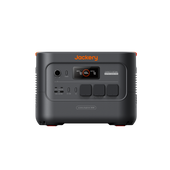
- Power Supply: Jackery Solar Generator for reliable outdoor charging on the road
In the end, the best packing strategy is simple: pack for comfort, weather changes, and road-day practicality. A European road trip feels far more enjoyable when the basics are easy to reach, the car stays organised, and your power supply is dependable enough to support the way you actually travel.
Jackery Solar Generators for Road Trips in Europe
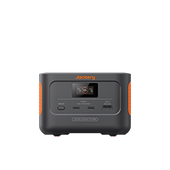
A European road trip often means long hours away from fixed power sources. Even if you are mainly staying in hotels, there are still plenty of moments when extra power makes the journey easier: charging phones during long drives, topping up cameras at scenic stops, or keeping small essentials ready when you are parked somewhere remote. That is why a portable solar generator can fit naturally into this kind of trip.
A Jackery Solar Generator works especially well for road trips because it supports the practical side of flexible travel. It gives you a portable power setup that can be recharged by solar, used across a range of everyday devices, and carried more easily than bulkier power solutions.
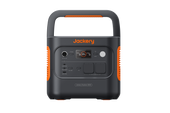
Jackery Solar Generator 500 v2
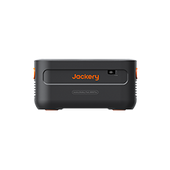
The Jackery Solar Generator 500 v2 is the stronger option for travellers who want a bit more flexibility and headroom on the road. Explorer 500 v2 is listed with 512Wh capacity and 500W rated output, it can deliver up to 1,000W peak power. It also includes two AC outlets, two USB-C ports, one USB-A port, and a 12V car socket, which makes it much easier to charge or run several travel essentials across the day.

Compact Power That Suits Irish Road Trips
The Jackery Solar Generator 500 v2 is a practical choice for road trips in Europe because it gives you useful portable power without taking up too much space in the car. With 512Wh capacity and 500W rated output, it is designed to cover everyday travel essentials such as phones, laptops, lights, and even a small fridge.
Easy to Carry and Store in the Car
Portability is one of its strongest features. The Explorer 500 v2 weighs only 5.7 kg and is described as one of the lightest and smallest portable power stations in its class, which makes it easy to lift with one hand and simple to store in a boot, campervan, or caravan.
Multiple Ports for Modern Travel Gear
The unit includes 2*AC outlets, 2*USB-C ports, 1*USB-A port, and a 12V car socket, which means you can charge several devices at the same time. That is especially helpful on the road. It is positioned as a strong option for weekend camping, overnight trips, and short-term travel use, which aligns well with many Ireland road trips that mix driving, sightseeing, and occasional overnight stops.
Smart Charging with Solar Priority
Green Energy First – The Explorer 500 v2 smartly prioritises solar when both solar panels and AC are connected, topping up with mains only when needed. Efficient, eco-friendly, and designed to cut your electricity costs.
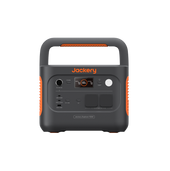
Jackery Solar Generator 240 v2
The Jackery Solar Generator 240 v2 is the lighter, simpler choice for travellers who want dependable power without carrying more than they need. It has 256Wh capacity and 300W output, and it weighs 7.94 lbs / 3.6 kg. It also is a compact model that can fit easily into a backpack-style setup, which immediately makes it attractive for short road trips, couples, solo travellers, and people using smaller vehicles.

Good Match for Everyday Travel Essentials
For many Europe road trips, the main need is not running heavy appliances all day, but keeping smaller essentials powered reliably. The Solar Generator 240 v2 is well suited to charging items such as phones, tablets, laptops, drones, and lights. It is a compact excursion and outdoor companion rather than a heavy-duty base unit.
Solar Charging Adds More Freedom on the Road
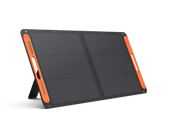
One of the main reasons to choose the solar generator version instead of only the power station is that it comes paired with a solar panel setup, giving you another way to recharge while travelling. The Solar Generator 240 v2 with a SolarSaga 40W Mini solar panel. You get more flexibility for campsites, scenic stops, and longer journeys where wall charging is not always convenient.
Multiple Charging Options Make It More Practical
The Explorer 240 v2 product information describes it as supporting several charging routes, including AC mains, 12V car adapter, and solar charging. That matters on a Europe road trip because you may recharge differently depending on the day — from the car while driving, from accommodation overnight, or from solar during outdoor stops.
FAQs
The following are frequently asked questions about the best road trip routes in Europe.
1. Are there toll roads in Europe?
Yes. Many European countries use tolls or similar road charges on some motorways, bridges, tunnels, or major routes, although the system varies by country. In the EU, both tolls and vignettes are part of the broader road-charging framework.
2. What is the longest road trip in Europe?
There is no single official “longest road trip in Europe,” because that depends on how you define the route. For a well-known named driving route, Ireland’s Wild Atlantic Way is often treated as one of the longest, at roughly 2,500 km.
3. What is the best road to drive in Europe?
There is no universal winner, but two of the most iconic choices are France’s Route des Grandes Alpes for mountain scenery and Scotland’s North Coast 500 for coastal and Highland landscapes. The better one depends on whether you prefer alpine driving or remote coastal touring.
4. Where to go in Europe for hidden gems?
Good hidden-gem ideas include Riquewihr in France, Parga in Greece, and quieter offbeat regional routes across Europe rather than only the biggest capitals. Smaller coastal towns, rural heritage areas, and lesser-known islands often make the most rewarding stops on a road trip.
Final Thoughts
A road trip through Europe can be as varied as you want it to be. You might be drawn to mountain passes in France, coastal drives in Ireland and Wales, historic towns in Germany, or sunlit roads in Spain and Italy. That variety is one of the biggest reasons European road trips feel so rewarding.
At the same time, the best trips are usually the ones that balance freedom with preparation. Understanding the road rules, checking the documents you need, planning for tolls and seasonal conditions, and choosing a route that matches your travel style all make the journey smoother.


