




















Living off-grid in Europe is no longer just a niche lifestyle choice for remote cabins or full-time van travellers. In 2026, it has become a practical option for people who want more control over their energy use, lower long-term household costs, or a simpler way of living. The real cost depends on where you live, how independent you want to be, and how much you need to spend upfront on essentials such as power, water, heating, land, transport, and daily living.
This guide shows the real costs of living off-grid in Europe, including breakdowns by country and the key expenses that shape your monthly and yearly budgets. It also compares off-grid living with conventional residential living.
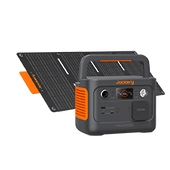
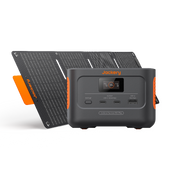
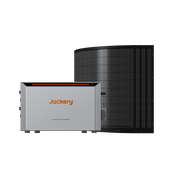
For people trying to build a more affordable setup, it is also worth considering practical power solutions, such as a Jackery Solar Generator, to make solar energy more accessible on a limited budget.
|
Key Takeaways: |
|
What Does Off-Grid Living in Europe Look Like?
Off-grid living in Europe usually means living with less reliance on the main public utility systems, especially electricity, gas, water, and sometimes sewage. For some people, that means a rural home with solar panels, battery storage, rainwater collection, wood heating, and a septic system. For others, it could mean a small cabin, a converted barn, a tiny house, or a camper-based lifestyle designed to keep monthly costs lower and daily living more self-managed.
Off-grid living is rarely all-or-nothing. Many European households sit somewhere in between. A home may be off-grid for power but still connected to a water supply, or it may use solar energy as the main source while keeping a backup generator or limited grid connection for winter.
Part of the growing interest comes from the wider pressure on household budgets across Europe. Eurostat reports that house prices in the EU rose by 53% between 2010 and 2024, while rents rose by 25% over the same period.
Housing, water, electricity, gas, and other fuels continue to take a large share of household spending, and electricity prices in Europe remain well above pre-2022 energy-crisis levels even after some stabilisation in 2025.
In the first half of 2025, average household electricity prices in the EU were €28.72 per 100 kWh, with large differences between countries, from around €10 in Hungary to €38 in Germany.
The benefits of off-grid living in Europe are not just about lifestyle. The first is cost control. While setup costs can be high, many people move off-grid to reduce recurring bills over time, especially electricity and heating costs. The second is energy independence. Producing and storing your own power can make daily life less vulnerable to price shocks, supply interruptions, or regional utility costs. The third is location freedom.
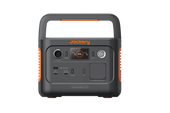
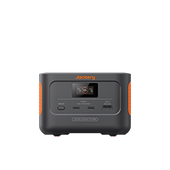
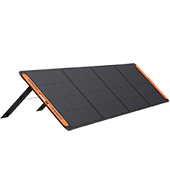
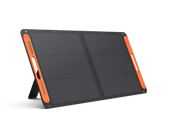
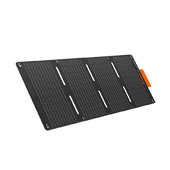
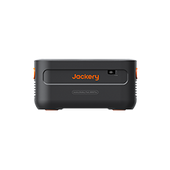
For people on a limited budget, a full fixed solar installation may not be the first step. A more accessible option can be a portable system such as a Jackery Solar Generator, which allows users to start using solar energy for essential appliances, tools, lighting, or backup power without committing immediately to a large and expensive off-grid build.

Cost of Living Off-Grid in Europe
The cost of living off-grid in Europe can vary from relatively modest to surprisingly high, depending on the type of property, the climate, and how independent the setup needs to be. A simple seasonal cabin or small tiny house with light power use can be far cheaper to run than a conventional home.
A fully independent house with solar power, battery storage, water systems, heating, wastewater treatment, and year-round comfort usually requires a much bigger upfront budget.
In general, the biggest difference between off-grid living and standard residential living is the shape of the spending. Conventional housing tends to spread the cost across monthly bills such as rent or mortgage payments, electricity, gas, water, and council or service charges. Off-grid living often reduces some of those recurring bills, but it shifts more of the burden into the initial setup. That means the lifestyle can become cheaper over time, but rarely feels cheap at the beginning.
For electricity alone, the pressure is easy to understand. In the first half of 2025, the average household electricity price in the EU was €28.72 per 100 kWh, while prices were much higher in some countries such as Germany, Belgium, and Denmark.
|
Main cost item |
Simplified Cost Range |
|
Solar system only |
€7,000–€30,000 |
|
Solar system + battery |
€13,000–€40,000 |
|
Borehole / well |
£8,000–£15,000 |
|
Septic tank / wastewater system |
€5,000–€12,000 |
|
Septic maintenance |
£225–£1,050 per year |
|
Portable entry-level backup option |
£1,799 |
Setup Costs
Setup costs are usually the hardest part of the budget because several systems have to work together. The power system is often the largest single investment.
- Electricity: Recent European market guidance shows that a residential solar system can vary widely by size and region, with rough system costs often falling in the range of €7,000 to €30,000 without storage and around €13,000 to €40,000 with storage. In the UK market, a complete off-grid solar setup is often quoted around £7,000 to £20,000, while a 5 kWh battery alone commonly adds several thousand pounds.
- Water and wastewater can add another major layer of cost. If the property does not have access to mains water, a borehole or well can become one of the most expensive site works, especially in rocky or deep-drilling areas. UK examples in 2025 commonly place domestic borehole drilling around £8,000 to £15,000, with shallow or easier sites costing less and difficult sites costing much more.
- Wastewater is another expense people often underestimate. Septic tank installation commonly falls around €5,000 to €12,000 in recent supplier guidance, while some UK installations can land closer to £8,000 to £12,000 depending on ground conditions, drainage requirements, and access for machinery.
- Heating also changes the budget. In a mild part of southern Europe, a smaller solar setup and efficient insulation may be enough for much of the year. In northern or mountainous regions, off-grid living often requires extra spending on wood stoves, LPG, diesel heating, or larger battery capacity to cover darker winters.
Many people in Europe start with a phased approach rather than building a complete off-grid system all at once. A portable unit such as a Jackery Solar Generator can help cover essential appliances, lighting, device charging, or backup needs while keeping the entry cost lower than a full fixed installation.
Running Costs
Once the system is installed, monthly living costs can drop sharply in some areas, but they do not disappear. Off-grid households still pay for food, transport, heating fuel, internet, maintenance, insurance, and in many cases land or property taxes. The difference is that utility bills are often lower, less predictable, or replaced by fuel and maintenance spending.
- Electricity costs may become much lower if solar covers most daily use, especially in sunnier regions. But winter backup still matters. Many off-grid households keep a generator, LPG backup, or occasional grid charging option for prolonged bad weather.
- Water can be cheap to use once a well or collection system is installed, yet pumps, filtration, water treatment, and repairs still create an ongoing cost. Wastewater systems also need servicing. Septic emptying is not constant, but it is not free either.
- Heating remains one of the most variable running costs. In southern Spain, Portugal, Greece, or coastal Croatia, heating demand can be fairly limited compared with Scandinavia, the Alps, or inland central Europe. A household that burns wood, buys pellets, or uses LPG will usually find that winter comfort is one of the biggest ongoing costs after food and transport.
- Transport is often overlooked in off-grid budgeting. Many off-grid homes are in rural areas, which means more driving for work, shopping, school runs, repairs, and healthcare. So while the home itself may avoid monthly utility bills, the lifestyle can raise fuel and vehicle costs instead.
Maintenance and Replacement Costs
The long-term cost of off-grid living is not just about what you spend to get started and what you spend each month. It is also about what wears out. Batteries age, inverters need replacing, pumps fail, filters clog, and roofing or insulation may need upgrades to keep the home efficient.

A Simple General Cost Range
For a basic off-grid lifestyle in Europe, people often try to keep initial setup lean by using a small structure, modest energy use, composting toilet solutions, and portable or semi-portable solar equipment. In that kind of setup, entry costs may stay in the low thousands to low tens of thousands of euros.
For a more comfortable full-time off-grid home, it is more realistic to expect setup costs in the tens of thousands, especially once solar panels, battery storage, water access, wastewater treatment, heating, insulation, and site work are all included. A more advanced rural property with full independence can easily move well beyond that.
Compare the Costs of Living Off-Grid in Different European Countries
There is no single official dataset that tells you the exact cost of living off-grid in each European country, because off-grid budgets depend on property type, land access, drilling, wastewater systems, heating needs, and how much battery storage you want.
So the most realistic way to compare countries is to look at the main cost drivers behind off-grid life: housing pressure, retail energy prices, climate, and how large the solar-and-storage system needs to be.
|
Country |
Cost level |
Modest Off-Grid Setup |
More Complete / Full-Time Setup |
|
Spain |
Lower-cost |
€18,000–€40,000 |
€40,000–€70,000 |
|
France |
Mid-range |
€22,000–€45,000 |
€45,000–€75,000 |
|
Germany |
Higher-cost |
€28,000–€55,000 |
€55,000–€90,000+ |
|
United Kingdom |
Higher-cost |
£22,000–£50,000 |
£50,000–£85,000 |
|
Netherlands |
Higher-cost |
€28,000–€55,000 |
€55,000–€90,000 |
|
Ireland |
Higher-cost |
€25,000–€50,000 |
€50,000–€85,000 |
Spain
Spain is usually one of the more affordable places in this group for off-grid living, especially in rural inland areas. The big advantage is climate. Stronger solar potential and generally milder winters can reduce how much battery capacity and backup heating you need, which helps keep both setup and running costs lower.
Spain’s household electricity price in the first half of 2025 was about €26 per 100 kWh, close to but slightly below the EU average range reported around €28.7, so avoiding grid use can still make financial sense over time.
A modest off-grid setup often lands around €18,000 to €40,000, while a more comfortable full-time setup with larger storage, water, and heating systems may sit around €40,000 to €70,000.
France
France tends to sit in the middle. In many rural parts of the country, land and older properties can still be more attainable than in the most expensive corners of western Europe, but site works, insulation upgrades, and regulatory requirements can still push costs up. France’s household electricity price in the first half of 2025 was about €27 per 100 kWh, which is near the EU average.
As a rough guide, a modest off-grid setup in France often falls around €22,000 to €45,000, while a more complete year-round system may reach €45,000 to €75,000. Running costs are often manageable, but colder regions still need a proper heating budget.
Germany
Germany is usually one of the more expensive off-grid options in this comparison. The country had the highest household electricity prices in the EU in the first half of 2025 at €38.35 per 100 kWh, which makes self-generation attractive, but it also reflects a generally expensive energy environment. German households spend one of the highest shares of disposable income on housing in the EU, and rural areas still show a notable housing cost burden.
A modest full-time setup can easily start around €28,000 to €55,000, while a more comfortable system may run €55,000 to €90,000 or more.
United Kingdom
The UK is also on the higher-cost side, although costs vary sharply between regions. The official Ofgem price cap for a typical dual-fuel household fell to £1,641 per year for April to June 2026, with electricity charged at 24.67 pence per kWh under the cap, while average UK private rents reached £1,368 per month in December 2025.
A modest off-grid setup in the UK often falls around £22,000 to £50,000, while a more robust full-time setup can reach £50,000 to £85,000.
Netherlands
The Netherlands is usually expensive for off-grid living, not because off-grid systems are impossible, but because land and housing costs are high, the climate is less forgiving than southern Europe, and household gas prices were among the highest in Europe in the first half of 2025. Even if an off-grid household reduces dependence on grid electricity and gas, heating and weather resilience still matter.
In practice, a modest off-grid setup often lands around €28,000 to €55,000, while a more complete full-time system can reach €55,000 to €90,000.
Ireland
Ireland is one of the toughest markets here from a cost point of view. Eurostat’s 2025 housing publication shows that Irish housing costs in 2024 were 87% above the EU average, and household electricity prices in the first half of 2025 were about €33 per 100 kWh, well above the EU average.
A modest off-grid system often needs around €25,000 to €50,000, while a more reliable year-round setup can reach €50,000 to €85,000. Winter backup and moisture-resistant building work are especially important in the Irish context.

Which Countries Tend to Be Cheapest or Most Expensive?
As a broad rule, Spain is often the easiest place in this group to build a lower-cost off-grid lifestyle because solar conditions are stronger and heating demand is often lower. France is often a balanced middle-ground choice. Germany, the Netherlands, the UK, and Ireland usually need a bigger budget, either because energy and housing are expensive
Costs of Off-Grid Living vs Residential Living
The main difference between off-grid living and residential living in Europe is not simply how much you spend, but when you spend it. Residential living is usually easier and cheaper to enter because the home already has grid electricity, water, wastewater, and in many cases established heating.
Off-grid living can reduce monthly utility dependence, but it normally asks for a much higher upfront spend on solar power, battery storage, water access, wastewater treatment, insulation, and backup systems.
Across the EU, households spent an average of 19% of disposable income on housing in 2024, while house prices were up 53% and rents up 25% compared with 2010. Household electricity prices also remained high at an EU average of €0.2872 per kWh in the first half of 2025, with Germany at €0.3835 per kWh, the highest in the EU. (Source: European Commission)
In day-to-day terms, residential living usually means higher regular bills but lower self-management. You pay rent or a mortgage, electricity, gas, water, wastewater, and sometimes service charges or parking.
Off-grid living often lowers purchased electricity and sometimes water bills, but it replaces them with maintenance, backup fuel, filtration, septic servicing, equipment replacement, and often more transport if the property is in a rural area.
So once the system is installed, off-grid can feel lighter month to month, but in the first years it is often not cheaper overall because you are effectively paying off your own infrastructure instead of paying utility companies.
Jackery Solar Generators for Off-Grid Living in Europe
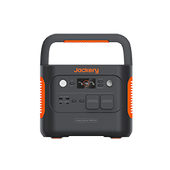
If your budget is limited but you still want more freedom over how and where you use electricity, a Jackery Solar Generator can be a practical middle ground between full grid dependence and a complete off-grid home installation.
A fixed solar-and-battery system for a house can be expensive to buy and install, especially once panels, batteries, wiring, and other site work are included. A portable solar generator is a simpler way to start. It gives you usable stored power for essentials, lets you recharge with solar panels, and can help reduce reliance on paid electricity for selected devices and daily tasks.
Another reason it suits budget-conscious off-grid living is flexibility. You are not committing immediately to a full property-wide system. Instead, you can cover the most important needs first, such as lighting, phones, laptops, routers, small kitchen devices, tools, or backup power during outages.
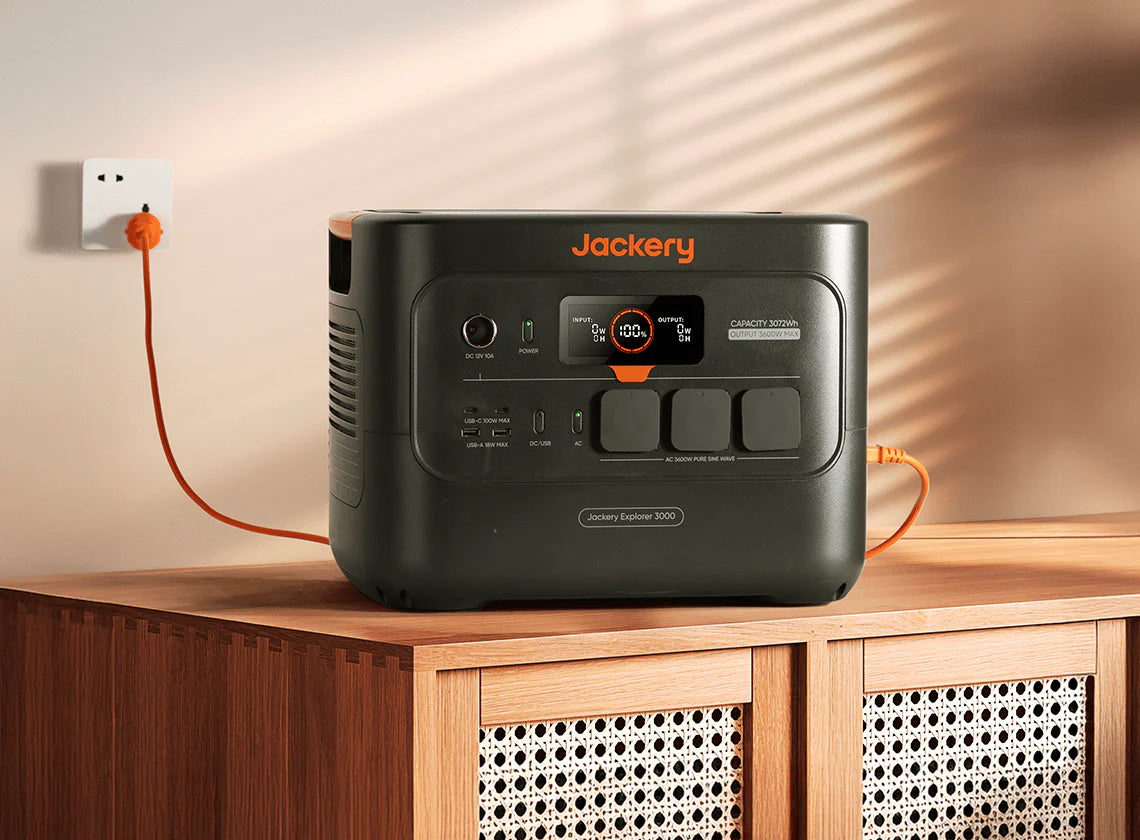
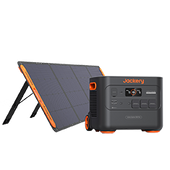
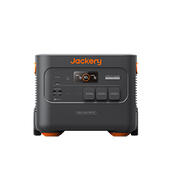
Jackery Solar Generator 3000 v2
Choosing the Jackery Solar Generator 3000 v2 for off-grid living in Europe is a strategic move, especially with its recent upgrades in battery chemistry and portability. This model is designed to handle the high-wattage demands of European appliances while remaining compact enough for van life or remote cabins.

European Power Standards & Compatibility
Unlike North American models, the European version of the 3000 v2 is tailored specifically for the EU market:
Voltage & Frequency: Delivers a steady 230V at 50Hz, matching the standard European grid.
Schuko Outlets: Comes equipped with standard European (Schuko) sockets, eliminating the need for bulky adapters for your tools and appliances.
3600W Continuous Output: With a 7200W surge peak, it can start high-induction motors common in European espresso machines, power tools, or even small air conditioning units.
Next-Gen LiFePO4 Battery (Longevity)
One of the biggest reasons to choose the "v2" over previous models is the switch to LiFePO4 (LFP) cells:
Lifespan: It offers 4,000+ charge cycles to 70% capacity. In an off-grid scenario where you might cycle the battery daily, this translates to roughly 10 years of use.
Safety: LFP chemistry is significantly more thermally stable and safer than older NCM batteries, which is crucial when living in confined spaces like a campervan or a small cabin.
Industry-Leading Compactness & Portability
Despite its massive 3072Wh capacity, the v2 is surprisingly manageable:
Size Reduction: It is approximately 47% smaller than many conventional 3kWh power stations.
Weight: At around 27 kg, it’s one of the lightest in its class.
Mobility: It features an integrated pull-handle and rugged wheels, making it easy to move across European cobblestones or uneven campsite terrain.
Rapid "Green" Recharging
Off-grid living depends on how fast you can "recover" power when the sun is out:
Solar Input: Supports up to 1000W of solar input, allowing you to fully recharge in about 3.5 hours under optimal European summer sun (using 5x SolarSaga 200W panels).
AC Fast Charge: If you occasionally visit a campsite or use a small petrol generator, it recharges from 0% to 100% in just 1.8 hours via a standard wall outlet.
|
Feature of Jackery Solar Generator 3000 v2 |
|
|
Combo |
Jackery Explorer 3000 v2 + SolarSaga 200W |
|
Capacity |
3072Wh |
|
Cell Chemistry |
LiFePO4 4000 cycles to 70%+ capacity |
|
Operating Temperature |
Charge: 0°C~45°C(32°F~113°F) Discharge: -15°C~45°C(5°F~113°F) |
|
Efficiency Rate of Solar Panel |
25% |
|
Output Ports |
AC Output 3 Ports, 230V~ 50Hz, 16A Max USB-A Output 2 Ports, 18W Max, 5-6V⎓3A, 6-9V⎓2A, 9-12V⎓1.5A USB-C Output 2 Ports, 100W Max, 5V⎓3A, 9V⎓3A, 12V⎓3A, 15V⎓3A, 20V⎓5A Car Port 12V⎓10A |
|
Recharging Methods |
Wall Charging: 1.8 Hrs 1 x SolarSaga 200W: 22 Hrs Solar Input 1000W Max: 3.5 Hrs AC+DC (54V) Charging: 1.4 Hrs Car Charging 12V: 36 Hrs |
|
Working Hours |
Refrigerator (200W): 24-48 Hrs Electric Oven (960W): 2 Hrs WiFi Router (10W): 66 Hrs Water Pump (60W): 30 Hrs |
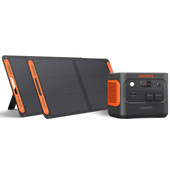
Jackery Solar Generator 2000 v2
If the 3000 v2 is the "heavy lifter" for long-term off-grid living, the Jackery Solar Generator 2000 v2 is the "mobility champion." It is widely considered the sweet spot for European van-lifers and weekend off-grid enthusiasts who need high power but have limited space.

The "Size-to-Power" Sweet Spot
The 2000 v2 was engineered with CTB (Cell-to-Body) technology, which integrates the battery cells directly into the chassis.
Extreme Portability: It is 40% smaller and 35% lighter than most 2kWh power stations. In a compact European campervan (like a VW California or Mercedes Marco Polo), every centimeter matters.
Weight: At just 17.5 kg, it is significantly easier to move in and out of a vehicle or carry to a remote picnic spot compared to the 27 kg of the 3000 v2.
European Power Efficiency (GaN Technology)
The 2000 v2 uses a GaN (Gallium Nitride) inverter, which is more common in high-end European electronics.
Higher Efficiency: GaN inverters lose less energy as heat, meaning you get more actual usage out of your 2042Wh capacity.
2200W Constant Output: It can easily run 90% of European household appliances, from induction hobs to hairdryers and travel kettles, without breaking a sweat.
Rapid Recovery for the "Cloudy" European Climate
Weather in Northern and Central Europe can be unpredictable. The 2000 v2 excels at "opportunity charging":
Emergency Super Charge: Using the Jackery App, you can activate a fast-charge mode that takes the battery from 0% to 80% in just 52 minutes via a wall outlet (ideal for a quick stop at a café or campsite).
Solar Input: While its solar intake is capped lower than the 3000 v2 (approx. 400W max), it is perfectly paired with two 200W panels, which is a standard, manageable setup for most European roof racks.
Optimized for Stealth & Sleep
European "wild camping" often requires being as discreet as possible.
Whisper Quiet: It operates at ≤30dB in quiet mode. You can have it charging or powering a 12V fridge right next to your bed in a small van without the fan noise keeping you awake.
UPS Seamlessness: If you use it for a "home office" setup in Europe, the 20ms UPS ensures your workstation doesn't reboot during a local power cut.
|
Feature of Jackery Solar Generator 2000 v2 |
|
|
Combo |
|
|
Capacity |
2042Wh |
|
Cell Chemistry |
LiFePO4 4000 cycles to 70%+ capacity |
|
Operating Temperature |
Charge: 0°C~45°C(32°F~113°F) Discharge: -10°C~45°C(14°F~113°F) |
|
Efficiency Rate of Solar Panel |
25% |
|
Output Ports |
AC Output 2 Ports, 230V~ 50Hz, 2200W nominal power, 4400W peak power USB-A Output 1 Port, 5-6V⎓3A, 6-9V⎓2A, 9-12V⎓1,5A USB-C Output 2 Ports, 30W Max, 100W Max Car Port 12V⎓10A |
|
Recharging Methods |
Emergency Charging via App: 1.33 Hrs Wall Charging: 1.7 Hrs Car Charging: 24 Hrs 1 x SolarSaga 200W: 15 Hrs 2 x SolarSaga 200W: 7.5 Hrs |
|
Working Hours |
Refrigerator (15-520W): 3.2-72 Hrs Electric Oven (1600W): 1.1 Hrs Light (5W): 155 Hrs Heater (1800W): 1 Hrs |
FAQs
The following are frequently asked questions about the costs of living off-grid in Europe.
1. How much does it cost to live off-grid in Europe in 2026?
It depends on the country and the setup. A basic off-grid lifestyle may start in the low tens of thousands of euros, while a comfortable full-time setup can cost much more once solar power, batteries, water, heating, and wastewater systems are included.
2. Is living off-grid cheaper than living in a regular house in Europe?
It can be cheaper over time, but usually not at the beginning. Off-grid living often needs higher upfront investment, while regular residential living is easier to start but comes with ongoing utility bills.
3. Which European country is cheapest for off-grid living?
Spain is often one of the more affordable options because of stronger solar conditions, lower heating needs, and generally lower living costs in many rural areas.
4. What are the main monthly costs of living off-grid?
The main monthly costs usually include food, heating fuel, transport, internet, maintenance, backup power, water treatment, and occasional system servicing or replacements.
Final Thoughts
Off-grid living can be a smart choice if you want more control over your energy, more independence from rising household bills, and a lifestyle that feels less tied to traditional utilities. Across Europe, that appeal is becoming stronger as electricity, housing, and daily living costs continue to put pressure on ordinary budgets.
For some people, going off-grid is a way to save money over time. For others, it is more about flexibility, self-sufficiency, and living in a way that feels simpler and more intentional.
So, is off-grid living for you? It may be, if you are willing to plan carefully, invest upfront, and think long term rather than focusing only on immediate savings. It is often best suited to people who want to reduce their dependence on utility providers and are comfortable taking more responsibility for how their home works.