












Switzerland may sit in the heart of Europe, but its power plugs can still catch travellers off guard. Many people assume the electrical setup will be exactly the same as in neighbouring countries, only to find that Swiss sockets are slightly different from the plug standards used elsewhere in Europe.
This guide breaks it down in a practical way. It explains the standard plug types used in Switzerland, the local mains voltage and frequency, how Swiss sockets compare with plugs used across Europe, and when you may need an adapter or a power converter. It also looks at common plug standards in other European countries and why a Jackery Portable Power Station can be a useful travel companion when moving between different socket systems.
|
Key Takeaways: |
|
What Electrical Plugs for Switzerland?
Switzerland mainly uses Type J plugs and sockets, with a standard electricity supply of 230V at 50Hz. The Type J system is the national standard and is the plug you should expect in homes, hotels, offices, and many public buildings across the country.
The International Electrotechnical Commission lists Switzerland under plug type J, which is the clearest reference point for travellers and appliance users.
Type J Plug
Type J is the standard plug type used in Switzerland. It has three round pins, with the earth pin offset slightly from the centre line rather than placed directly in line like some other European plug systems. This layout is one of the key features that makes Swiss plugs distinct.
In everyday use, Type J is designed for grounded appliances, so it is common for larger electronics, kitchen equipment, chargers with earthing, and other devices that need extra electrical protection.
Another important detail is compatibility. Many Type C plugs can fit Swiss sockets, but a true Type J plug is the proper local standard. That matters because not every European plug used elsewhere fits neatly or safely into Swiss outlets, even if it looks similar at first glance.
Type C Plug
You may also come across Type C plugs in practice, especially on smaller devices such as phone chargers, camera chargers, and lightweight personal electronics. Type C is the familiar two-round-pin plug used widely across mainland Europe. In Switzerland, it is often accepted because many Swiss sockets are designed to accommodate slim two-pin plugs alongside the national standard.
That said, Type C is usually best understood as a compatible secondary option, not the main Swiss standard. It works well for low-power or double-insulated devices, but it does not include grounding.
For most visitors, the safest recommendation is to bring a Switzerland-compatible adapter for Type J. Even if some two-pin European plugs may work, relying on that alone can be inconvenient, especially for laptops, hair tools, or grounded devices.

What Is the Mains Voltage and Frequency in Switzerland?
In Switzerland, the standard mains electricity supply is 230 volts at 50 hertz. That is the same general household standard used across much of Europe, so many European appliances will already be designed to work with it.
Switzerland’s Mains Voltage: 230V
The 230V figure refers to the nominal voltage supplied to homes, hotels, offices, and most everyday buildings in Switzerland. In simple terms, voltage is the electrical pressure that pushes current through your device. A charger, coffee machine, hair dryer, or laptop power brick must be built to handle that level safely. If a device is marked 220–240V, it will normally be suitable for use in Switzerland without a voltage converter.
Many modern electronics, such as phones, tablets, cameras, and laptops, are made for 100–240V, so they can usually work in Switzerland as long as you have the right plug adapter. Older or high-power appliances designed only for 110–120V may need a voltage converter, otherwise they can overheat, malfunction, or fail.
Switzerland’s Frequency: 50Hz
The 50Hz figure refers to the frequency of the alternating current supplied by the grid. In practical terms, it means the electrical current changes direction 50 times per second. For most modern electronics, frequency is not a major issue because chargers and power adapters are designed to handle both 50Hz and 60Hz.
However, frequency can still matter for certain appliances with motors, timers, or heating systems. Some older devices made for a 60Hz-only system may not perform as expected on a 50Hz supply. They may run less efficiently, generate extra heat, or operate at the wrong speed.
What This Means for Everyday Use?
For most people in Europe, Switzerland’s electricity system feels familiar because 230V / 50Hz matches the wider continental standard. So if your device already works elsewhere in Europe, the electrical rating is likely fine in Switzerland too.
For travellers from countries such as the United States, Canada, or Japan, the situation is different. The device may need both a plug adapter and, in some cases, a converter depending on its voltage rating.
Will My European Plug Fit a Swiss Socket?
Sometimes yes, but not always. In Switzerland, the standard socket is Type J, and while some European plugs can fit into it, others cannot. The most reliable rule is this: slim two-pin European plugs often work, but larger grounded European plugs often do not.
If your device uses a small two-pin Type C plug, there is a good chance it will fit a Swiss socket. Switzerland officially uses Type J, but Type C is commonly accepted for many smaller appliances such as phone chargers, camera chargers, and similar low-power electronics.
If your device uses a larger Type E or Type F plug, the answer is often no. Those plugs are common in parts of continental Europe, but they are usually too large or use a different grounding design, so they may not fit properly into Swiss outlets.
Why Some European Plugs Fit?
The reason comes down to shape, pin size, and grounding design. Swiss Type J sockets are designed around the Swiss standard, but they also accept many Europlugs, which are the slim two-pin plugs known as Type C. These are common across Europe on lightweight and double-insulated devices.
This works because Type C plugs are relatively narrow and simple. They do not need an earth connection, so they can slide into the live and neutral contacts of the Swiss socket without needing to match the Swiss earth pin layout.
Why Other European Plugs Do Not Fit Well?
The issue with Type E and Type F plugs is that they are built differently. These plugs are usually larger, and they rely on different grounding systems. Type F uses side earth clips, while Type E is designed around a projecting earth pin in the socket. Another practical reason is that Swiss sockets are often more compact or recessed, which makes bulky continental plugs even less likely to fit neatly.
If you are travelling to Switzerland, the safest option is to bring a Type J travel adapter. That removes the guesswork and helps with both small chargers and larger grounded devices.

Do I Need a Power Plug Adapter in Switzerland?
In most cases, yes. If your plug is not already compatible with a Swiss Type J socket, you will need a power plug adapter in Switzerland. Switzerland uses 230V / 50Hz and mainly uses Type J sockets, although many outlets also accept Type C two-pin plugs.
When You Probably Need an Adapter?
You will usually need an adapter if you are bringing a plug from the UK, Ireland, the US, Canada, or other countries that do not use Type C or Type J plugs. In those cases, the plug shape simply does not match the Swiss outlet, so the device cannot be plugged in directly.
Even within Europe, an adapter is often still the safer choice. That is because Switzerland does not use the same plug system as many neighbouring countries. A slim Type C Europlug may fit, but larger grounded European plugs often do not fit Swiss sockets properly.
When You Might Not Need One?
You may not need an adapter if your device already uses a Type C two-pin plug. Switzerland’s tourism guidance notes that Type C plugs also fit J sockets, which is why many small chargers and lightweight travel electronics can work without any extra accessory. If your charger or appliance uses a bulkier grounded plug, it is better not to assume it will fit.

Do I Need a Power Converter for Switzerland?
Not always. In many cases, you do not need a power converter for Switzerland, but it depends on the voltage range of your device. Switzerland uses 230V / 50Hz, which matches the standard electricity supply used across most of Europe. If your device is already designed for 230V or marked as 100–240V, 50/60Hz, then a converter is usually unnecessary.
When You Do Not Need a Converter?
Most modern travel electronics are made for international use. Phone chargers, laptop chargers, tablet adapters, camera chargers, and many small electronic devices usually show 100–240V, 50/60Hz on the label. That means they can safely handle Switzerland’s electricity supply without changing the voltage. For these devices, a plug adapter is enough if the plug itself is not compatible with a Swiss socket.
When You Do Need a Converter?
You may need a power converter or transformer if your appliance is single voltage only and does not match Switzerland’s 230V supply. This is more common with certain older appliances or devices brought from countries that use 110V or 120V, such as the United States or Canada.
If the appliance label only shows 110V or 120V, it should not be plugged directly into a Swiss outlet without proper conversion.
Converter vs Plug Adapter
This is where many travellers get confused. A plug adapter only changes the shape of the plug so it can fit the socket. It does not change the voltage or frequency. A power converter or transformer is different because it changes the electrical supply to suit the appliance.
How to Check Before You Travel?
The easiest way is to look at the rating label on your charger or appliance. If it says something like Input: 100–240V, 50/60Hz, it should work in Switzerland without a converter. If it lists only one lower voltage, such as 110V, then you should assume a converter may be needed.
What Are the Standard Plugs in European Countries?
Europe does not use one single plug type everywhere. In practice, most of the continent revolves around a few familiar standards, especially Type C, Type E, Type F, Type G, and Type J, while most countries use electricity close to 230V / 50Hz.
The most widespread plug across Europe is Type C, the slim two-pin Europlug used for many small chargers and low-power devices. It is common across most of Europe, but it is not the main national standard everywhere.
Type C is the classic two-round-pin Europlug. It is ungrounded and is commonly used for phone chargers, camera chargers, toothbrush chargers, and other smaller electronics. It is widely used throughout Europe and is especially useful because it can fit into several other European socket systems.
Type E is common in countries such as France. It has two round pins plus an earth connection designed to work with a projecting earth pin in the socket. It is often found on household appliances and devices that need grounding for safety. Type F plugs are also described as fully compatible with Type E sockets through the common hybrid E/F design now widely used on many appliances.
Type F, often called Schuko, is one of the most common grounded plug types in Europe. It also has two round pins, but grounding is provided through side earthing clips. It is widely used in Germany, the Netherlands, Spain, and many other European countries. This is the plug many travellers from mainland Europe carry without even realising it has its own type name.
Type G is the familiar three-rectangular-pin plug used in the UK and Ireland. It is very different from the round-pin systems found in continental Europe, which is why travellers between Britain and the rest of Europe almost always need an adapter.
Type J is the standard used in Switzerland. It has three round pins in a distinctive Swiss arrangement. Swiss tourism guidance notes that Type C two-pin plugs also fit J sockets, but larger grounded continental plugs often do not, which is why Switzerland can be slightly trickier than other European destinations.

Power Plugs in Other European Countries
For grounded household appliances, much of mainland Europe relies on Type E or Type F. France is strongly associated with Type E, while Germany and the Netherlands are strongly associated with Type F, often called the Schuko plug.
Spain is also commonly linked with Type F, while many devices with Type C plugs still work there for lighter everyday electronics. Ireland and the UK are different again, using Type G, the three-rectangular-pin system.
France
France mainly uses Type E plugs and sockets, with 230V / 50Hz electricity. In practical terms, many travellers will also encounter devices using Type C plugs for smaller electronics. France is one of the key examples of the continental European system where voltage feels familiar across Europe, but grounding design still matters.
Germany
Germany is one of the main homes of Type F (Schuko). The country uses 230V / 50Hz, and Type F is widely associated with grounded household use there. Small Type C plugs are also common on lightweight electronics, but Type F is the more recognisable everyday standard for homes and appliances.
Spain
Spain generally uses Type F and accepts Type C for many smaller devices, with 230V / 50Hz as the mains standard. For travellers, Spain usually feels straightforward if they are already travelling within mainland Europe, especially with standard continental chargers and adapters.
Ireland
Ireland uses Type G plugs and 230V / 50Hz electricity. The socket design matches the UK system rather than continental Europe, so travellers arriving from France, Germany, Spain, or the Netherlands normally need a plug adapter.
Netherlands
The Netherlands mainly uses Type F, with 230V / 50Hz electricity. As in other parts of continental Europe, Type C plugs are also widely relevant for smaller electronics. For many European travellers, the Dutch plug setup feels familiar and easy to manage.
United Kingdom
The UK uses Type G and runs on 230V / 50Hz. Its three-pin rectangular plug is one of the easiest European plug types to recognise, and also one of the least interchangeable with mainland Europe. That is why adapters are usually essential when travelling between the UK and most of the continent.
Switzerland
Switzerland uses Type J as its national standard and also commonly accepts Type C two-pin plugs, with 230V / 50Hz electricity. Swiss tourism guidance notes that many standard two-pin continental plugs work without problem, but larger grounded plugs may still need a Swiss adapter.
|
Country |
Main Plug Type(s) |
Voltage |
Frequency |
Practical Note |
|
Switzerland |
Type J, Type C |
230V |
50Hz |
Type C often fits, but Type J is the Swiss standard. |
|
France |
Type E, Type C |
230V |
50Hz |
Type E is the main grounded standard. |
|
Germany |
Type F, Type C |
230V |
50Hz |
Type F Schuko is the standard grounded plug. |
|
Spain |
Type F, Type C |
230V |
50Hz |
Mainland European travellers usually find Spain straightforward. |
|
Netherlands |
Type F, Type C |
230V |
50Hz |
Similar setup to Germany for most travellers. |
|
Ireland |
Type G |
230V |
50Hz |
Same plug family as the UK. |
|
UK |
Type G |
230V |
50Hz |
Different from most of mainland Europe. |
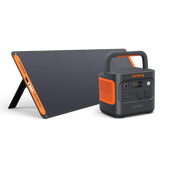
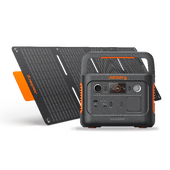
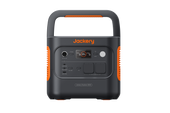
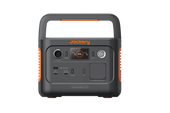
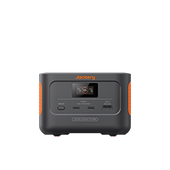
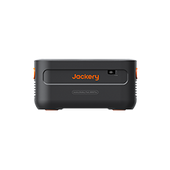
If you are moving between countries with different sockets, a portable power supply can make travel much easier. A Jackery Portable Power Station can be a practical option for road trips, campervan travel, festivals, outdoor work, or backup charging in holiday accommodation.
It does not replace the need to understand local plugs and voltage, but it can reduce the number of times you need to hunt for a wall socket during the day.
Jackery Portable Power Stations Explained
When travelling across Europe, the biggest inconvenience is often not the voltage but the plug difference between countries. Much of continental Europe uses 230V / 50Hz, but socket types still vary, including Type C, E, F, G, and J depending on where you are. That is where a Jackery Portable Power Station becomes especially useful. It gives you a reliable source of portable electricity, so you are less dependent on finding the right wall socket at the right moment.
A traveller moving from mainland Europe to the UK, Ireland, or Switzerland may need different adapters along the way. A Jackery Portable Power Station helps by letting you charge key devices from one central power source instead of relying constantly on hotel sockets, station outlets, or campsite hook-ups.
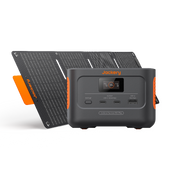
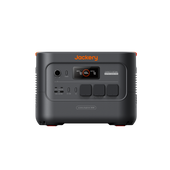
Jackery Explorer 1000 v2
The Jackery Explorer 1000 v2 is often the "goldilocks" choice for European travel. It bridges the gap between the ultra-portable smaller units and the heavy-duty series. When traveling across European borders—where you might encounter UK Type G sockets one day and Europlug Type C/F the next—this unit offers specific advantages:

The "Universal" Input Advantage
The most stressful part of cross-border travel is keeping the power station itself charged. The 1000 v2 is built to handle the standard 220V–240V range found across all of Europe and the UK. You don't need a bulky voltage converter to charge the unit; you only need a simple, passive plug adapter. It can charge from 0 to 100% in about 1.7 hours via AC (or 1-hour emergency charging). This is crucial when hopping between campsites or stopping at a café in a different country; you can get a meaningful top-up during a lunch break.
Solving the "Plug Problem" (Output)
Since the 1000 v2 is more compact than the larger models, it is easier to keep "on the counter" or in the passenger seat. Because many European travelers use various regional plugs for their small tech (phones, tablets, cameras), the 1000 v2’s Dual 100W USB-C ports are a lifesaver. They allow you to bypass regional AC wall adapters entirely for your most-used devices.
Even though it’s the "1000" model, it actually supports 1500W continuous power (3000W surge). This means you can use a standard European electric kettle or a travel hair dryer regardless of which country's plug is on the end of the appliance (provided you have a simple travel adapter).
Compact Enough for "Border Hopping"
European travel often involves smaller vehicles (VW Transporters, Mercedes Vitos) where space is at a premium. At just 10.8 kg, it is significantly easier to carry into a hotel room or a friend's apartment in a city like Paris or Rome than the 3000 v2. Unlike the "Plus" models where ports are often on the back, the v2 has a streamlined design that makes it easier to tuck against a van wall while keeping the plugs accessible.
Solar Flexibility in Different Climates
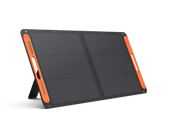
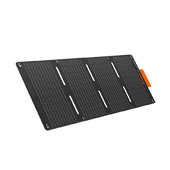
Whether you are in the sunny Algarve or the cloudier Scottish Highlands: The built-in controller is highly efficient at pulling power even in the "soft" light of Northern Europe. It features dual DC input ports, allowing you to chain panels together easily to maximize daylight hours in regions with shorter winter days.
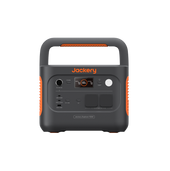
Jackery Explorer 500 v2
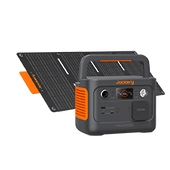
The Jackery Explorer 500 v2 (launched late 2025) is a ground-up redesign of one of the most iconic portable power stations. For European travel, it is specifically positioned as the "Agile Essential"—enough power for the basics, but small enough to disappear into a car or small van.

Industry-Leading Lifespan (6,000 Cycles)
While the larger 2000 and 3000 models are rated for 4,000 cycles, the 500 v2 sets a new benchmark with 6,000+ charge cycles to 70% capacity. If used every single day, this unit can last over 15 years. It uses an upgraded LiFePO4 battery with a ceramic multi-layer membrane, which is more resistant to the vibrations and temperature swings (-20°C to 45°C) often experienced during Alpine or Nordic road trips.
The "Lunchbox" Form Factor
The v2 is roughly 27% smaller and 11% lighter than the original Explorer 500. At just 5.7 kg, it is roughly the weight of a heavy grocery bag. It’s significantly easier to carry across a crowded European campsite or up to a second-floor Airbnb than its competitors.
Its new "toolbox" design features a flat top and a folding handle, allowing you to stack other gear on top of it in a cramped trunk—a major improvement over the fixed-handle design of older models.
Solving the European "Different Plug" Headache
Traveling between the UK (Type G) and Continental Europe (Type C/F) often leads to a mess of adapters. The 500 v2 helps mitigate this:
Dual AC Outlets: Unlike the original 500, which usually had only one outlet, the European v2 model includes two AC outlets. This allows you to keep one dedicated to a UK-to-EU adapter while keeping the other free.
High-Speed USB-C (100W + 30W): Most modern travelers use USB-C for everything. The 100W PD port can charge a MacBook or high-end laptop directly, meaning you don't need to carry your laptop's bulky regional wall brick or worry about plug compatibility for your most important tech.
Whisper Quiet
It operates at roughly 28dB (quieter than a library). This makes it perfect for "stealth camping" in urban areas where you don't want any fan noise to give away your location. It features a <10ms UPS mode. If you’re working from your van and plugged into a campsite’s unreliable shore power, the Jackery will take over instantly if the campsite's breaker trips, protecting your laptop or fridge.
FAQs
The following are frequently asked questions about the electrical plugs for Switzerland.
1. What plug type is used in Switzerland?
Switzerland mainly uses Type J plugs and sockets, and many outlets also accept Type C two-pin plugs. The mains electricity supply is 230V / 50Hz, which is the same general voltage and frequency standard used across much of Europe.
2. Will a European two-pin plug work in Switzerland?
Often, yes. A standard Type C two-pin Europlug can usually be used in Swiss sockets, which is why many phone and camera chargers work without much trouble. However, that does not mean every European plug fits. Larger grounded plugs used in some other European countries may still need a Swiss Type J adapter.
3. Do I need a travel adapter for Switzerland?
In many cases, yes. If your plug is not Type C or Type J, you will usually need a travel adapter in Switzerland. This is especially relevant for travellers coming from the UK, Ireland, or countries outside Europe. Even for some continental European travellers, carrying a Swiss adapter is still the safest option because not all grounded European plugs fit Swiss sockets properly.
4. What is the difference between dual-voltage and single-voltage appliances for Switzerland?
A dual-voltage appliance is designed to work with a range such as 100–240V, 50/60Hz, so in Switzerland it usually only needs the correct plug adapter. A single-voltage appliance is built for one specific voltage, such as 110V or 120V only.
If that voltage does not match Switzerland’s 230V supply, you may also need a power converter, not just an adapter. This is why checking the label on your appliance before travelling is so important.
Final Thoughts
Switzerland’s electricity system is straightforward once you know the basics. The country mainly uses Type J plugs and 230V / 50Hz power, which means the voltage will feel familiar to most European travellers, even if the socket shape may not. Smaller Type C two-pin plugs often work, but larger grounded European plugs do not always fit, so bringing the right adapter is usually the safest choice.
For trips that involve multiple countries, it also helps to think beyond the wall socket. A portable option such as a Jackery Portable Power Station can give you more flexibility when outlets are limited or plug types change along the way.


