
























In 2026, Europe remains a desirable place to live for professionals, entrepreneurs, and retirees worldwide.
However, a primary task before relocating is to understand the cost of living in Europe. From economically strong but expensive countries like Switzerland and Norway to cost-effective and high-quality lifestyles like Poland and Romania, the cost of living in Europe exhibits clear geographical stratification.
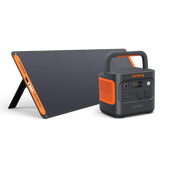
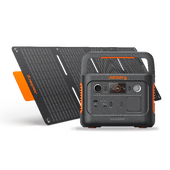
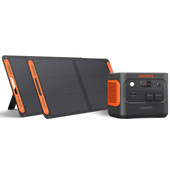
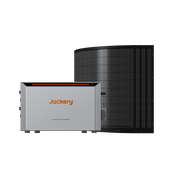
Housing, energy, and healthcare costs are key variables affecting quality of life. Utilizing cutting-edge energy solutions like the Jackery Solar Generator 3000 v2 and Solar Generator 2000 Plus can effectively reduce electricity bills.
|
Key Takeaways: |
|
Europe Cost of Living by Country: Compare Expenses Across European Nations in 2026
Relocating to Europe is a popular choice for professionals, families, entrepreneurs, and retirees worldwide. However, before making the transfer, it is critical to understand the cost of living in various European Union countries. Western European countries such as Switzerland, Norway, and Denmark are generally more expensive due to their strong economy and good living standards. Eastern European countries, such as Poland, Hungary, and Bulgaria, provide a more economical lifestyle without sacrificing quality.
The following is the average monthly expenditure for a single expatriate renting a one-bedroom apartment in a city center in several typical European countries, for reference only:

France
Monthly Cost of Living: €1,900–€3,000 per month
The cost of living in Paris is significantly higher than in cities like Lyon and Bordeaux. It's worth noting that France has a highly developed dining culture, and the average cost of eating out is generally higher than in Germany. However, healthcare and public services are excellent.
Germany
Monthly Cost of Living: €1,800–€2,800 per month
Germany offers strong salaries but higher housing costs, especially in cities like Munich or Frankfurt. Fortunately, the cost of daily necessities and food in Germany is relatively affordable compared to other Western European countries.
Italy
Monthly Cost of Living: €1,500–€2,500 per month
Italy exhibits a significant north-south divide: the cost of living in the north is higher than in the south. Smaller cities offer a moderate cost of living. Overall, public transport and basic utilities costs in Italy are relatively stable.
Spain
Monthly Cost of Living: €1,400–€2,400 per month
Spain remains one of the best value-for-money Western EU destinations. While rents in Madrid and Barcelona are also rising, they are still about 10-20% cheaper than in Berlin or Paris. The cost of dining here is extremely low, and local fresh ingredients are very cheap.
Romania
Monthly Cost of Living: €900–€1,600 per month
Romania remains one of the lowest-cost EU destinations while still providing EU-level mobility and benefits. It also boasts one of the fastest internet speeds in Europe at extremely low prices, with the cost of living only a third of that in London or Paris.
The cost of living index can be used to compare the cost of living in different European countries. This data uses Numbeo data, with New York City as the benchmark, which scores 100. So, if a country scores higher than 100, it means that it is on average more expensive than New York City in terms of consumer goods prices, which include groceries, restaurants, transportation and utilities.
|
Country |
Cost of Living Index |
|
Switzerland |
110.7 |
|
Iceland |
97.2 |
|
Norway |
83.7 |
|
Denmark |
78.9 |
|
Luxembourg |
78.0 |
|
Netherlands |
73.4 |
|
Austria |
71.3 |
|
Ireland |
70.6 |
|
Finland |
69.0 |
|
Germany |
68.7 |
|
Belgium |
68.6 |
|
Sweden |
68.0 |
|
United Kingdom |
67.8 |
|
France |
67.7 |
|
Italy |
61.4 |
|
Estonia |
59.7 |
|
Slovenia |
54.1 |
|
Greece |
54.0 |
|
Czech Republic |
53.0 |
|
Croatia |
52.4 |
|
Latvia |
52.3 |
|
Spain |
51.6 |
|
Lithuania |
51.2 |
|
Slovakia |
49.6 |
|
Portugal |
48.85 |
|
Poland |
47.3 |
|
Hungary |
46.9 |
|
Bulgaria |
41.6 |
|
Romania |
40.6 |
(Source: www.numbeo.com)
Note: These index numbers don’t include rent, so your mileage may vary depending on where you find accommodation.
Cost of Living in Europe in 2026: Housing Costs
Housing is often the largest single component of the cost of living in Europe, particularly in cities, and it varies the most across countries. In European cities, housing-related expenses frequently consume a higher part of household resources than disparities in food, transportation, or utilities. As a result, housing expenses are a major driver of perceived affordability and one of the key reasons why cost-of-living comparisons differ, even when other price categories appear to be roughly similar.
Countries or Regions in Europe with High Housing Costs
Renting a house in Paris, London, or Milan is notoriously expensive. In London, one-bedroom apartments can cost up to €2,200 ($2,300) each month. These cities serve as worldwide financial, fashion, and cultural hubs, driving demand—and costs. If you want to live in one of these cities, keep in mind that living costs in Europe are greater.
Countries or Regions in Europe with Low Housing Costs
If you're looking for low-cost accommodation, looking for homes for rent in Prague, Krakow, or Athens is an excellent method to stay within your rental budget. You may easily find rooms and flats for rent here for €400 ($420) to €800 ($840) per month.
These cities provide a bustling lifestyle with plenty of culture, amenities, and opportunities to explore without being prohibitively expensive to live in. These cities also have lower utility and bill costs.
|
Country |
Monthly Rent (Per Square Meter) |
Selling Price (Per Square Meter) |
|
Switzerland |
22 Euros |
8500 Euros |
|
Norway |
18 Euros |
5800 Euros |
|
France |
18 Euros |
4100 Euros |
|
Germany |
13 Euros |
3800 Euros |
|
Italy |
12 Euros |
3200 Euros |
|
Greece |
6 Euros |
1200 Euros |
|
Spain |
11 Euros |
2800 Euros |
|
Poland |
7 Euros |
2200 Euros |
|
Hungary |
7 Euros |
1800 Euros |
|
Romania |
6 Euros |
1400 Euros |
(Source: europecompass)
The above shows the monthly rental and home purchase costs in 10 typical European countries for your reference and comparison.

Cost of Living in Europe in 2026: Food and Daily Expenses
Compared to housing, grocery prices vary less dramatically among European countries, but the variances are still economically significant. Northern and Western European countries generally have grocery prices higher than the EU average, although several Southern and Central and Eastern European countries have lower prices.
If you opt to look into rental properties in Lisbon, you'll be surrounded by affordable eateries serving both local and international cuisines. If you opt to look for apartments in Athens, you may indulge in street food such as gyros or souvlaki for as little as €3 ($3.15), making it simple to dine well on a budget. If you opt to reside in Portugal, Spain, or Greece, you will be able to enjoy a wide variety of cuisines year-round, as well as purchase local ingredients at affordable prices.
It is worth noting that food prices in Europe tend to rise as one travels north and west. If you decide to look for apartments for rent in Zurich, keep in mind that a simple supper at a low-priced restaurant might cost around €20 ($21). Groceries in these nations may also be more expensive due to higher taxes and import fees.
|
Country |
Groceries and Daily Items |
|
Switzerland |
€500 per month |
|
Norway |
€450 per month |
|
France |
€350 per month |
|
Germany |
€320 per month |
|
Italy |
€300 per month |
|
Greece |
€160 per month |
|
Spain |
€280 per month |
|
Poland |
€180 per month |
|
Hungary |
€170 per month |
|
Romania |
€150 per month |
(Source: europecompass)
The above shows the monthly cost of food and groceries in 10 typical European countries for your reference and comparison.
Cost of Living in Europe in 2026: Energy and Utility Costs
Across Europe, electricity, heating, water, and basic utilities continue to differ due to energy mix, climate, regulation, and state intervention.
Eurostat data reveal that household energy prices in several Northern and Western European countries remain above the EU average, while several Central and Eastern European countries continue to be below the EU benchmark in nominal terms. Hungary, Bulgaria, Romania, and Croatia have kept home electricity prices reasonably low.
Germany, Denmark, the Netherlands, Italy, and Ireland have rather high electricity costs. As a result, inhabitants in these areas have begun to increasingly adopt flexible energy supplementing alternatives such as the Jackery Solar Generator 3000 v2 or Solar Generator 2000 Plus.
Non-energy services like water supply, rubbish collection, and basic internet connection vary less dramatically across Europe than electricity. Water bills in Europe typically include both the water price and wastewater treatment fees.
Denmark and Germany have the highest urban water rates. Due to exceptionally strict environmental criteria for wastewater treatment, roughly 60% of the water bill in these regions is spent on wastewater treatment and infrastructure maintenance.
|
Country |
Utilities |
Electricity |
Water |
|
Switzerland |
150 Euros per month (usually included in rent) |
/ |
/ |
|
Norway |
120 Euros per month (usually included in rent) |
/ |
/ |
|
France |
160 Euros per month |
110 Euros per month |
50 Euros per month |
|
Germany |
180 Euros per month |
140 Euros per month |
40 Euros per month |
|
Italy |
140 Euros per month |
90 Euros per month |
50 Euros per month |
|
Greece |
80 Euros per month |
60 Euros per month |
20 Euros per month |
|
Spain |
120 Euros per month |
80 Euros per month |
40 Euros per month |
|
Poland |
100 Euros per month |
70 Euros per month |
30 Euros per month |
|
Hungary |
83 Euros per month |
55 Euros per month |
28 Euros per month |
|
Romania |
65 Euros per month |
40 Euros per month |
25 Euros per month |
(Source: europecompass)
The above shows the utility costs of 10 typical European countries for your reference and comparison.

Cost of Living in Europe in 2026: Transport and Daily Travel Costs
In cost-of-living talks, transportation costs are sometimes overlooked in favour of housing and food. In practice, however, they impact everyday spending just as reliably — if not more so — through frequent, repeated outlays.
If you look for rental apartments in Copenhagen or London, you'll quickly discover that rent isn't the only expensive thing in these cities. Commuting expenditures are correspondingly high. A monthly public transport pass in London can cost at least €180 ($188) per month, depending on the zone you live in. However, these towns frequently provide student discounts and provide efficient services that make the expense worthwhile.
However, cities such as Budapest, Prague, and Warsaw have inexpensive public transit. A monthly public transport pass in Prague costs approximately €22 ($23). These cities feature large networks of buses, trams, and subways, making it simple to travel. In densely populated cities, shorter commutes can minimise transportation expenditures and, over time, dramatically lower living expenses. If you rent in Amsterdam, you may also take use of the city's outstanding bicycle infrastructure to cut transportation expenditures.
|
Country |
Transportation |
|
Switzerland |
85 euros per month |
|
Norway |
100 euros per month |
|
France |
75 euros per month |
|
Germany |
85 euros per month |
|
Italy |
35 euros per month |
|
Greece |
30 euros per month |
|
Spain |
55 euros per month |
|
Poland |
20 euros per month |
|
Hungary |
22 euros per month |
|
Romania |
18 euros per month |
(Source: europecompass)
The above shows the transportation costs in 10 typical European countries for your reference and comparison.
Cost of Living in Europe in 2026: Healthcare Costs
European citizens frequently benefit from public healthcare systems subsidised by taxes or social contributions. Healthcare expenses vary throughout European countries mostly due to the share of national healthcare system spending, healthcare inflation rates, and labour costs.
Countries such as Switzerland, the United Kingdom, France, Norway, and Germany often have world-class medical technology. However, their expenses, both in terms of public spending and private insurance premiums, rank among the highest in the world. For example, Switzerland has one of the most expensive private healthcare systems in Europe, if not the entire globe. With no free public healthcare, all inhabitants are required to acquire private health insurance, making monthly premiums a considerable chunk of household budgets.
In contrast, European countries such as Romania, Poland, and Hungary provide highly appealing healthcare options, particularly for self-paying patients or medical tourists, due to lower operational costs and government price regulations. For example, Hungary has a significant competitive edge in dental care, particularly in the high-end private care industry.
|
Country |
Health Insurance |
|
Switzerland |
€350 per month |
|
Norway |
€0 per month (tax-funded universal free healthcare) |
|
France |
€50 per month |
|
Germany |
€380 per month |
|
Italy |
€80 per month |
|
Greece |
€50 per month |
|
Spain |
€60 per month |
|
Poland |
€35 per month |
|
Hungary |
€0 per month (employed residents are entitled to free public healthcare) |
|
Romania |
€0 per month (employed residents are entitled to free public healthcare) |
(Source: europecompass)
The above shows the health insurance costs in 10 typical European countries for your reference and comparison.
How to Minimise the Cost of Living in Europe?
Living in Europe, prices are an unavoidable topic. The cost of living varies significantly by country. With constant fluctuations in the cost of living, smarter strategies are needed to reduce expenses. Here are some practical tips:

Tip 1: Bring Your Own Water Bottle and Say Goodbye to Bottled Water
Bottled water is not only expensive but also environmentally unfriendly. In countries like Italy, Switzerland, and Austria, high-quality drinking water flows from street fountains everywhere. Bringing a durable sports water bottle can save you hundreds of euros on water each year.
Tip 2: Use Anti-Food Waste Apps
Download Too Good To Go or Phenix. Every evening, many supermarkets, bakeries, and restaurants sell unsold but completely fresh food at one-third of the original price. This not only saves you money but also allows you to try different European cuisines.
Tip 3: Use Public Transport As Much As Possible
Within cities, avoid taxis and use public transport, shared bicycles, or electric scooters. Compared to expensive taxis, cycling not only provides free exercise but also saves on parking fees. For long-distance travel, you can use BlaBlaCar carpooling, which is much cheaper than trains or buses.
Tip 4: Try Secondhand Trading
The secondhand culture is very mature in Europe, so you don't need to buy everything new. For example, furniture, electronics, and clothing can be found on Vinted, eBay, or Leboncoin (France). Many almost brand-new items are less than a third of their original price.
Tip 5: Consider Sharing
In London, Berlin, and Paris, housing expenses typically account for over 35% of income. Sharing can effectively cut rent in half. Besides saving money, it's also the best way to spread high energy costs.
Tip 6: Save Energy
Energy costs are currently high in many European countries. Developing habits like turning off lights when not in use, unplugging unused appliances, and shortening shower time can save a lot of electricity. If electricity is billed at different times, try to use washing machines and dishwashers at night or during off-peak hours.
Tip 7: Use an Alternative Energy Source
Faced with high electricity prices in places like Germany and Belgium, consider investing in a power generation system, such as the Jackery Solar Generator 3000 v2 or Solar Generator 2000 Plus. During the day, deploy the solar panels to absorb energy, and at night use the stored free electricity to power laptops, mobile phones, desk lamps, etc.
Jackery Solar Generators: Effectively Save on Electricity Bills in the Cost of Living in Europe
In recent years, the persistently high energy bills have become an unbearable burden for many families in the cost of living in Europe. Especially in countries with extremely high electricity prices such as Germany and Belgium, daily electricity expenses often constitute a large portion of household spending. Faced with this challenge, achieving a certain degree of energy self-sufficiency is no longer just an environmental concept, but also a savvy economic decision. By utilizing the inexhaustible solar energy, the Jackery Solar Generator 3000 v2 and Solar Generator 2000 Plus can significantly reduce your dependence on the grid, thereby effectively controlling or even drastically reducing your monthly electricity bills.
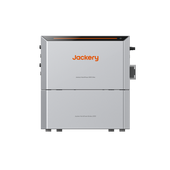
Jackery Solar Generator 3000 v2
The Jackery Solar Generator 3000 v2 easily handles the power needs of various high-power appliances in European households, providing a solid foundation for reducing your energy bills and achieving energy independence.

Large Capacity and Powerful Output to Power All Your Appliances: With an impressive capacity of up to 3072Wh and a stable output of 3600W, this means it can power refrigerators, washing machines, induction cookers, and even small electric heaters for several hours simultaneously. When energy prices soar, you can choose to use it during periods of lower electricity prices to power your appliances, or fully charge it during the day using solar power and use it at night, completely avoiding peak electricity prices and maximizing energy savings.
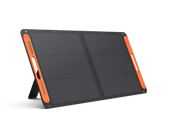
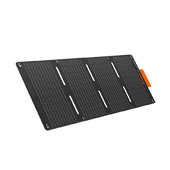
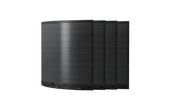
Fast Charging Technology, Efficiently Utilizing Every Ray of Sunlight: Its SolarSaga 200W solar panel employs cutting-edge bifacial IBC technology, achieving a conversion efficiency of up to 25%. With a maximum solar input power of 1000W, it can be fully charged in just 3.5 hours.
Under the long, sunny days of European summers, it rapidly converts solar energy into stored electricity, ensuring ample power availability in the evenings and at night, eliminating the need to purchase electricity from the expensive grid. By prioritizing the use of stored solar energy, it can help reduce your electricity bill by approximately 30%.
Smart Energy Management, Optimising Electricity Usage Strategies: Through the accompanying Jackery App, you can monitor your energy consumption in real time, clearly seeing the source and destination of every kilowatt-hour. This transparent energy management allows you to dynamically adjust your electricity usage habits based on real-time electricity prices.
For example, you can use grid power to supplement your devices during off-peak hours and switch entirely to Jackery power during peak hours, thereby minimizing electricity costs. This feature is especially suitable for users with time-of-use pricing or smart meters, saving up to 15% on electricity bills annually.
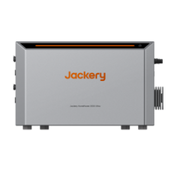
Jackery Solar Generator 2000 Plus
If you seek greater flexibility or want to gradually build your home energy system according to your budget, the Jackery Solar Generator 2000 Plus is the most attractive option.

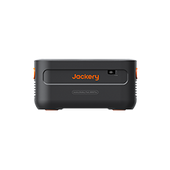
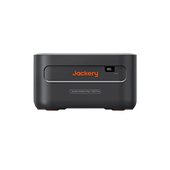
Flexible Modular Expansion: Considering the diverse needs of home electricity consumption, this product supports flexible battery capacity expansion. It can support up to 5 additional battery packs at a time, easily expanding the capacity from 2kWh to 12kWh.
For renters new to Europe with limited living space, this product allows you to start with your current budget and needs, gradually building a more powerful home energy system by adding additional battery modules as needed.
Super-Powerful Instant Start: Despite its smaller size (47.3 x 35.94 x 37.36 cm), it boasts impressive power. Connect two 2000 Plus units using Jackery's dedicated Parallel Kit.
Parallel connection increases the output power from 3000W to 6000W, with more stable voltage support, capable of powering almost all heavy appliances in European homes (such as high-powered heat pumps and electric ovens). This powerful power supply is crucial for maintaining a standard of living.
Rapid Solar Charging, Fully Charged in 2 Hours: The sunlight collected during the day is stored in the battery, enough to power a family's nighttime lighting and entertainment. The daily electricity savings add up, significantly shortening the payback period.
The included Jackery SolarSaga 200W solar panels feature bifacial power generation and industry-leading bifacial IBC technology, enabling power generation even in low-light conditions. A single SolarSaga 200W panel takes 14 hours to fully charge, while six panels can be fully charged in just 2 hours.
FAQs
The following are the frequently asked questions about the living costs in Europe:
1. What is the cost of living in Europe in 2026?
The cost of living in Europe in 2026 varies greatly by country and city. Housing remains the most expensive cost driver, but food, energy, and transportation expenses vary depending on income level, infrastructure, and local market structures. There is no standard European cost-of-living figure that is applied consistently across countries.
2. What's the most expensive place to live in Europe?
On the other end of the range, Switzerland is the most costly place to live in Europe. Cities such as Zurich and Geneva have high prices for everything from property to coffee. In Zurich, monthly living costs might easily reach €3,800.
3. How much money do you need to live comfortably in Europe?
The comfort of living in Europe varies by country. Monthly prices in Western Europe range between €1,800 and €3,000, although in Eastern Europe, €800 to €1,200 is generally sufficient. Comfort means being able to pay for housing, food, transportation, and recreation without having to worry about money.
4. What's the cheapest place to live in Europe?
If affordability is your primary issue, try relocating to Bulgaria, Hungary, or Portugal. In places like as Porto, you should expect to spend roughly €1,400 per month on all expenditures, including rent, food, and entertainment. These countries have low living costs in Europe while offering a unique cultural experience.
Final Thoughts
One of the most important factors influencing your decision to live in Europe is the cost of living. While rents and energy costs continue to rise in major Western European cities, a high-quality European lifestyle is not out of reach through flexible housing options and sound energy management.
In particular, home power solutions like the Jackery Solar Generator 3000 v2 and 2000 Plus not only provide control over energy fluctuations but also significantly reduce long-term electricity costs through green technology.


