




























When people talk about the highest mountain in Europe, Mount Elbrus is the name that stands above the rest. Rising to 5,642 metres in the Caucasus Mountains, it is widely recognised as the highest peak in Europe and one of the continent’s most fascinating mountain destinations.
But Mount Elbrus is more than a record-holder on a map. It is a place of glaciers, volcanic history, changing weather, scenic routes, and outdoor experiences that go well beyond the summit itself. Some visitors come for the climb, some for skiing and hiking, and others to enjoy the dramatic landscapes around the mountain.
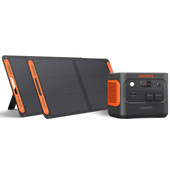
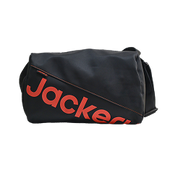
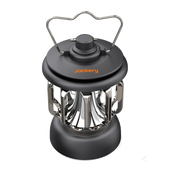
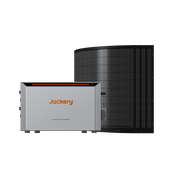
This guide explores the essentials of Mount Elbrus, including its location, climate, climbing routes, nearby sights, travel activities, and practical visitor tips. It also explains why the Jackery Explorer 300D can be a useful companion for powering small devices on your journey.
|
Key Takeaways: |
|
Which Is the Highest Mountain Peak in Europe?
The answer is Mount Elbrus, which rises to 5,642 metres (18,510 feet) in the Caucasus Mountains. It is widely recognised as the highest peak in Europe when the Europe–Asia boundary is drawn along the Greater Caucasus watershed.
Some people treat Mont Blanc as Europe’s highest mountain instead, especially in travel writing focused on the Alps or on western Europe. Mont Blanc stands at 4,807 metres (15,771 feet) on the French-Italian border and is often described as the highest peak in the Alps or the highest mountain in western Europe.
Why Mount Elbrus Is Usually Considered Europe’s Highest Peak?
Mount Elbrus is located in southwestern Russia, near the border with Georgia, in the Greater Caucasus range. Because many modern references place the continental divide between Europe and Asia along this mountain system, Elbrus is counted as part of Europe. That is why it appears on the well-known Seven Summits list as the highest mountain on the European continent.
What About Mont Blanc?
Mont Blanc remains one of Europe’s most famous mountains and is often the better-known name among general travellers. It dominates the Alps and is a major landmark for France, Italy, and Switzerland.
So, for accuracy, the clearest way to put it is this:
- The highest mountain peak in Europe: Mount Elbrus.
- The highest mountain in the Alps / western Europe: Mont Blanc.
For a travel or geography article aimed at a European audience, that distinction helps avoid confusion while keeping the explanation simple and accurate.

Basics of Mount Elbrus: Location, Climate, Geological Dispute and History
Mount Elbrus is not just the highest mountain linked with Europe. It is also one of the most interesting peaks on the continent because it sits at the meeting point of geography, geology, and history.
Location of Mount Elbrus
Mount Elbrus stands in the Greater Caucasus of southwestern Russia, near the border with Georgia. It is part of the Caucasus mountain system, which stretches between the Black Sea and the Caspian Sea. The mountain has two main summits, with the western summit reaching 5,642 metres and the eastern summit slightly lower.
Its position is one reason the mountain attracts so much attention. Elbrus lies in a dramatic high-altitude region of glaciers, snowfields, and volcanic landforms, which makes it very different from the Alpine landscapes many travellers associate with Europe.
Climate on Mount Elbrus
The climate on Mount Elbrus is harsh and highly changeable. At lower elevations, conditions are more manageable in the warmer months, but the upper mountain is cold, snowy, and exposed for much of the year.
Elbrus is known for strong winds, freezing temperatures, and sudden whiteout conditions. Even in the climbing season, weather can shift quickly from clear skies to snow and poor visibility. That is one reason the mountain, despite being considered less technical than some famous peaks elsewhere, should never be underestimated.
Geological Background of Mount Elbrus
Strictly speaking, the main “dispute” around Mount Elbrus is not geological, but geographic. The question is whether Elbrus should count as part of Europe or Asia. Many modern references place the Europe–Asia boundary along the watershed of the Greater Caucasus, which places Mount Elbrus in Europe. That is why it is commonly listed as Europe’s highest mountain.
Mount Elbrus was formed more than 2.5 million years ago and is widely described as an extinct or dormant volcano. Britannica calls it an extinct volcano, while the Smithsonian Global Volcanism Program classifies it among Holocene volcanoes, meaning it has shown activity within the last roughly 12,000 years.
History of Mount Elbrus
Mount Elbrus has a long place in regional exploration history. The eastern summit was first climbed in 1829 by Killar Khashirov, a Kabardin mountaineer. The higher western summit was first reached in 1874 by a British-led climbing party. These early ascents helped establish Elbrus as one of the great peaks of Eurasia.
Over time, the mountain became increasingly important in mountaineering culture. Today it is widely known through the Seven Summits challenge, where climbers aim to reach the highest point on each continent.
Climbing Routes for Mount Elbrus
Mount Elbrus is often described as one of the more accessible Seven Summits, but that does not mean it is easy. Altitude, glacier travel, long summit days, and fast-changing weather can turn a straightforward plan into a serious mountain challenge.

Southern Route
The Southern Route is the standard way up Mount Elbrus and by far the most popular. Most climbers approach from Azau, using the cable car system to gain elevation before moving to huts around 3,800 to 4,100 metres.
From there, the route continues past the Pashtukhov Rocks at about 4,670 metres, then up to the saddle and finally the higher west summit at 5,642 metres. This route is considered the most convenient because it has the best infrastructure. There are huts, mechanical uplift, and in many cases snowcats or piste groomers that can shorten the lower part of summit day.
Northern Route
The Northern Route is less developed and feels much wilder. Instead of using cable cars and the busy southern infrastructure, climbers begin from the north side’s base camps and usually move up through a hut area around 3,750 to 3,800 metres, then on towards Lenz Rocks around 4,600 metres before making the summit push.
The north side as more remote, with fewer facilities, while teams often use a higher camp or acclimatisation carry to Lenz Rocks before summit day.
Western Route
The Western Route is one of the least commonly climbed options and is generally treated as a more adventurous and more difficult line. Russian operators sometimes offer west-side ascents, but they are much rarer than south or north climbs. A west-side ascent often involves rougher access, a more isolated approach, and a longer commitment on the mountain.
Eastern Route
The Eastern Route is also much less crowded than the South Route and is often associated with a more independent expedition style. The east side via the Achkoriakol lava flow as one of Elbrus’s recognised ascent lines. Unlike the southern side, the east has far less built infrastructure, so climbers need to be better prepared for camping, navigation, and changing mountain conditions.
Traverse Routes
A traverse on Mount Elbrus usually means ascending by one side of the mountain and descending by another, rather than simply going up and down the same route. The Full Traverse as one of the classic ways to climb Elbrus, while east-to-south and west-to-south style traverses that cross the massif more fully.
Detailed Tips for Climbing Mount Elbrus
Climbing Mount Elbrus is not only about reaching Europe’s highest summit, but also about preparing properly for the challenges that come with high altitude, fast-changing weather, and long summit days.

Take Acclimatisation Seriously
Altitude is one of the main reasons climbers fail on Elbrus. The mountain may be less technical than some famous peaks, but it still rises above 5,600 metres, which is high enough for altitude sickness to become a major problem. Build in acclimatisation days, move up gradually, and avoid treating Elbrus like a quick walk-up just because the normal route has lifts and huts.
Choose Your Route Honestly
The best route is not the most dramatic one on paper. For many people, the Southern Route is the right choice because it offers a more controlled introduction to Elbrus. More remote lines, such as the north, east, west, or a full traverse, make sense only if your experience, logistics, and fitness genuinely match the extra commitment.
Prepare for Cold, Wind, and Poor Visibility
Weather on Elbrus can change very quickly. Whiteouts, severe wind, and freezing temperatures are common enough that they should be part of your planning from the start, not an afterthought. Good layering, reliable gloves, proper eye protection, and a clear turnaround rule matter just as much as fitness.
Start Summit Day with Realistic Expectations
Even on the standard route, summit day is long. On the north side it is often much longer. Pace matters, hydration matters, and so does discipline. Many climbers start too fast, burn energy early, and then struggle high on the mountain where every step feels slower. A steady rhythm usually works better than pushing hard too soon.
Do NOT Rely Only on Infrastructure
Cable cars, huts, and snowcats can make the South Route feel convenient, but Elbrus is still a glaciated high mountain. You still need suitable clothing, navigation awareness, and respect for the environment. Mechanical support can shorten the approach, but it does not remove the risks of altitude, exposure, or sudden weather shifts.
Keep Essential Electronics Powered
Cold conditions and long days can drain batteries faster than many climbers expect. Phones, headlamps, GPS devices, action cameras, and satellite communicators are all more useful when you can actually keep them running.
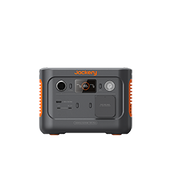
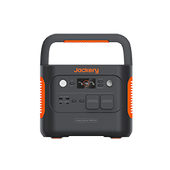
For that reason, a compact outdoor power supply can be practical in camp or during the approach. The Jackery Explorer 300D as a lightweight power option for outdoor trips, suitable for charging essentials such as phones, GPS devices, headlamps, cameras, and small accessories.
Go with a Guide If You Are Unsure
Elbrus is often marketed as a beginner-friendly high mountain, but that label can be misleading. A guided climb is a sensible choice for anyone without solid glacier and altitude experience, especially on anything other than the standard southern route. The mountain rewards good judgement much more than bravado.
What to Expect When Visiting Mount Elbrus?
A visit to Mount Elbrus is not only about the summit. Even travellers with no plan to climb high on the mountain usually come away talking about the wider region: glacier views, mineral springs, deep gorges, alpine meadows, winding roads, and a landscape that feels far wilder than many classic European mountain destinations.

A Landscape That Changes Fast With Altitude
One of the first things visitors notice is how quickly the scenery changes. Lower valleys are greener and more sheltered, while higher areas turn into open alpine ground, rocky slopes, glaciers, and snowfields. In and around Prielbrusye, this elevational change shapes almost everything, from the plants you see to the types of walks and viewpoints available.
Flora Around Mount Elbrus
The plant life around Mount Elbrus changes with altitude. In the lower river valleys and mountain foothills, you can find conifer forests, along with shrubs and berry-bearing plants. Higher up, the vegetation shifts into subalpine shrubs and meadows, and then into alpine grasslands before giving way to bare rock, snow, and ice at the highest elevations.
Fauna Around Mount Elbrus
Wildlife is another part of the Elbrus experience, although sightings are never guaranteed. Sources on the Elbrus area mention animals such as chamois, Caucasian goat or tur, brown bear, wolf, lynx, wild boar, deer, fox, and smaller forest mammals. Birdlife is also part of the mountain environment, especially in quieter valleys and open slopes.
Dzhily-Su Gorge
Dzhily-Su is one of the best-known natural areas near Elbrus, especially on the mountain’s northern side. It is known for its mineral springs, waterfalls, rugged volcanic scenery, and dramatic road approach. It Is one of the standout scenic areas in Kabardino-Balkaria, popular with people who want a wilder, less built-up mountain experience.
Blue Lakes
The Blue Lakes of Kabardino-Balkaria are among the region’s best-known non-alpine natural attractions. They are widely described as karst lakes with striking blue water, and they are often recommended as a scenic stop when exploring the broader Elbrus and Kabardino-Balkaria area.
Valley of Narzans
The Valley of Narzans is another place many visitors include in an Elbrus trip. It is known for its mineral springs, often described as iron-rich or naturally carbonated waters, and several sources note that the valley has around 20 springs. The area is closely associated with scenic stops on the way towards the northern Elbrus region and Dzhily-Su.
Other Things to Expect
Beyond the headline sights, expect a mountain region that still feels relatively rugged. Roads can be long and scenic, weather can change quickly, and some areas close to border zones may require extra planning or permits depending on exactly where you go.
At the same time, the region also supports mainstream mountain tourism. Visitors come for hiking, climbing, skiing, cable-car access, scenic drives, mineral springs, and nature-based excursions, so you do not need to be a serious alpinist to enjoy it.
What Activities to Do in Mount Elbrus?
Mount Elbrus is best known for climbing, but a trip to the region can be much broader than a summit attempt. The area around Elbrus combines high-altitude adventure, scenic lifts, ski slopes, hiking routes, mineral springs, and mountain villages, all within the wider Prielbrusye National Park landscape.

Climbing Mount Elbrus
For many visitors, the main activity is the climb itself. Mount Elbrus is part of the Seven Summits challenge, and the standard south-side ascent is the most common route because it has the strongest infrastructure, including cable cars, huts, and established acclimatisation patterns.
The best time for a normal climbing trip is usually late spring to early autumn, with many operators running regular departures from April to October. That window offers the most reliable access for guided climbs, though conditions can still change quickly at altitude.
Skiing
Skiing is one of the most popular winter activities in the Elbrus area. Local resort information states that the ski season usually runs from mid-December to mid-April, and recent official reporting notes that the 2025–2026 season opened on 6 December 2025, with new skiing infrastructure added in the eastern sector. Resort development information also describes around 15.4 km of pistes and multiple lifts serving the area.
Snowboarding
Snowboarding follows the same general season as skiing and benefits from the same lift system and piste network. For travellers who prefer boards to skis, Elbrus offers the same high-mountain scenery and winter resort energy, with the added appeal of broad open terrain and the feel of a destination that is still slightly off the usual western European ski circuit.
Cable Car Sightseeing
Not everyone comes to Elbrus to climb or ski. One of the easiest and most rewarding activities is simply taking the cable car from Azau up the mountain for panoramic views. The cable car route from Azau at about 2,200 metres to Stary Krugozor, then Mir station, with onward lift access higher up toward Garabashi.
This is one of the best activities for general travellers, photographers, and families who want the mountain experience without a technical objective.
Hiking and Trekking
Hiking is one of the most natural ways to experience the Elbrus region. Prielbrusye National Park and surrounding valleys attract visitors for mountain walking, photography, and scenic exploration, even when they have no intention of reaching the summit.
Acclimatisation Walks and Mountaineering Training
For people attempting the summit, acclimatisation walks are a major part of the trip rather than just preparation in the background. South-route itineraries commonly include carries or training days toward Pastukhov Rocks and practical sessions covering crampon use, self-arrest, and rope work before summit day.
Photography
Photography is one of the simplest and most rewarding things to do around Elbrus. The area offers glacier views, volcanic slopes, snowy ridges, lifts rising above valleys, and changing light across the Caucasus.
Some parts of the Elbrus region lie close to the Russia–Georgia border, and official Elbrus-area guidance states that a special border permit is required for many gorges on the right side of the Baksan Valley. Separate climbing permits may also apply for summit attempts or overnight stays higher on the mountain.
What Are the Essential Tips for Tourists in Mount Elbrus?
A Mount Elbrus trip can be unforgettable, but it usually goes more smoothly when you treat it as a real mountain journey rather than a simple sightseeing stop. The region has lifts, hotels, and popular routes, yet it still comes with altitude, shifting weather, and a few local logistics that catch first-time visitors off guard.

TIP 1: Check permits before you plan side trips
This is one of the most important practical tips. The Elbrus region lies close to the Russia–Georgia border, and official local guidance says that a special border permit is required for entering most gorges on the right side of the Baksan Valley.
TIP 2: Do not underestimate the altitude
Even if you are only planning light sightseeing, Mount Elbrus is still a high-altitude destination. The cable car starts in Azau at about 2,200 metres, goes to Stary Krugozor at 3,000 metres, then to Mir station at 3,500 metres, with onward lift access higher still. That is enough for some visitors to feel the effects of altitude, especially if they go up quickly on the first day.
TIP 3: Watch the weather closely
Mountain weather around Elbrus can shift fast, and that affects climbers, hikers, skiers, and sightseers alike. Local Elbrus-area information highlights dedicated weather forecasting for the mountain, which reflects how central weather is to trip planning there.
Even in seasons with regular tourism, conditions can change from clear to harsh surprisingly quickly, especially higher up.
TIP 4: Choose the season that matches your trip
Mount Elbrus is not the same destination year-round. Official local information says the main ski season runs from mid-December to mid-April, while the cable car from Azau to Mir and one chairlift section operate all year, with summer hours from 10:00 to 15:00 and winter lift hours typically 9:00 to 16:00.
TIP 5: Be more self-sufficient than you might expect
Elbrus has tourism infrastructure, but it is not a fully polished resort in every respect. Official local ski information notes that ski shops do not really exist in the area, ski hire is very limited, and only basic repairs are available in valley bases.
TIP 6: Use the cable car wisely
The lift system is one of the easiest ways to experience Mount Elbrus without committing to a summit attempt. It gives access to big views and a high-mountain atmosphere with much less effort than a full climb. At the same time, going high too fast can leave people tired, cold, or light-headed.
TIP 7: Pack for cold, wind, and sun at the same time
This surprises many first-time visitors. Even if the lower valley feels mild, conditions higher up can be much colder, windier, and brighter because of snow glare and open terrain. In practice, that means layers, a waterproof outer shell, sunglasses, sunscreen, and reliable footwear all matter.
TIP 8: Keep your devices charged, especially on longer days
Phones, cameras, GPS units, and headlamps become more important in mountain destinations, whether you are using them for navigation, photos, weather checks, or simply staying in contact. For camp use, road trips, or longer days out, a compact power station can be practical.
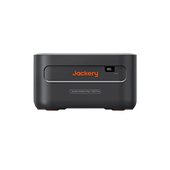
The Jackery Explorer 300D as a 288Wh, ultra-light unit at about 5.5 lbs, designed for outdoor adventures and charging devices like phones, tablets, and cameras. For an Elbrus trip, it fits naturally as a convenient backup power source for essentials
Jackery Explorer 300D for Trips to Mount Elbrus
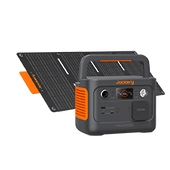
A trip to Mount Elbrus usually means cold mornings, long road transfers, changing weather, and plenty of time away from easy charging points. That is exactly where a compact power station makes sense. The Jackery Explorer 300D fits this kind of trip well because it focuses on portability, straightforward charging, and everyday device support rather than bulky high-capacity backup.

The Ultra-Lightweight "Summit" Profile
In mountaineering, every gram counts. The 300D is a "DC-only" hybrid, meaning it lacks a heavy AC inverter. It weighs just 2.5 kg (5.5 lbs). This is significantly lighter than the 300 Plus (approx. 3.75 kg) and most 300Wh power stations, making it feasible to carry to higher camps (like the Barrels Hut or Diesel Hut) without exhausting yourself. It is roughly 56% smaller than previous 300-series models. It can be easily tucked into a technical backpack alongside crampons and ropes.
High-Altitude Efficiency (DC-to-DC)
At high altitudes, battery efficiency is life-critical. Most power stations waste energy converting DC to AC. Because the 300D is designed for Direct DC output, it is nearly 90% energy efficient. This means you get more actual "juice" for your headlamps, satellite messengers (Garmin InReach), and GPS watches than you would from a standard unit with an inverter.
The dual 140W USB-C ports can rapidly charge a MacBook Pro or professional drone in a fraction of the time, which is vital during short weather windows at Base Camp.
Built for the Cold (Extreme Weather Resistance)
Mount Elbrus is notorious for sub-zero temperatures and sudden storms. The 300D is rated to discharge down to -15°C (5°F). While you should still keep it inside your sleeping bag or an insulated bag at night, it is far more resilient to cold-soak than standard lithium-ion banks.
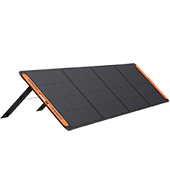
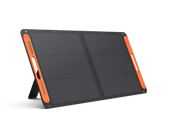
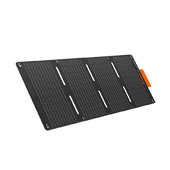
When paired with the SolarSaga 40W Mini (often bundled with the 300D), you get a solar panel that is IP68 waterproof and dustproof. It can handle blowing snow and spindrift on the mountain without failing.
The unit is 100% fanless (0 dB). This prevents fine snow or glacial dust from being sucked into the internals, a common cause of failure for traditional generators in alpine environments.
The 2-in-1 Handle & Cable Design
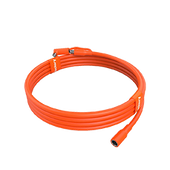
Mountaineering gear should be multi-functional to save space. The "handle" of the 300D is actually a heavy-duty, reinforced 140W charging cable. You don't have to worry about losing your charging cable in a snowbank or having it snap in the cold—it is built into the structural grip of the device and tested for high tension.
What Are the Top 5 Highest Mountains in Europe?
If you mean Europe as a continent, the usual top five are all in the Caucasus except Mont Blanc. The standard ranking is Mount Elbrus (5,642 m), Dykh-Tau (5,205 m), Shkhara (5,193 m), Koshtan-Tau (5,152 m), and Janga / Jangi-Tau (about 5,051–5,074 m, depending on the summit named).
1. Mount Elbrus
Mount Elbrus is the highest mountain in Europe at 5,642 metres. It stands in the Greater Caucasus in southwestern Russia and is widely recognised as Europe’s top peak when the Europe–Asia boundary is drawn along the Greater Caucasus.
2. Dykh-Tau
Dykh-Tau is usually ranked as the second-highest mountain in Europe, reaching 5,205 metres. It is also in the Caucasus, in Russia, close to the Georgian border. PeakVisor lists it directly after Elbrus on its Europe-by-elevation register.
3. Shkhara
Shkhara stands at 5,193 metres and is commonly listed as the third-highest mountain in Europe. It lies on the Georgia–Russia border in the central Caucasus. PeakVisor places it just below Dykh-Tau in the continental ranking.
4. Koshtan-Tau
Koshtan-Tau reaches 5,152 metres, making it the fourth-highest mountain in Europe on standard continental lists. Like Dykh-Tau, it is located in the Russian Caucasus. PeakVisor includes it immediately after Shkhara in Europe’s top elevations.
5. Janga (Jangi-Tau)
The fifth-highest mountain in Europe is usually given as Janga, also written Jangi-Tau, at a little over 5,050 metres. Glavnaya Jangi at 5,074 metres, with nearby Jangi summits also listed separately, which is why exact naming can vary slightly depending on the source and summit point used.
FAQs
The following are frequently asked questions about the highest mountain in Europe.
1. What myths and legends are linked to Mount Elbrus?
Mount Elbrus is surrounded by Caucasus folklore, and many stories in the region connect the mountain with giants, heroes, and sacred power. While the exact legends vary by ethnic tradition, Elbrus has long held a special symbolic place in the Caucasus because of its size, volcanic form, and dominant presence in the landscape.
More broadly, modern reference sources consistently describe Elbrus as a landmark peak of the Caucasus and Europe’s highest mountain, which helps explain why it features so strongly in regional storytelling.
2. How do you get to Mount Elbrus?
Most visitors reach Mount Elbrus through the Baksan Valley, usually travelling first to Mineralnye Vody or Nalchik, then continuing by road to Terskol or Azau, which are the main resort and access points on the south side.
The Mineralnye Vody and Nalchik are the closest major cities, and from there travellers can take local transport to Terskol. On the mountain itself, the standard tourist and climbing approach commonly starts from the Azau Valley.
3. Is Elbrus harder than Everest?
In overall seriousness, Everest is far harder and more dangerous than Elbrus because of its extreme altitude, longer expedition format, and much greater objective risk. However, that does not make Elbrus easy.
The Elbrus is a moderately technical mountain where climbers often need crampons, ice axe skills, and rope travel, while Everest is a much higher expedition peak that demands far more experience, logistics, and resilience.
4. Is Kilimanjaro easier than Elbrus?
For most people, Kilimanjaro is generally easier than Elbrus. Elbrus is lower but harder, mainly because it is colder, covered in permanent snow and ice, and requires more alpine skills and equipment. By contrast, Kilimanjaro is usually described as a trekking mountain where the main challenge is altitude and endurance rather than technical snow or glacier travel.
Final Thoughts
Mount Elbrus is not only the highest mountain in Europe, but also one of the most distinctive. Its volcanic background, high-altitude environment, and broad range of travel experiences make it far more than just a climbing objective.
For travellers, the appeal of Elbrus lies in that variety. You can approach it as a serious mountaineering challenge, a winter sports destination, or a scenic nature escape with lifts, hikes, springs, and mountain views.
And when you are preparing for long travel days in cold, remote conditions, practical gear matters just as much as enthusiasm. A compact option like the Jackery Explorer 300D fits naturally into this kind of trip by helping keep essential devices charged without adding too much weight, making it a sensible addition to your packing plan.


