











Almost every European country, from Albania to the United Kingdom, has issued unprecedented warnings to its population to prepare for a range of potential disasters, including military conflict, cyberattacks, and severe weather. Have you stocked up on supplies to last the first 72 hours of a national emergency?
To ensure a supply of essential products for at least 72 hours, European households should store critical items such as bottled water, food, basic survival gear like flashlights and matches, and waterproof bags for essential documents.
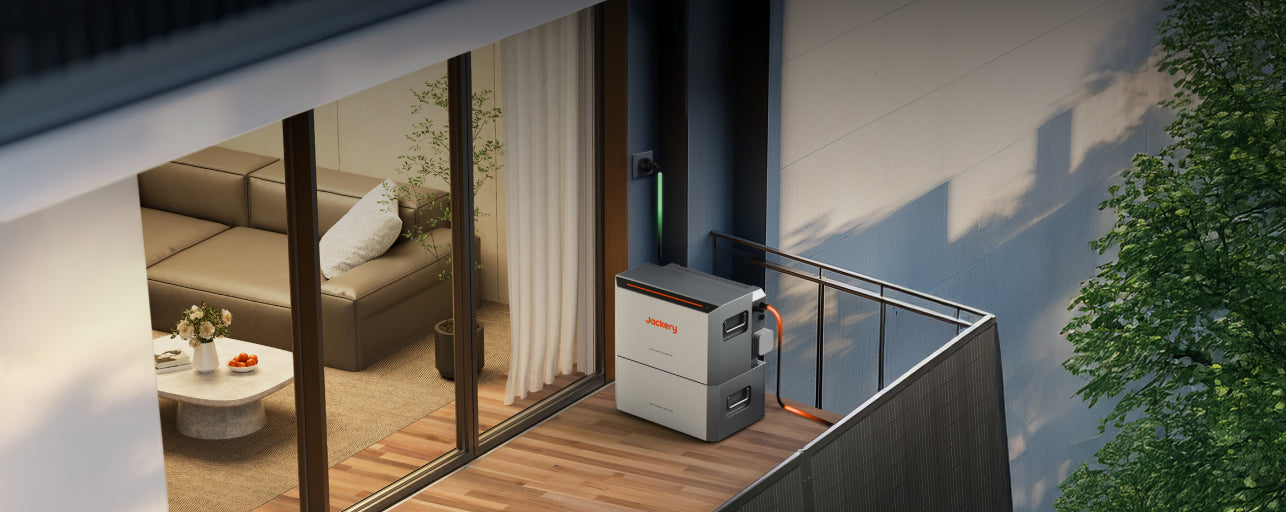
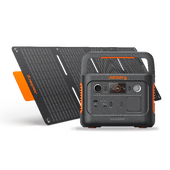
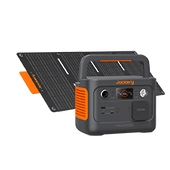
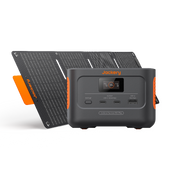
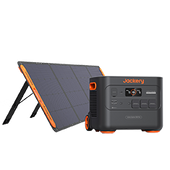
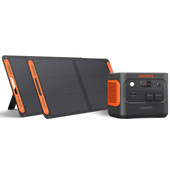
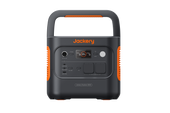
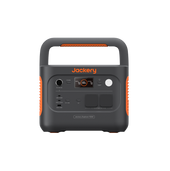
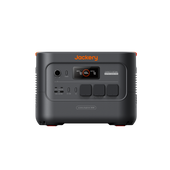
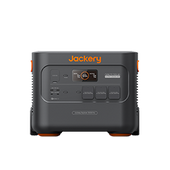
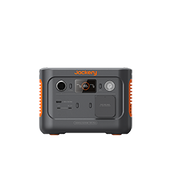
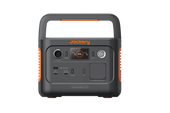
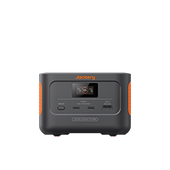
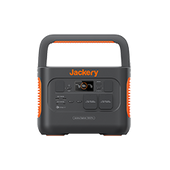
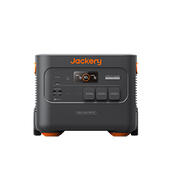
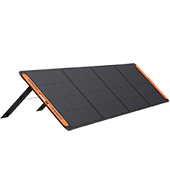
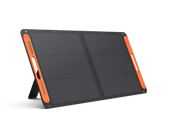
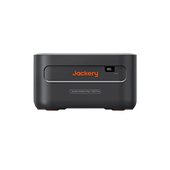
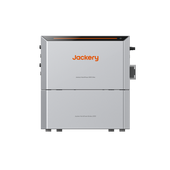
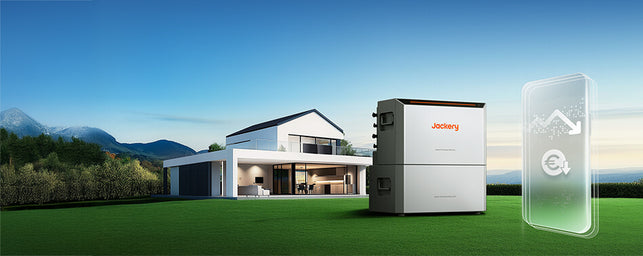
Furthermore, solar systems can provide continuous power to homes when standard power lines fail. Balcony solar systems, such as the Jackery HomePower 2000 Ultra, are intended for household emergencies and require no complicated installation. They are just plug-and-play.
|
Key Takeaways: |
|
Is Self-Reliant Emergency Response Necessary in Europe?
In Europe, autonomous emergency response is deemed critical. Since March 28, 2025, the EU has entered a new phase of civil defence preparations. The new "Disaster Preparedness Coalition Strategy" describes how member states can prepare their citizens for war, crises, and catastrophes. It urges the EU's 450 million residents to prepare for a range of disasters, including military conflict, cyberattacks, catastrophic weather events, and infrastructure failures.
The European Commission has issued a new 30-step plan requiring every EU home to build a 72-hour emergency survival kit. It recommends storing basic emergency supplies, including bottled water, canned food, flashlights, batteries, and first-aid kits. National governments are also required to prepare for conflict or disasters while maintaining the usual operation of national services such as healthcare, water supply, and telecommunications.
How are European countries implementing autonomous emergency response?
The EU executive body states that catastrophe preparedness activities differ by country. For example, Spain and Greece are more prone to wildfires, whereas Romania and Bulgaria are more prone to earthquakes.
Germany has issued a 68-page document outlining what residents should do in the event of a flood, fire, or nuclear calamity, including recommendations for stockpiling 10 days' worth of food and other supplies.
In addition, all Dutch homes will get a handbook in the coming months with instructions on how to respond to an emergency within the first 72 hours. The brochure guides what to include in an emergency kit and provides recommendations for creating a comprehensive disaster plan. The pamphlet will be distributed to all families from November 25 to January 10 as part of the "Think Ahead" education campaign.
What Should Europeans Do According to the Emergency Manual?
Many European governments have released or revised emergency manuals in recent years, urging citizens to be prepared for situations such as war, natural disasters, power outages, and water shortages. The central principle is "Think Ahead." Prior preparedness is essential for protecting yourself and your family. Emergency manuals in most European countries advise individuals to perform the following:
Measure 1: Prepare a 72-Hour Survival Kit
For example, in the Netherlands, the government advises residents to stock a 72-hour emergency pack with canned food, water, batteries, and even cash. This ensures self-sufficiency, even if only momentarily, in the event of a public system outage.
|
72-Hour Emergency Kit Checklist |
|
|
Drinking water (at least 2-3 litres per person per day) Food (compressed biscuits, canned food, etc.) Warm clothing Emergency thermal blanket Important documents and certificates Small amount of cash Baby supplies (diapers, formula, etc.) Pet supplies (pet food, leash, etc.) |
Flashlight Radio First aid kit Hand sanitiser Multi-tool knife Whistle Waterproof matches or a lighter Raincoat Portable power source/solar system |
This list is only for reference. Please put together a survival kit based on the government's recommendations and your own needs.
Please check your survival kit every six months and replace any expired food, water, or medications. It is also crucial that you keep this survival pack readily accessible and ensure all family members know where it is.

Measure 2: Develop a Family Emergency Plan
A clear, executable emergency plan ensures that every family member can act swiftly, safely, and successfully in the event of a catastrophe. Define precise emergency scenarios that simulate a variety of conceivable disasters, including earthquakes, floods, and power outages. Please get together all family members to work on this plan.
Identify Assembly Points: Select two assembly points where your family can reunite following a disaster. Choose one near your home (know the location of community emergency shelters) and one further away for temporary housing in case you need to flee or are unable to return to the region.
Create an Emergency Contact Plan: Designate an out-of-town friend or family member as your family's emergency contact. After a disaster, it can be easier to make long-distance calls to unaffected locations.
Make an Evacuation Plan: Identify possible evacuation routes to ensure you can reach the scheduled assembly site. If you do not have your own transportation, please ask relatives, neighbours, friends, or local authorities to arrange transportation for you.
Develop a House Evacuation Plan: Designate one or more safe spaces in your house. These safe rooms should have as few windows or doors as possible and be equipped with a television, radio, and phone.
Practise Your Plan with Your Family: Practise your emergency plan with the entire family at least 2-3 times per year. After each practice session, adjust your plan as needed based on the real circumstances. In addition, you should consider the needs of each family member, including those with mobility issues or disabilities, older adults, youngsters, and pets.

Why Is a Balcony Solar System So Important in Self-Reliant Emergency Preparedness?
Electricity is essential in self-sufficient emergency preparedness. A portable power source can be included in a 72-hour survival kit, but its capacity is limited and unsuitable for long-term use. Balcony solar power can provide a steady supply of electricity to European households using free solar energy. It is not only an energy source for household self-sufficiency in emergency scenarios, but also a demonstration of survival skills. Its significance is demonstrated in the following areas:
Responding to Power Outage Crisis
When the standard power grid goes down due to a disaster, balcony solar systems can keep families powered. It captures solar energy using photovoltaic panels and, when combined with energy storage batteries, can provide off-grid power, continually powering lighting, communication, heating, medical equipment, and other devices during power outages.
Achieving Energy Self-Reliance
Many European countries rely heavily on imported energy, and their natural gas and electrical delivery networks are vulnerable to global events. In the case of a conflict, energy supplies may deteriorate swiftly. Balcony solar power allows households to become self-sufficient without relying on a shaky power grid or limited fuel supply.
Rapid Deployment
Traditional energy equipment, such as diesel generators, requires fuel delivery and intricate installation, making it difficult to deploy quickly. Solar systems, with their modular, lightweight, and plug-and-play design (for example, the Jackery HomePower 2000 Ultra), can be easily moved to disaster zones and deployed in a variety of locales and situations.

Scalable to Demand
Balcony solar systems can be tailored to specific energy needs, ranging from small, portable charging stations to larger systems capable of powering a whole home. Their modular design enables the installation of additional solar panels and batteries.
Renewable and Sustainable
Unlike generators, which require a constant supply of fuel, diesel or propane, solar power is totally dependent on sunlight, a free and essentially endless resource. Furthermore, solar systems provide a clean energy alternative with no emissions, noise, or pollution.
Basic Balcony Solar System Setup Guide
The governments of France, Germany, and the Nordic countries are leading the way in disseminating survival guidelines and encouraging the storage of 72-hour emergency kits. Against this backdrop, a cheap and practical solar system can not only power mobile phones, lamps, and small appliances, but it can also facilitate communication, sustain basic living, and even save lives in an emergency. The installation tutorial below will walk you through the entire process step by step.
Key Components of a Solar Emergency System
A basic emergency solar system mainly consists of the following components:
|
Components |
Functions |
|
Solar panels |
Converts sunlight into direct current (DC). |
|
Solar controller |
Manages the charging process, preventing overcharging or overdischarging of the battery and protecting the system's lifespan. |
|
Storage batteries |
Stores excess energy for use at night or on cloudy days. |
|
Inverter |
Converts the battery's DC power into alternating current (AC) for use by ordinary household appliances. |
|
Wires/cables |
Connects various components. |
|
Brackets and fixtures |
Used to mount the solar panels. |
Suitable Installation Location for an Emergency Solar System
Solar panels require as much sunlight as possible; therefore, location selection is critical. Here are some things to consider:
Orientation: In Europe, the ideal orientation for solar panels is straight south to maximise sunshine hours.
Angle: The optimum tilt angle for solar panel installation is between 30° and 50°, preferably closer to the local latitude.
Avoid Obstructions: Make sure there are no trees, chimneys, or other structures blocking sunlight, especially between 9 a.m. and 3 p.m.
Rooftops, balcony railings, patio surfaces, and exterior wall supports are all common installation places. Consider the structure's load-bearing capacity and wind resistance. Apartment residents can choose portable solar panels, which require no digging and are easy to store.

Balcony Solar System Installation Steps
The following are basic installation methods for an emergency solar system, intended for reference only. Please keep in mind that connecting the system to your home's main power supply requires the services of a qualified, certified electrician to ensure compliance with all local legislation and safety guidelines.
Step 1: Secure the Bracket
First, secure the bracket in the desired spot, making sure it is solid and does not wobble.
Step 2: Install the Solar Panel
Secure the solar panel to the bracket with screws, then adjust the angle and tighten the screws. Handle carefully to avoid scratching the surface.
Step 3: Connect the Inverter and Battery
Connect the inverter's input wires to the battery, paying particular attention to the positive and negative terminals.
Step 4: Connect the Controller and the Battery
Connect the battery's positive and negative terminals to the "Battery" port on the controller. The polarity must be proper. After connecting, the controller's indicator light should illuminate to indicate the charging status.
Step 5: Connect Solar Panels and Controller
Connect the solar panel's positive and negative cables to the "Solar Input" connector on the controller. The positive and negative terminals should not be reversed.
Step 6: Connect to the Grid and Household Electricity
You can connect the system to the electrical grid. Even if you do not connect to the grid, you must connect it to your home's electrical system to power your appliances.
Step 7: Test the Operation
On a sunny day, check whether the controller displays a charging indicator. Use a test pen or a multimeter to determine whether the voltage is within range. Connect a tiny appliance to ensure it works correctly.
Jackery HomePower 2000 Ultra: Easy-to-Use Solar System
Extreme weather, energy swings, and localised power outages are all becoming more common across Europe. Several European governments require residents to prepare a 72-hour survival kit and build detailed home emergency plans.
Furthermore, faced with these uncertainties, an increasing number of residents recognise that relying on the grid is no longer an option; learning basic self-rescue emergency skills is critical to ensuring home safety.
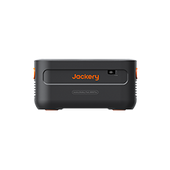
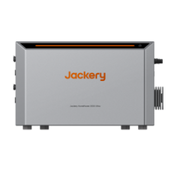
Against this backdrop, balcony solar systems, such as the Jackery HomePower 2000 Ultra, are proving to be practical tools for home emergency preparedness. It's a balcony power plant with energy storage, charging, and inverter capabilities, built explicitly for emergencies and home use.
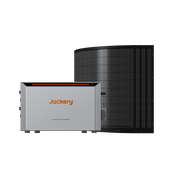
It supports up to 2,800W of solar input, with a maximum microinverter input of 800W and Dual MPPT up to 2,000W PV Input. Compatible with up to 4 solar panels. For European families wishing to improve their self-reliant emergency capabilities, it offers several key advantages:

No Complicated Installation Required, Plug and Play
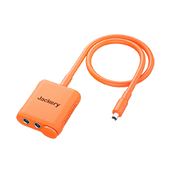
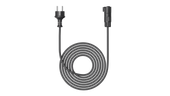
Unlike standard solar systems that involve drilling, wiring, and mounting brackets, the Jackery HomePower 2000 Ultra does not require complex installation. It's simple to use and plug-and-play (no drilling necessary, just three cords, installation in 5 minutes), allowing anyone to build their own solar power system without professional knowledge.
|
3 Steps to Install Jackery HomePower 2000 Ultra |
|
|
Step 1: Attach Padlocks To The Solar Panel |
Secure both ends with ropes: first, lightly tighten the rope clamp, then pass the rope through the eyelets and tensioner. |
|
Step 2: Hang The Lightweight Solar Panel On The Balcony |
Place the panel over the railing. Finally, tighten the rope clamp securely. |
|
Step 3: Connect The Solar Panel To The Power Cable |
Connect The Panel To The HomePower 2000 Ultra |
Supports Solar Charging, Green and Reliable
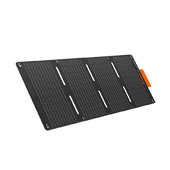
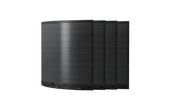
When paired with Jackery solar panels (such as the Jackery Flexible Solar Panel Set), the Jackery HomePower 2000 Ultra can charge during the day with sunlight. It can accommodate up to 2800W of solar input, with the micro-inverter having a maximum input power of 800W and the dual MPPT supporting up to 2000W.
Sufficient and Expandable Power to Meet Emergency Needs
The Jackery HomePower 2000 Ultra has a 2048Wh capacity, which is enough to charge a phone more than 50 times, offer LED lighting all night, or power a small refrigerator for 6-8 hours. Furthermore, a single HomePower 2000 Ultra can stack up to 3 battery packs, increasing capacity to 8kWh and providing about 1-2 days of backup power for an apartment.
Lightweight and Flexible, Suitable for Emergency and Home Use
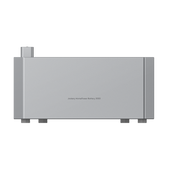
The Jackery HomePower 2000 Ultra is lightweight (26.4 kg) and compact (270 × 445 × 270 mm), with a handle for convenient mobility. It can be installed in the living room, bedroom, or basement during power outages; it can also be moved outside for camping, community emergency stations, or temporary shelters, providing versatility.
Safe and Reliable, Designed for Extreme Environments
The Jackery HomePower 2000 Ultra features advanced fire suppression technology that actively detects fire threats, sends rapid notifications, and automatically suppresses aerosols. Furthermore, its built-in heating technology enables it to operate over a temperature range of -20°C to 55°C. It is waterproof and dustproof to IP65 standards, making it suitable for use outside.
Applications of Balcony Solar Systems in Emergency Scenarios
Balcony solar systems are quickly becoming an essential tool in Europe's self-sufficient emergency response, providing reliable power for basic living, medical care, and community mutual aid during power outages, disasters, or conflicts.

Ensure Basic Electricity Supply
Storms, earthquakes, or conflict can cause power outages that persist for days, if not weeks. A basic balcony solar system can play an essential role in this. Many European households install modest solar panels on balconies, rooftops, or backyards, coupled with energy storage batteries and controllers, to form a simple off-grid system. These can power light bulbs, fans, heaters, and basic domestic equipment.
Build and Improve Community Resilience
When disasters occur, solar-powered community microgrids can provide dependable power. Local emergency response centres, for example, equipped with solar systems, can continue to operate even when the power goes out. It can also serve as a command centre during a crisis, coordinating rescue efforts and providing basic services to affected residents.
Ensure Communication
Cell phones, radios, and walkie-talkies are essential instruments for gathering information, contacting loved ones, and seeking assistance. When the power goes out, simply placing solar panels on a balcony or windowsill can charge cell phones and radios, ensuring continued connectivity for coordination and information dissemination.
Emergency Rescue
In the event of a disaster, the initial response is frequently the most effective. However, power shortages often disrupt rescue attempts. Balcony solar power can provide critical lighting for nighttime rescue operations, increasing rescuer safety and helping them identify debris and work locations. Furthermore, during rescue operations in icy or remote areas, it can charge walkie-talkies, GPS devices, and first-aid kits to ensure continued operation.
Support Emergency Medical Services
During a crisis, solar systems can power medical equipment such as ventilators, oxygen concentrators, and insulin refrigerators, and can also refrigerate vaccines and drugs. These systems can be engaged immediately during a power outage, saving patients valuable time. In addition, solar power systems are used in field first-aid stations and temporary medical facilities.
Does Europe Support the Installation of Solar Systems?
With the advancement of the European Green Deal, RE Power EU, and Fit for 55 targets, European countries are promoting renewable energy development. Currently, several EU countries have about 1 kilowatt of solar power capacity per capita, roughly equivalent to two solar panels.
The Netherlands leads with 1.4 kilowatts per capita, followed by Germany at 1.2 kilowatts per capita. Furthermore, to promote this new technology, many nations have begun offering incentives for solar panel installation and energy storage, pushing utilities, businesses, and individuals to quickly embrace this solution on a broad scale.
More than €225 billion in subsidies are available across Europe, provided your solar project complies with each country's constantly changing rules. The following are some of the subsidies or grants offered by European countries to support solar system installation:
Netherlands: The Dutch government encourages increased self-consumption of solar energy and provides subsidies for solar panels, such as lowering the VAT on household photovoltaic systems to zero. Furthermore, you can consume a portion of the solar power generated while returning the remaining to the grid, for which your electricity supplier would compensate you. This is known as netting (in Dutch: salderingsregeling). The Dutch Tax and Revenue Authority website provides information on how to apply for subsidies.
Germany: Starting in January 2023, the supply and installation of solar panels will be exempt from VAT. The SolarPLUS program offers subsidies of up to €30,000 to landlords, investors, tenants, owners, and other qualifying individuals for the purchase and installation of solar energy storage systems. There is also a subsidy of up to €500 available for the purchase of plug-in solar equipment.
France: Beginning October 1, 2025, household solar systems with a capacity of less than 9 kW will be eligible for a preferential VAT rate of 5.5% if they meet strict environmental and technical requirements. Furthermore, the feed-in tariff policy for solar power generating systems under 100 kW in France will remain in effect until January 1, 2026, and is only applicable to systems erected on buildings, sheds, or shading structures.
FAQs
The following are frequently asked questions about the emergency preparations in Europe.
1. What's in a European emergency survival kit?
According to the European Commission's recommendations, every household should stock a core survival kit containing:
Non-perishable food and drinking water (enough for at least 3 days)
Battery-powered flashlight and spare batteries
Power bank
Emergency radio
Medical emergency kit
Hygiene kit
Essential documents
Warm clothing and blankets
List of local emergency contacts
2. Why do European countries need to be prepared for emergencies?
Rising geopolitical tensions, increased cyber threats to digital infrastructure, and a greater frequency of major weather events and infrastructure breakdowns, such as floods and heat waves.
3. Does the Netherlands also need to be prepared for emergencies?
Absolutely. The Dutch government is likewise focused on creating self-managed emergency response plans for its citizens. In the following months, all Dutch families will get a booklet as part of the "Think Ahead" education campaign. It explains how to respond to an emergency within the first 72 hours. The brochure offers advice on which goods to include in an emergency kit, as well as pre-planning with family and friends. The brochure also guides the creation of a comprehensive emergency plan.
4. Are balcony solar systems necessary for European residents' self-reliance in emergency preparedness?
Absolutely. During disasters and emergencies, traditional energy infrastructure is frequently disrupted, resulting in extensive power outages and affecting routine communication, medical services, food preservation, and other critical services. Balcony solar systems, on the other hand, can function completely independently and off the grid. They can deliver power even when regular infrastructure fails. Portable solar panels can also be quickly transported to disaster-affected areas to provide power.
Final Thoughts
In summary, governments across Europe are issuing alerts, or rather advice, to be prepared. Whether it's war, hacking, or natural calamities, citizens are being persuaded that it's time to take charge of their own protection.
Citizens are required to create an emergency supply kit containing essential items that will last at least 72 hours. This should include not just water and food, but also balcony solar systems such as the Jackery HomePower 2000 Ultra. These can power essential services like lighting when storms, earthquakes, or conflict disrupt the electrical grid.