



















Travelling through Europe by motorhome gives you a very different way to see the continent. You are not tied to one hotel, one route, or one timetable. One day you might park near a vineyard in France, the next in a coastal town in Spain, or at a countryside site in Ireland. That freedom is a big part of the appeal, but it also comes with one important question: where can you actually park a motorhome in Europe?
The answer is not always simple. Across Europe, motorhome parking rules vary by country, region, and sometimes even by town. In some places, daytime parking is easy but overnight stays are restricted.
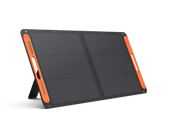
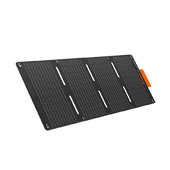
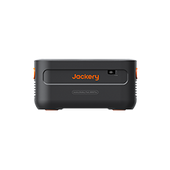
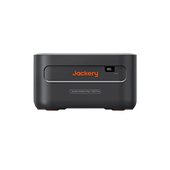
This guide explains the general parking rules for motorhomes in Europe, the country-specific rules in France, Germany, the UK, the Netherlands, and Ireland, as well as the best types of places to park. It also covers practical tips for finding the right stop, road etiquette that leaves a good impression, and why a Jackery Solar Generator can be a useful addition for motorhome travel in Europe.
|
Key Takeaways: |
|
Parking for Motorhomes in Europe: General Rules
Parking a motorhome in Europe is usually straightforward, but the key point is this: parking and overnight stays are not treated the same way everywhere. In many places, you can legally park a motorhome in a normal parking area during the day if it fits the bay, follows local height or weight limits, and does not break any signposted restrictions.
However, staying overnight, putting out chairs, awnings, steps, or levelling blocks can move you from “parking” into “camping,” which is often regulated much more strictly. Across Europe, local signs and municipal rules matter more than one single continent-wide rule.
A common situation in Europe is that city centres, historic districts, and coastal tourist zones are the most restrictive. Many towns limit access for larger vehicles, while some urban areas use restricted traffic zones or special local controls that can catch visiting drivers out. This is especially important in popular tourist destinations, where standard car parks may not allow longer or heavier motorhomes, even if spaces appear empty.
For overnight stops, Europe generally offers three practical options: official campsites, dedicated motorhome areas, and authorised stopovers. Tourism and camping sources across Europe point travellers toward designated motorhome parking areas and service points rather than informal roadside stays.
Another general rule is that wild camping and sleeping in ordinary public car parks are often restricted or banned, especially outside clearly permitted areas. Size also matters. Many European car parks were designed for standard passenger cars, not larger motorhomes, so length, height barriers, axle weight, and bay size can all become practical problems. Even where parking is technically allowed, a motorhome that overhangs markings, blocks circulation, or takes multiple spaces may still risk a fine or removal.
Parking Rules for Motorhomes in Different European Countries
Motorhome parking rules in Europe can look similar at first, but the details change from country to country. A vehicle that is legally parked for the day may not be allowed to stay overnight, and many towns add their own local rules on top of national guidance. That is why the safest approach is always to check both the national position and the signs at the exact place where you stop.
 France
France is one of the easiest countries in Europe for motorhome travel because of its large network of aires de camping-cars and dedicated stopovers. Practical guidance used by motorhome travellers in France says you can generally stay overnight where ordinary parking is allowed, especially if your vehicle is under 3.5 tonnes, unless local restrictions say otherwise. France also relies heavily on aires, which are specifically set up for self-contained motorhomes and often allow short overnight stays with basic services.
France makes a clear distinction between parking and camping. On most aires, and in many public parking areas, you are expected to remain within the footprint of the vehicle. Putting out chairs, awnings, washing lines, or similar equipment can turn a legal overnight stop into unauthorised camping.
Germany
Germany is generally organised and predictable for motorhome travellers, but it is also more rule-based than France. Motorhomes can usually be parked on streets or in car parks in urban areas unless traffic signs or local restrictions say otherwise, and some limits especially affect heavier vehicles. Germany also has a strong network of Stellplätze, which are designated motorhome stopovers and usually the best choice for overnight stays.
A key detail in Germany is that overnight sleeping in an ordinary parking place is not the same as camping. Sleeping in the vehicle may be tolerated as a short rest to restore fitness to drive, but this does not give travellers a free right to camp in public car parks.
United Kingdom
In the UK, there is no single nationwide motorhome parking rule for overnight use of ordinary car parks. Standard road parking rules from the Highway Code still apply, but overnight parking and sleeping are often controlled by local councils, parking orders, and site-specific signs. In other words, a motorhome may be allowed to park during the day in one council car park, while overnight sleeping is banned there unless the council has created a designated scheme.
Cornwall Council bans overnight sleeping in almost all of its car parks except a specified site in Bude, while some Scottish and English councils now run dedicated paid overnight bays for self-contained motorhomes.
Netherlands
The Netherlands is convenient for motorhome touring, but it is not a wild camping country. Travellers toward campsites and parking areas designed specifically for motorhomes, and wild camping is not allowed.
Dutch motorhome stopovers work in a similar way to French aires, but rules are often stricter about staying within the vehicle. Motorhome users may park, eat, and sleep within the vehicle during the allowed period, but camping-style behaviour such as setting out tables and chairs is generally not permitted unless a site specifically allows it.
Spain
Spain has long been popular with motorhome travellers, and the national direction remains fairly clear: a motorhome can generally stop and park under the same basic conditions as other vehicles, but this is only part of the story. In March 2026, Spain’s traffic authority DGT updated its motorhome instruction and reaffirmed that, in general, motorhomes may carry out stopping and parking manoeuvres under the same conditions and limits as other vehicles. However, municipal rules and local signs still apply on urban roads.
Spain is one of the countries where the difference between parking and camping is especially important. A legally parked motorhome is usually fine if it stays within its marked space and does not project equipment outside the vehicle, but councils can impose local bans, stay limits, or overnight restrictions in seafront areas, town centres, and tourist hotspots.
Ireland
Ireland is often seen as a relaxed road-trip destination, but official tourism guidance is actually quite direct: you cannot simply park up for the night anywhere you like. You cannot stay overnight in a camper van without permission, and it also notes that wild camping is not allowed unless you have the landowner’s permission.
Daytime parking may be possible where the vehicle fits and signs allow it, but for sleeping overnight, the safest and most accepted choices are approved campsites, dedicated parks, or private land where you have permission.
Daytime parking is often easier than overnight staying, and local signs always matter. France and Germany offer some of the strongest dedicated motorhome infrastructure, the UK depends heavily on council-level rules, the Netherlands discourages wild camping and pushes travellers toward designated stopovers, Spain allows ordinary parking in principle but still leaves room for strong local restrictions, and Ireland is much stricter about overnight stays without permission.
Where to Park for Motorhomes in Europe?
Motorhome travellers in Europe have more options than many first-time visitors expect. The main thing is choosing the right type of place for the kind of stop you want. Some places are best for a full holiday stay, some are made for a single overnight stop, and others are only practical for a short break on the road. In most of Europe, official or designated places are the safest choice, especially for overnight stays.

Campgrounds and Campsites
Traditional campsites are still one of the easiest and most reliable places to park a motorhome in Europe. They usually offer marked pitches, electricity, toilets, showers, waste disposal, fresh water, and often extras such as laundry rooms, restaurants, swimming pools, or play areas.
For families, longer road trips, or anyone who wants full facilities, campsites are often the most comfortable option. ACSI, one of Europe’s best-known camping platforms, lists thousands of campsites and motorhome pitches across the continent, which shows just how established this option is.
Holiday Parks
Holiday parks are a close relative of campsites, but they are often more geared towards resort-style stays than simple touring stops. In many parts of Europe, especially family holiday regions, these parks combine motorhome pitches with cabins, lodges, leisure facilities, restaurants, and entertainment. They can work well for travellers who want a holiday base rather than just a place to sleep for the night.
Motorhome Service Areas and Stopovers
Across mainland Europe, dedicated motorhome stopovers are one of the most practical options for touring. These include aires de camping-cars in France, Stellplätze in Germany, and camperplaatsen in the Netherlands and Belgium.
They are designed specifically for self-contained motorhomes and usually offer a pitch for the night plus basics such as water refill points, grey-water disposal, toilet cassette emptying, and sometimes electricity.
City-Approved Lots and Official Council Parking Areas
Some cities and towns in Europe now provide approved motorhome bays or council-managed overnight areas. These are especially useful where ordinary car parks are too small or where local authorities want to manage tourism without allowing uncontrolled overnight parking.
In the UK, for example, some councils explicitly allow overnight sleeping only in named car parks, while others ban it almost entirely unless a dedicated scheme is in place.
Farms and Vineyards
One of the more enjoyable ways to park a motorhome in Europe is through farm and vineyard stopovers. These are usually private rural locations where self-contained motorhomes can stay overnight on working farms, wineries, orchards, or artisan properties. France Passion is one of the best-known examples, offering stays with farmers and winegrowers on private land for short stops, usually up to 24 hours.
Wild Camping Friendly Zones and Tolerated Nature Areas
There are still parts of Europe where more remote overnight stops are possible, but this is the area where travellers need the most caution. So-called wild camping friendly zones are usually not a continent-wide category with one set of rules. Instead, they tend to be specific local areas where overnight stays are allowed, tolerated, or lightly managed, sometimes with their own rules.
Highway Service Areas and Motorway Rest Stops
Highway service areas are useful for short breaks, meals, fuel, and fatigue stops, but they are rarely the ideal place for a relaxed overnight motorhome stay. On long drives across Europe, they can be practical when you need to rest, stretch, eat, or pause for safety, and in some countries a short overnight rest may be tolerated if the goal is to restore fitness to drive.
Visitor Attractions, Marinas, and Rural Tourism Sites
In some parts of Europe, motorhomes can also park at visitor centres, marinas, leisure sites, rural attractions, and tourism-linked parking areas. Local planning documents and tourism proposals in the UK, for example, specifically mention places such as visitor attractions, sports clubs, water-based sites, heritage centres, and rural businesses as locations that can support motorhome stopovers or service points.
Recommend Places to Park Motorhomes in European Countries
If you are planning a motorhome trip across Europe, it helps to mix full-service campsites, dedicated motorhome areas, and a few official council-approved overnight lots. The best option depends on whether you want city access, beach time, vineyard views, or just a practical overnight stop with water and waste services.

France
France is one of the easiest countries for motorhome travel because it has a huge network of aires, coastal stopovers, and rural host properties. These five work well for different styles of trip:
- La Rivière-Saint-Sauveur, Normandy – a practical stop near Honfleur, good for travellers who want quick access to the estuary and the Normandy coast.
- Mont Saint-Michel motorhome area, Manche – a strong choice if you want to visit one of France’s most famous landmarks without relying on a standard campsite.
- Sains, Brittany – another smart base near Mont Saint-Michel, especially for travellers who prefer a quieter stop a few kilometres away.
- Vannes, Conleau, Brittany – a well-placed stop for exploring the Gulf of Morbihan and the old town of Vannes.
- France Passion farm and vineyard hosts – ideal if you want a more rural experience, since the network offers up to 24-hour stopovers on private farms and wine estates for self-sufficient motorhomes.
Germany
Germany is very good for organised motorhome touring, and the best stops are usually Stellplätze with clear facilities and rules. These five stand out as useful recommendations:
- Wohnmobilhafen WMV Büsum, Büsum – a strong option on the North Sea coast and one of the places highlighted by promobil in its 2026 top motorhome park list.
- Reisemobilhafen Bad Dürrheim, Bad Dürrheim – a good stop if you want spa-town access and a more established motorhome setup in southern Germany.
- CaravaningPark schaffer-mobil, Dresden – useful for travellers who want a proper motorhome base for visiting Dresden.
- Reisemobilhafen Am Freesenbruch, Zingst – a popular coastal choice for the Baltic side of Germany.
United Kingdom
In the UK, overnight parking depends much more on local authority schemes than in many parts of mainland Europe. That means council-approved sites are especially useful.
- Crescent Car Park, Bude, Cornwall – one of the clearest official overnight motorhome options in Cornwall, with designated areas for fully self-contained motorhomes.
- Riverbank Long Stay Car Park, Bideford – an official Torridge District Council overnight option that works well for touring North Devon.
- Churchfields Car Park, Appledore – another approved Torridge overnight stop, useful for estuary views and easy access to the village.
- Sydney House Long Stay Car Park, Torrington – a practical council-run stop with overnight motorhome parking allowed.
- Highland Council designated overnight car parks, Scotland – a good choice for self-contained vehicles touring the Highlands, especially if you want to stay within an official scheme rather than guess local rules.
Netherlands
The Netherlands is best for travellers who use official camperplaatsen and dedicated motorhome parks rather than trying to improvise. These five are good options:
- Marina Muiderzand, Almere – a year-round camper park with marina facilities, useful for travellers who want easy access to Amsterdam-area sightseeing without staying right in the city.
- Camperpark Middelburg, Zeeland – a good stop for exploring Zeeland’s historic towns and coast while keeping to an official motorhome setup.
- Camperpark de Bloesem, Borsele, Zeeland – a quieter countryside option with a more relaxed rural feel.
- Camperpark Valkenburg, Limburg – a useful southern Netherlands stop if you want hill-country scenery and easy access to Valkenburg and Maastricht.
Ireland
Ireland is stricter about overnight stops without permission, so approved parks and recognised camping sites are the safest and easiest recommendations.
- Camac Valley Tourist Caravan & Camping Park, Dublin – one of the most convenient choices for a Dublin-area stop with proper facilities.
- Fossa Caravan & Camping Park, Kerry – a strong base for Killarney and the Ring of Kerry.
- Clifden Eco Beach Camping & Caravanning Park, Galway – a very good option for Connemara and the Atlantic coast.
- Nagle’s Doolin Caravan & Camping Park, Clare – a smart stop for the Cliffs of Moher area and the west coast.
A practical rule is to recommend official aires in France, Stellplätze in Germany, council-approved lots in the UK, camperplaatsen in the Netherlands, and approved parks in Ireland.
Tips for Finding the Proper Parking for Motorhomes
Finding the right motorhome parking in Europe is much easier when you match the stop to your actual travel needs. Not every parking place serves the same purpose, and the best choice often depends on whether you need a long overnight stay, a short sightseeing stop, or just a quick break on the road.

1. Choose the Right Type of Stop
Start by deciding what kind of stop you need. A full-service campsite, a dedicated motorhome pitch, a city-approved bay, and a motorway rest area are all designed for different uses. Choosing the right category first makes the rest of your search much more practical.
2. Check Your Vehicle Size Before Booking
Always consider your motorhome’s height, length, and width before heading to a parking area. Many problems in Europe come from height barriers, narrow roads, tight turns, or bays that are too short for larger vehicles. A stop may look ideal online but still be unsuitable once you arrive.
3. Search by Facilities, Not Just Location
A good stop is not only about where it is, but also about what it offers. Some travellers only need a legal place to sleep, while others need electricity, fresh water, grey-water disposal, or toilet emptying points. Checking facilities in advance helps you avoid choosing a stop that does not fit your setup.
4. Prefer Official Motorhome Stopovers for Overnight Stays
When staying overnight, dedicated motorhome areas are usually a better option than ordinary car parks. These places are often set up specifically for self-contained vehicles, which means they are usually more practical, more clearly regulated, and often more affordable than general parking areas.
5. Read Local Parking Signs on Arrival
Even if a place looks suitable online, the roadside signs at the location are what matter most. Local rules can include restrictions on overnight parking, larger vehicles, or time limits. Always check the signs carefully before settling in, especially in towns, coastal areas, and popular tourist spots.
6. Think About Season and Timing
Parking conditions can change a lot depending on the time of year. A quiet and convenient motorhome bay in spring may be full or more restricted in peak summer. This is especially common in beach towns, lake areas, and city gateways, so it helps to have backup options nearby.
7. Use a Simple Parking Pattern for Longer Trips
For smoother route planning, use different types of stops for different parts of the journey. Campsites and holiday parks work well for longer stays, dedicated motorhome pitches suit touring nights, and service areas are best kept for short driving breaks. This approach fits how motorhome infrastructure is designed across much of Europe.
8. Plan Your Power Needs in Advance
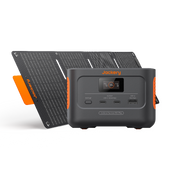
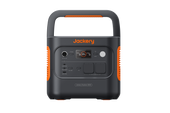
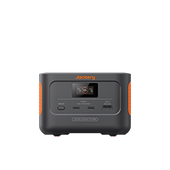
Power can make a big difference when you choose simple stopovers or scenic places without hook-up points. A Jackery Solar Generator can give you more flexibility by powering small appliances, lighting, and device charging during off-grid stays. That makes it easier to stay comfortably in places where space and scenery matter more than full campsite facilities.
Jackery Solar Generators for Motorhomes
For motorhome travel in Europe, a Jackery Solar Generator makes sense because it fits the way many people actually travel: moving between campsites, simple stopovers, scenic parking areas, and places where fixed hook-up points are not always guaranteed.
One of the biggest reasons to choose Jackery is extra freedom when parking. If you stay at a basic motorhome stopover, a farm stay, or a quiet rural pitch without mains electricity, a solar generator helps keep essentials running without depending entirely on campsite infrastructure. That flexibility matters in Europe, where many motorhome travellers mix full-service parks with simpler overnight stops.
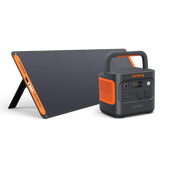
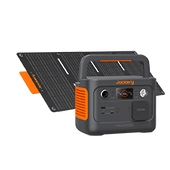
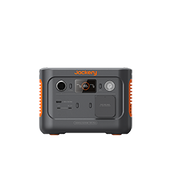
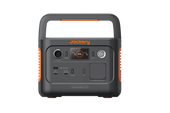
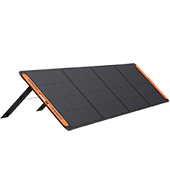
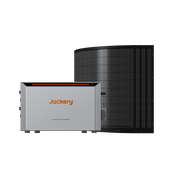
On a motorhome trip, you are not always driving long enough every day to rely only on vehicle charging, and you may not always want to pay for a powered pitch just to top up your battery. Jackery Solar Generators combine a Portable Power Station with Jackery Solar Panel, which gives travellers another way to recharge during longer stays or off-grid breaks.
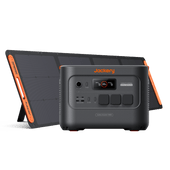
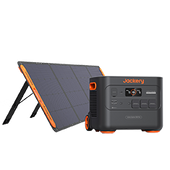
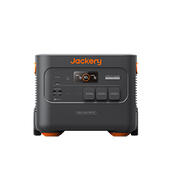
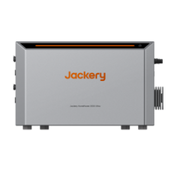
Jackery Solar Generator 3000 v2
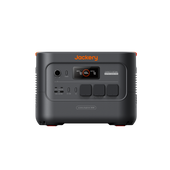
The Jackery Solar Generator 3000 v2 is a significant upgrade for motorhome and campervan users in Europe. It addresses the two biggest complaints about high-capacity power stations: weight and bulk, making it an ideal "drop-in" energy solution for van life.

Market-Leading Power-to-Weight Ratio
Traditionally, a 3kWh power station would weigh between 35kg and 45kg, making it difficult to move in and out of a van. At only 27 kg, the 3000 v2 is roughly 40% lighter than many competitors in its class. It is significantly smaller (about 47% smaller than previous standards), meaning it can fit into tight storage benches or under-bed compartments common in European van conversions like the Fiat Ducato or VW Crafter.
European-Specific Performance (230V/3600W)
The European model is optimized for the 230V/50Hz grid. With 3600W continuous output, you can run high-wattage European appliances simultaneously—such as a Nespresso machine, an induction hob, and a hair dryer—without tripping the inverter.
The 7200W peak surge handles the initial "startup" current required by air conditioning units (like the Truma Aventa) or heavy-duty power tools.
Long-Life LiFePO4 Chemistry
The v2 moves to LiFePO4 (Lithium Iron Phosphate) cells, a must-have for long-term travelers.It offers over 4,000 charge cycles to 70% capacity. If you use it every single day, it will last over 10 years. LiFePO4 is much more thermally stable than standard Lithium-ion, providing peace of mind when stored in the confined, sometimes hot environment of a parked motorhome.
Rapid Off-Grid Charging
When touring Europe, you need to replenish power quickly during short bursts of sun or brief stays at a campsite. It can charge from 0 to 100% in approximately 1.8 hours via a standard European wall outlet. It supports up to 1000W of solar input, allowing you to fully recharge in about 3.5 hours in ideal conditions. This is perfect for those "wild camping" in sunny regions like Spain, Portugal, or Greece.
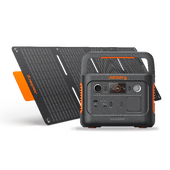
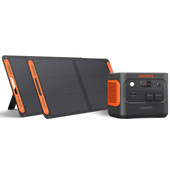
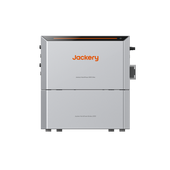
Jackery Solar Generator 2000 v2
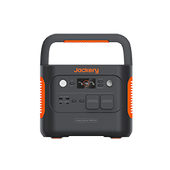
The Jackery Solar Generator 2000 v2 (Explorer 2000 v2 with SolarSaga 100W or 200W solar panel) is currently one of the most balanced options for European motorhome owners. While the 3000 v2 is a powerhouse for heavy users, the 2000 v2 is often the "sweet spot" for those who prioritize agility and space without sacrificing the ability to run high-wattage appliances.

The "Suitcase" Portability
The 2000 v2 is famously compact. Jackery used "Cell-to-Body" (CTB) technology to strip away unnecessary bulk. It weighs only 17.5 kg. For a 2kWh unit, this is roughly 35.6% lighter than its predecessor and most competitors. It is about 41% smaller than the industry standard for this capacity. In a European camper where every centimeter of storage counts, this unit fits into small cabinets or footwells where larger units simply won't go.
High Output in a Small Frame (2200W)
Despite its smaller size, it doesn't "throttle" its power. It provides 2200W of continuous AC power (with a 4400W surge). In a European context, this is plenty to run a 1500W induction plate, a small air fryer, or a powerful electric kettle. It effectively handles 95% of standard household appliances you'd bring on the road.
Whisper-Quiet Operation
This is a major selling point for anyone sleeping in a confined motorhome. When in "Quiet Charging Mode" (toggled via the app), it operates at ≤30dB. This is quieter than a whisper, meaning you can charge it from the van's internal sockets overnight without being disturbed by loud cooling fans.
Hyper-Fast "Emergency" Charging
European trips often involve frequent stops. The 2000 v2 is designed to top up during those short windows. It can charge from 0 to 100% in just 1.7 hours (and as fast as 1.33 hours in "Emergency Super Charge" mode via the app). It supports up to 400W of solar. While lower than the 3000 v2's 1000W, it’s a more realistic amount of panel space for the roof of a medium-sized van.
Road Etiquette That Wins Hearts
Good motorhome road etiquette in Europe is not only about following the law. It is also about making life easier for everyone else on the road. Because motorhomes are larger, slower, and more noticeable than ordinary cars, small acts of courtesy stand out quickly.
Avoid holding up faster traffic for too long. On scenic roads, mountain routes, and smaller rural roads, motorhomes often travel more slowly than local cars. That is normal. What matters is being aware of the queue behind you and using safe opportunities to let traffic flow again. This feels especially important in parts of Europe where roads are narrow and overtaking chances are limited.
Another big part of good etiquette is giving extra consideration to cyclists, pedestrians, and horse riders. In many European towns and countryside areas, motorhomes share space with far more vulnerable road users. Drivers should give way to cyclists in cycle lanes and cycle tracks, allow pedestrians and cyclists to cross in slow-moving traffic, and slow down when passing cyclists and horse riders on single-track roads.
Good etiquette also means driving gently in villages, campsites, and built-up areas. Large vehicles create more noise, more visual pressure, and more risk for people walking nearby, so a lower, steadier speed makes a real difference. If you are driving a right-hand-drive motorhome on the continent, courtesy also means being extra careful when overtaking or changing position on the road.
Even where a motorhome is legally allowed to stop, the considerate approach is to stay neatly within the marked space, avoid blocking views, entrances, pavements, or service points, and leave enough room for others to manoeuvre.
FAQs
The following are frequently asked questions about parking motorhomes in Europe.
1. Can you park a motorhome anywhere in Europe?
No, you cannot assume a motorhome can be parked anywhere in Europe. In most countries, daytime parking, overnight staying, and camping are treated differently, and local signs or municipal rules often decide what is allowed in a specific place. Spain’s traffic authority, for example, says motorhomes may generally stop and park under the same conditions as other vehicles, but local urban rules still apply.
2. Is it legal to sleep in a motorhome in a car park in Europe?
Sometimes, but not always. In many European countries, sleeping overnight in a standard public car park is restricted, discouraged, or only tolerated in limited situations, while official motorhome areas, campsites, and approved stopovers are the safer legal choice. The European Consumer Centres Network notes that in most EU countries, overnight stays with a caravan or motorhome in parking lots and at the roadside are illegal.
3. What is the best type of place to park a motorhome in Europe?
For most travellers, the best option is usually a designated motorhome stopover, aire, Stellplatz, camperplaats, or campsite, depending on the country and the kind of trip. These places are set up for larger vehicles and often provide useful services such as water, waste disposal, and sometimes electricity.
4. How do I find legal motorhome parking in Europe?
The safest way is to use official campsite or motorhome-stop databases, then confirm the rules when you arrive by checking local signs. Tools such as ACSI and Campercontact list campsites and dedicated motorhome areas across Europe, but roadside signage and local authority rules remain the final authority on site.
Final Thoughts
Parking a motorhome in Europe becomes much easier once you understand how the system works. The most important thing is to remember that not every parking space is suitable for an overnight stop, and not every country treats motorhomes in the same way. Local rules, road signs, and designated motorhome infrastructure all play a big role in shaping where you can stay.
Campsites and holiday parks work well for longer stays, dedicated motorhome areas are ideal for touring nights, and approved city or council lots can make urban visits far more manageable.
Add in a bit of courtesy on the road and better energy flexibility with a Jackery Solar Generator, and motorhome travel in Europe becomes not only more convenient, but also more comfortable and more enjoyable.


