





















Quick Answer:
Solar panel costs in Europe vary widely — Belgium averages €1,200–€1,600 per kWp, Germany €1,300–€1,600, and Spain €900–€1,200. Hardware prices have dropped 20% recently, but shipping disruptions and labor costs keep regional differences large. Government incentives like VAT exemptions significantly reduce net costs, but grid profitability remains a top user concern.
Key Takeaways:
- Belgium’s fully installed 5 kWp system costs €6,000–€8,000, with labor and permits accounting for 25% of the total.
- Battery storage adds €1,000–€1,500 per kWh, extending payback by 2–4 years but increasing self-consumption.
- Solar panel prices per kWp can swing by over 40% between Western and Eastern Europe, driven mainly by installation labor and local bureaucracy.
You are not just buying panels — you are buying a system of hardware, labor, permits, and grid connection that varies dramatically by country. The price you pay in Belgium will not match what someone pays in Spain, even with identical panels on the roof.
What Solar Panels Cost per kWp in Europe’s Key Markets
Europe’s installed cost per kilowatt‑peak (kWp) shifts by hundreds of euros across borders because hardware costs are global, but the price you see on a quote is local.
|
Country |
Installed Cost per kWp (€) |
Key Incentive Factor |
|
Belgium |
1,200–1,600 |
6% VAT on residential ≤10 kWp |
|
Germany |
1,300–1,600 |
0% VAT, 20‑year feed‑in tariff |
|
Spain |
900–1,200 |
40% income tax deduction in some regions |
|
Netherlands |
1,100–1,500 |
Net metering through 2027 |
|
Italy |
1,000–1,400 |
65% tax deduction (2025) |
|
Hungary |
700–1,000 |
Lower labor costs |
|
Poland |
700–1,000 |
Lower labor costs |
Germany’s headline figure does not tell the whole story. Key regional differences shaping those costs:
- Germany: 0% VAT on residential PV systems since 2023 effectively knocks €200–€300 off the price per kWp compared with markets using standard VAT rates [1].
- Spain: High solar irradiance and a competitive installer market push costs to the lowest Western European level; the elimination of the “sun tax” in 2018 also removed a self‑consumption penalty.
- Netherlands: The salderingsregeling credits surplus energy at the full retail rate through at least 2027, offsetting higher hardware and installation costs [2].
- Italy: The 110% Superbonus dropped to 65% in 2025 and ends by 2026; as of April 2026, it is ending or has ended, so new installations now rely on standard deductions.
- Eastern Europe: Installers charge €20–€30 per hour versus €50–€60 in Western Europe, though supply chains are often less mature and incentive programs fewer.
These numbers are averages; your own quote depends on roof type, accessibility, and local grid connection fees. The same Tier‑1 panel can cost twice as much installed in Brussels as in Budapest, and the difference is not the glass and silicon — it is the people and the paperwork.
How Much Do Solar Panels Cost in Belgium? A Detailed Breakdown
The short answer is €6,000–€8,000 for a fully installed 5 kWp system, or €1,200–€1,600 per kWp, squarely in the middle of Western European pricing.
|
System Size / Component |
Cost |
|
3 kWp system |
€3,600–€4,800 |
|
5 kWp system |
€6,000–€8,000 |
|
7 kWp system |
€8,400–€11,200 |
|
Lithium‑ion battery |
€1,000–€1,500 per kWh |
|
5 kWh battery |
€5,000–€7,500 |
A 3 kWp system suits a two‑person apartment or a modest home; a 7 kWp system suits a family of four with an electric vehicle. Scaling is not linear because larger installations capture some economies of scale, but the per‑watt price settles around €1.35–€1.50.
Key cost drivers in Belgium:
- Labor and administrative fees: Roughly 25% of the total, meaning €1,500–€2,000 of a 5 kWp system goes to non‑hardware costs. High wages for certified electricians, combined with separate regional permit rules in Flanders, Wallonia, and Brussels, explain why Belgium’s per‑kWp price is higher than Spain’s even when the panels are identical.
- VAT shift: The rate dropped from 21% to 6% on residential systems under 10 kWp in 2024, cutting upfront costs by €500–€700 for a typical small system; confirm the current rate with your installer.
Adding a battery extends payback by 2–4 years but boosts self‑consumption from roughly 30% without storage to 60–70%, crucial where net metering is being phased down. To size storage properly, you can maximize the run time of your storage system with the right usage habits.
Why Solar Prices Differ So Much Across Europe
The same black‑framed monocrystalline panel might cost €0.20 per watt from a factory in Shanghai, yet installed cost varies by a factor of two. The driver is everything that happens after the container arrives at port.
|
Cost Factor |
Figure / Detail |
|
Labor |
€20/hour in Eastern Europe to €60/hour in Scandinavia; a 5 kWp job requires 20–30 hours, so labor swings from €400 to €1,800 — a €1,400 gap |
|
Shipping |
Red Sea crisis from late 2023 raised China–Europe container rates by over 200% at peak, though rates have since moderated somewhat; a 20‑foot container holds roughly 400 panels, so a €5,000 increase adds €12.50 per panel, or €0.03 per watt |
|
Import tariffs |
EU anti‑dumping duty on Chinese panels is just 4%, versus over 30% in the US |
|
Hardware |
Tier‑1 panels are global and stable at $0.20–$0.25/W |
Additional factors:
- Market maturity: Germany and Spain lead in installers per capita, so genuine competition drives margins down; Belgium has fewer installers, which can mean higher quotes unless you get multiple bids.
- Building codes: A roof in Belgium may require a specific mounting system and extra safety certifications that a similar roof in Poland might not, adding hundreds of euros.
- When comparing options, the difference between a good and a mediocre system can be stark on price and long‑term performance.
How Government Incentives Slash Your Solar Costs
The sticker price is never what you pay; incentives can cut net cost by 20–50%.
|
Country |
Incentive |
Net Effect |
|
Germany |
0% VAT; guaranteed 20‑year EEG feed‑in tariff |
A 5 kWp system producing 5,000 kWh/year at €0.08/kWh yields €400 annually |
|
Belgium |
6% VAT on systems under 10 kWp; net metering up to 5 kWp |
Values solar electricity at retail €0.30–€0.35/kWh; being phased down in Flanders and Wallonia |
|
Spain |
Sun tax eliminated; net metering; some regions 40% income tax deduction |
A Valencia homeowner may get a much better deal than one in Madrid; check your comunidad autónoma |
|
Netherlands |
Salderingsregeling credits surplus at full retail rate through 2027, then gradually reduces |
Battery storage becomes more attractive when the credit drops |
|
Romania |
Casa Verde grant |
Drops a €7,312 system to roughly €2,047 post‑subsidy |
Incentive details:
- Germany: EEG tariff has declined over time, but the certainty of payment for every kWh fed into the grid makes the investment more predictable than a one‑time grant.
- Belgium: Net metering offsets consumption with every exported kWh, effectively valuing solar electricity at the retail rate, but phasing down in Flanders and Wallonia makes locking in now matter.
- Romania: The grant can flip the cost ranking entirely, but such programs are often oversubscribed and change with political cycles, so confirm current availability.
The Hidden Costs of Going Solar: Beyond the Panels
Even if you have nailed down the panel price, the full cost of ownership includes several line items that rarely make the front page of a quote.
|
Hidden Cost |
Range / Detail |
|
Inverter replacement |
String inverters last 10–15 years and cost €800–€1,500 to replace, adding €0.01–€0.02/kWh; micro‑inverters cost more upfront but last longer |
|
Permits and grid connection |
€200 in Germany to over €1,000 in France; Belgium often €500–€800 |
|
Roof preparation |
€1,000–€3,000; roofs over 15 years old often need reinforcement or re‑tiling |
|
Monitoring and smart meters |
€200–€500; needed to optimize self‑consumption and often required |
|
Insurance |
€50–€150/year premium increase for replacement value |
Additional notes:
- Permit and grid fees depend on your region and distribution grid operator.
- Without a smart meter, you cannot track when you export surplus or pull from the grid, so you leave money on the table.
- Tell your insurer about the panels; otherwise you risk underinsurance if a storm damages the array.
What to Know Before You Buy: Solar’s Hidden Limitations
Even with the numbers on your side, solar is not a guaranteed financial win. Key limitations to consider:
- Installer quotes vary by 20–30%: The same 5 kWp system in Belgium can be quoted at €6,000 by one installer and €7,800 by another using identical panels. Always get at least three local bids and ask for a hardware‑versus‑labor breakdown; a too‑low quote may mean cheaper mounting hardware or skipped steps, while a too‑high quote often reflects marketing overhead.
- Payback estimates assume rising electricity prices: Belgium’s typical 5 kWp system without battery pays back in about 8–10 years at current retail rates, but that is a projection, not a promise. If rates stagnate or fall, the return may extend beyond 7–10 years; selling before the payback period ends leaves you betting on resale value, which is not guaranteed.
- System sizing without a 20% buffer leads to underperformance: Belgium’s winter generation can drop to 10–15% of summer output, so sizing exactly to average daily consumption leaves you drawing from the grid half the year. A 20% oversize cushions that but raises upfront cost.
- Grid profitability doubts are common: For most buyers, the goal is to offset your own consumption, not become a net electricity seller. Export rates are usually lower than retail rates, and without net metering, surplus earns little. The real financial return is avoided electricity at €0.30–€0.35/kWh multiplied by annual self‑consumed kWh.
- Shading from trees or chimneys can slash output by 10–30%: A single partially shaded panel can drag down an entire string unless you use micro‑inverters or power optimizers, which add €50–€150 per panel; factor that in from the start.
If you are still planning and need a backup power source while sorting out the permanent installation, a portable solar generator can bridge the gap. Portable power stations for EU travelers also help you understand actual consumption patterns before committing to a full rooftop system.
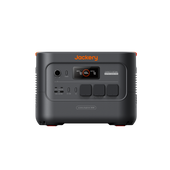
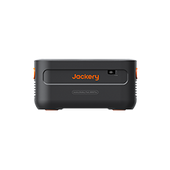
Product Recommendation: Jackery Solar Generator 2000 v2
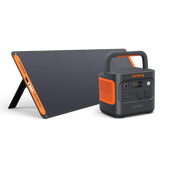
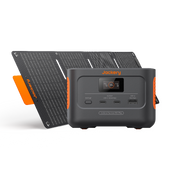
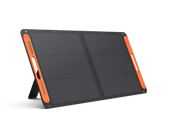
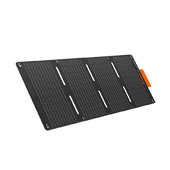
For reliable backup during grid outages or a way to experiment with solar before a rooftop investment, the Jackery Solar Generator 2000 v2 provides a self‑contained alternative. Its 2,042Wh capacity powers a refrigerator, router, and LED lights for several hours, and it accepts up to 800W solar input from compatible panels.
You can recharge it from portable panels or even from a small existing rooftop array; a full solar recharge takes about 6 hours with four SolarSaga 200W panels, and a 20% capacity buffer means a 1,600Wh daily load leaves margin for cloudy days.
|
Feature 、 |
Specification |
Key Benefit |
|
Capacity |
2,042 Wh |
Powers a 90W portable refrigerator for 15 hours |
|
Solar Input |
Up to 800W |
Full recharge in 6 hours with four SolarSaga 200W panels |
|
AC Output |
2,200W (4,400W surge) |
Handles most household appliances |
|
Cycle Life |
4000 charge cycles (LiFePO4) |
Long service life for daily use |
|
Weight |
17.5 kg |
Portable yet substantial |
This is not a replacement for a permanent PV system, but it is a practical first step. If you are camping or planning outdoor adventures in the EU, it doubles as a clean power source away from the grid.
Frequently Asked Questions (FAQ)
|
Question |
Answer |
|
How long do solar panels last before needing replacement? |
Solar panels typically last 25 to 30 years, with performance warranties guaranteeing 80% output after 25 years. |
|
What financing options are available for solar panels? |
Solar loans, home equity loans, leasing agreements, and power purchase agreements (PPAs), each with different upfront costs and ownership structures. |
|
How do I choose between a local and national installer? |
Local installers often offer more personalized service and quicker response times; national installers may provide better warranties and volume pricing. |
|
What is the process for obtaining a solar permit? |
Submit an application to your local building department, pay a fee, and schedule an inspection after installation; timelines vary by municipality. |
|
How does solar panel insurance coverage work? |
Standard homeowner's insurance policies can be endorsed to cover panels, typically adding €50–€150 per year to the premium for replacement value. |
Sources & References
[1] German Federal Ministry of Finance, VAT exemption for solar systems
[2] Netherlands Enterprise Agency (RVO), Salderingsregeling


