






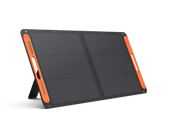
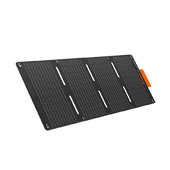













Quick Answer: A 400W solar panel charges a 12V 100Ah LiFePO4 battery in 3–4 hours under ideal conditions with an MPPT controller. Real-world factors like clouds and wiring losses typically extend charge time to 4–6 hours. Lead-acid batteries take 5–8 hours due to absorption phases and the 50% usable-capacity rule.
Key Takeaways:
- The theoretical charge time of 3 hours (1200Wh ÷ 400W) rarely holds; real usable output is 75–85% of rated wattage.
- Battery chemistry dramatically affects speed: lithium charges 30–50% faster than lead-acid.
- An MPPT charge controller is essential—it harvests 20–30% more energy than PWM in cool or cloudy conditions.
- Peak sun hours (PSH) vary by location and season—a 400W panel in Munich in December may need 1.3 days.
The honest answer to “how long will a 400W solar panel take to charge a 100Ah battery?” is a range, not a fixed number. Four variables decide the real figure: panel output, charge controller, battery chemistry, and local sun hours.
The Math Behind Charging a 100Ah Battery with a 400W Panel
Charging a 100Ah battery with a 400W panel depends on the battery's watt-hour capacity and real-world system losses. A 400W panel produces 400W only under standard test conditions: 1,000W/m² irradiance, 25°C cell temperature, and clean wiring.
A 12V 100Ah lead-acid battery stores 1200Wh (100Ah × 12V). A 12.8V LiFePO4 battery stores 1280Wh (100Ah × 12.8V). The ideal charge time is:
(Battery capacity in Wh) ÷ (Panel rated output in W) = Ideal charge time in hours
Example: 1200Wh ÷ 400W = 3.0h for a lead-acid battery with zero losses.
Heat, wiring resistance, and controller inefficiency typically eat 15–25% of rated output, leaving 320W usable at an 80% system efficiency.
- 1280Wh ÷ 320W = 4.0h for LiFePO4
- 1200Wh ÷ 320W = 3.75h for lead-acid before absorption
Absorption then adds 1–2 hours after the battery reaches 80–90% state of charge, especially on lead-acid, so 3 hours is a starting point, not a delivery time.
|
Battery type |
Rated capacity |
Nominal voltage |
Stored energy |
Ideal time at 400W |
Realistic time at 320W |
|
Lead-acid 12V |
100Ah |
12.0V |
1200Wh |
3.0h |
3.75h + absorption |
|
LiFePO4 12V |
100Ah |
12.8V |
1280Wh |
3.2h |
4.0h |
How Battery Type Drives Real Charging Speed
Panel output sets the ceiling; battery chemistry decides how fast you can approach it. LiFePO4 accepts full charge current until nearly full, so a 100Ah lithium battery typically finishes in 3–4 hours with a 400W panel. Flooded and AGM lead-acid batteries slow in the absorption stage, so the same panel takes 5–8 hours.
Lithium converts more panel power into stored energy per minute and charges roughly 30–50% faster than lead-acid [1]. Lead-acid chargers must taper current to avoid gassing and overheating, so the last 20% of charge can take as long as the first 80%.
Depth of discharge matters just as much.
- Lithium batteries can be discharged to 100% without immediate damage in most cycles, though manufacturers often recommend stopping at 80% for lifespan.
- Lead-acid should only be drained to 50% for reasonable cycle life, making a 100Ah lead-acid battery effectively a 50Ah usable battery in daily cycling.
So you recharge only half as much stored energy. If a lead-acid battery has sat at low state of charge for days, a 200W system in low-sun regions may take 3+ days to recover. A 400W panel cuts that risk, but sulfation from long-term low charge still reduces charge acceptance [1].
|
Chemistry |
Full charge with 400W |
Recommended daily depth of discharge |
Why it behaves that way |
|
LiFePO4 100Ah |
3–4h |
80–100% |
High charge acceptance, no long absorption |
|
Flooded lead-acid 100Ah |
5–8h |
50% |
Tapering absorption, heat and gassing risk |
|
AGM 100Ah |
6–8h |
50% |
Faster than flooded, but still tapers |
Three Inefficiencies That Slow You Down the Most
The three biggest inefficiencies are charge controller type, wiring losses, and panel temperature derating.
|
Inefficiency |
What happens |
400W impact |
|
Charge controller type |
PWM pulls the panel to battery voltage; MPPT tracks the panel’s best operating voltage |
MPPT harvests up to 30% more energy than PWM, or 20–30% more charging current in cool/cloudy conditions |
|
Wiring/connector losses |
10 AWG reduces voltage drop vs 12 AWG on longer runs |
Overall 3–5% loss, or 12–20W |
|
Panel temperature derating |
Output drops 0.3–0.5% per °C above 25°C [2] |
In 40°C heat, output falls 5–7% to roughly 370–380W |
After wiring resistance and controller inefficiency, a 400W panel is closer to 300W usable than 400W.
Shading and dust are less predictable but often worse: partial shade on a single cell can slash output by 50% or more, and even a thin layer of dust reduces efficiency. For off-grid builds, these losses are the difference between a battery that recharges daily and one that slowly dies—something off-grid power solutions for EU outdoor enthusiasts have to manage carefully.

Why Peak Sun Hours Matter More Than Panel Wattage
Peak sun hours determine daily energy more than panel wattage, especially in winter. One peak sun hour equals 1,000W/m² of irradiance for one hour. Southern Europe gets 4–6 hours daily in summer; Northern Europe averages 2–3 in winter [3]. Eight hours of weak morning and late afternoon sun may only deliver two PSH.
A 400W panel in Munich in December typically gets about 3 PSH per day. After 15–20% system losses, usable daily output is roughly 1000Wh (3 × 333W). A 12.8V 100Ah LiFePO4 battery needs 1280Wh, so a full recharge takes about 1.3 days of decent weather.
In Athens in July, with 6 PSH, the same panel delivers over 2000Wh daily—enough to fully charge a 12V 100Ah battery from empty in under a day.
Panels fixed at the latitude angle yield up to 30% more annual energy than flat placement [3]. Cloudy days can reduce PSH to under one hour, and a depleted 100Ah battery may then take 3–4 days to replenish.
|
Location / season |
Approx. peak sun hours |
Usable daily output from 400W |
Time to charge 1280Wh LiFePO4 |
|
Munich, December |
3 PSH |
~1000Wh |
1.3 days |
|
Athens, July |
6 PSH |
~2000Wh |
~0.6 days |
|
Northern UK, December |
0.8–1.2 PSH |
~280–400Wh |
3–5 days |
Location and season change the practical value of a panel more than a 100W difference in faceplate wattage. The applications of solar panels are worth matching to your local solar resource.
Common Beginner Questions
The most common beginner questions are whether a charge controller is needed, whether one panel can charge two batteries, and how many sun hours are needed.
- “Do I still need a charge controller?” Yes. A controller is mandatory to prevent overcharging and manage voltage; portable 400W panels cannot connect directly to a 12V battery.
- “Can one 400W panel charge two 100Ah batteries?” Generally no for daily cycling. The charging-only rule of thumb is 400W per 100Ah battery.
- “How many sun hours do I need for a full recharge?” Plan with 3.5–5 peak sun hours, not total daylight hours, which overstate usable charging time.
- “What is the maximum charge current for a 100Ah battery?” LiFePO4 can accept up to 50A (0.5C), but most manufacturers recommend a 20A (0.2C) maximum for longevity. Flooded lead-acid should be limited to about 10A (0.1C).
Practical Tips from Experienced Users
- Use an MPPT charge controller. It delivers 20–30% better efficiency than PWM.
- Current-limit for lead-acid. Program the MPPT to max 10A for flooded lead-acid; for LiFePO4, set 20A or follow the battery spec sheet.
- Verify voltage with a multimeter. A fully charged 12V lead-acid battery reads 12.6–12.8V. Use voltage, not time estimates, to confirm completion.
- Check battery spec sheets. Many LiFePO4 battery manufacturers recommend 20A max charge current for a 100Ah battery, not 40A, to prevent damage.
- Calculate in watt-hours. Convert Ah to Wh (12V × 100Ah = 1200Wh), then divide by usable solar power (≈320W) for a realistic time.
Practical Steps to Maximise Your 400W Setup’s Speed
- Match charge controller rating. Use an MPPT controller rated at least 30A — preferably 40A — to handle the roughly 33A potential current from a 400W panel at 12V.
- Keep panels parallel to the sun. Adjust tilt seasonally and avoid south-facing obstructions for maximum daily yield.
- Match battery chemistry to usage. Choose lithium for faster daily cycles; lead-acid is acceptable for infrequent, shallow discharges.
- Monitor battery state of charge before starting. Charging from 50% depth takes half the time of a full depletion.
- Invest in thicker cables and clean connectors. Keep voltage drop below 3% across the system.
Limitations
A 400W panel does not make charge time disappear; it just moves the bottleneck.
- Concurrent loads: A 60W fridge while charging drops net power from 340W to 280W, adding about 45–50 minutes.
- Battery age: A five-year-old lead-acid battery may hold only 80% of rated Ah and charge slower.
- Panel degradation: At 0.5% per year, a 400W panel in year ten delivers only 380W peak, slightly stretching charge times.
- Seasonal and geographic variance: Can add 1–2 extra hours or even days; users in Sydney reported multi-day recharge in August.
If comparing smaller systems, the Jackery Solar Generator 500 vs 2000 Pro comparison shows how usable capacity changes the math more than panel wattage.
A Simpler Way to Store Solar Power on the Go
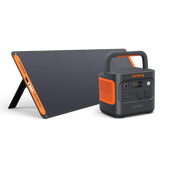
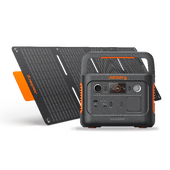
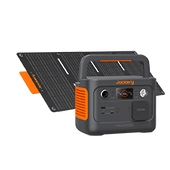
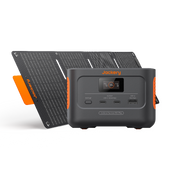
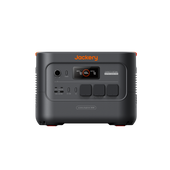
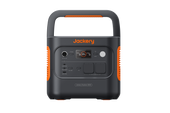
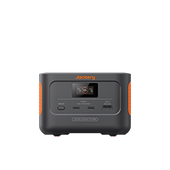
For a portable, all-in-one solution, the Jackery Explorer 2000 v2 and Jackery Explorer 3000 v2 support direct 400W solar charging. A separate panel, charge controller, and battery bank works, but wiring and settings add failure points.
|
Your Need |
Recommended Model |
Key Specs |
|
Portable power for camping or short trips |
Jackery Explorer 2000 v2 |
2042Wh LiFePO4, 2200W inverter, 17.5 kg, 400W solar recharge in ~7.5h |
|
Whole-home backup or longer off-grid stays |
Jackery Explorer 3000 v2 |
3072Wh LiFePO4, 3600W inverter, 27 kg, UPS switchover, 400W solar recharge in ~11h |
For mobile off-grid setups, these fit the same use case as portable power stations for EU travelers.
Frequently Asked Questions (FAQ)
What size charge controller do I need for a 400W panel?
A 30A MPPT charge controller is the minimum recommended size for a 400W solar panel at 12V. A 40A unit provides headroom for future expansion.
Can I connect a 400W panel to a 24V battery system?
Yes, with a compatible MPPT controller. The higher voltage roughly halves the charge current, but a 24V battery stores double the energy, so full recharge time increases.
How long to charge a 200Ah battery with a 400W solar panel?
Charging a 200Ah battery with a 400W panel takes about:
- 6–8 hours for lithium
- 10–14 hours for lead-acid
in ideal conditions, due to double the capacity. Real weather and absorption phases can extend this further.
Should I use one 400W panel or two 200W panels in series?
- Two 200W panels in series: Reduce wiring losses and allow thinner cable.
- Two 200W panels in parallel: Tolerate partial shading better.
Keep the combined open-circuit voltage within your MPPT controller’s limits.
How much daily energy does a 400W solar panel actually produce?
A 400W solar panel in good sun typically produces between 1.2 and 2.4 kWh of usable energy per day, depending on location and season. That assumes an MPPT controller, clean panels, and correct orientation.
Sources & References
[1] Battery University, https://batteryuniversity.com, accessed May 9, 2026
[2] PVEducation, https://www.pveducation.org, accessed May 9, 2026
[3] Global Solar Atlas, World Bank Group / ESMAP, https://globalsolaratlas.info, accessed May 9, 2026


