




























As summer progresses into mid-2026, an unrelenting series of severe heatwaves has placed Europe under immense climate pressure. Trapped under persistent heat domes and omega block atmospheric patterns, temperatures across Western, Central, and Southern Europe have shattered historical records.
The crisis has led to a sharp rise in heat-related mortality, major travel and infrastructure disruptions, and aggressive wildfires raging through drought-stricken regions. Weather warning systems across multiple nations have escalated to their highest alert levels.
Understanding the severity, underlying meteorological causes, and country-specific impacts of the 2026 European heatwave is essential as governments and individuals seek effective, practical solutions to navigate this extreme heat.
|
Key Takeaways: |
|
How Severe is the European Heatwave?
Since late May 2026, Europe has been hit by many severe heatwaves, with powerful heat domes gradually affecting different sections of the continent. In June, much of western Europe saw a record-breaking heatwave, as did the western Mediterranean and Atlantic coasts. A record-breaking heatwave is still gripping most of Europe, with red alerts in place in the United Kingdom, France, Spain, Germany, Switzerland, and Luxembourg.
The heatwave is among the most severe on record in Europe, with numerous nations expecting to see record-breaking high temperatures for this time of year. Naturally, it leads to a variety of negative effects:
Sharp Rise in Mortality Rates
Heatwaves have killed more people in Europe than any other natural disaster combined. According to France's public health office, the number of fatalities increased as temperatures in places under red alert hit record highs.
According to the agency, more than 1,200 deaths were recorded on June 24, and over 1,400 deaths occurred on June 25 and 26. Prior to the heat wave, there were between 900 and 1,000 deaths per day in April and May.
Transportation Disruptions
Heat, storms, and air traffic restrictions combined to delay or cancel almost 3,100 European flights in a single 24-hour period around June 21. Airports affected include Amsterdam Schiphol, Zurich, Rome Fiumicino, Athens, Málaga, and Luxembourg. In addition, France's SNCF suspended intercity trains due to heat damage to overhead lines, and UK passengers were urged to avoid needless rail travel.
Escalation of Frequent Wildfires
Currently, France is the European country most badly afflicted by wildfires, with red alerts in Languedoc-Roussillon and orange warnings for the bulk of central France. Earlier this month, a wildfire broke out in the foothills of the French Pyrenees, forcing a huge evacuation of inhabitants and tourists, while a fire in Fréjus, near Cannes, forced 1,700 vacationers to flee from three campsites.

2026 European Heatwave Map: Countries Most Affected by Extreme Heat
This summer, temperatures in Europe reached a new high, with hotter early-summer heatwaves causing illness, excessive deaths, and infrastructure collapse.
While many countries in Europe experienced extreme heat during previous heatwave phases in May and June, the current third wave primarily affects France, Italy, Portugal, and Spain, which are experiencing the most severe conditions as the heat dome intensifies over the Mediterranean and Western European regions.
|
Country |
Peak Temperatures |
Worst-Hit Areas |
|
Spain |
Above 45°C (south) |
Andalusia, Córdoba, Jaén, Bilbao; also Madrid and Seville |
|
France |
Up to 44°C (hottest day on record) |
Bordeaux, Loire Valley, Paris |
|
Germany |
Up to 41°C |
West and south, incl. Frankfurt |
|
Italy |
36–39°C |
Rome, Florence, Milan, Turin, Verona, Bologna |
|
Portugal |
Up to 44°C |
Lisbon, Porto, Douro Valley |
|
United Kingdom |
38–39°C (June record broken) |
London and southern England |
|
Switzerland & Luxembourg |
High 30s to ~40°C |
Widespread |
|
Balkans |
High 30s |
Rising day by day |
(Source: Wego)
The information above is for reference only; weather conditions are dynamic. Therefore, please be sure to check weather forecasts and local official guidelines.
Spain
According to Aemet, Spain's primary meteorological service, the country's temperatures are only rising, with both orange and red weather alerts issued thus far in July. Barcelona recorded a maximum temperature of 40.7°C on July 8, the highest in 112 years, and forecasts predict 40°C+ heat in the coming days, particularly in Andalusia and north-east Spain near the border with France.
Portugal
Similarly, parts of Portugal have experienced blistering heat in 2026, with the country reporting its highest-ever May temperature (40.3°C) earlier this year. However, Portugal is not currently afflicted by the brunt of Europe's heatwave; southern parts are having their regular July temperatures of 29-32°C. Current forecasts indicate that Portugal will not face the most severe temperatures this time around, but it is still recommended to keep a watch on the weather prediction, as circumstances may change suddenly.
France
France has arguably been the hardest hit by this summer's heatwaves. Meteo France reports that the bulk of the country is now under orange weather warnings. Bordeaux is expected to reach highs of 38 and 39 degrees Celsius this week, while Nantes and Perpignan will experience similar temperatures. As temperatures soared above 43°C in June, the Eiffel Tower was forced to close, and 68,000 households in western France lost power.
Italy
Italy, like the rest of Europe, is presently suffering its third heatwave of the summer, with temperatures exceeding 39 degrees. The country is now under a yellow weather warning for thunderstorms, with temperatures anticipated to reach the mid-30s during the next week. Over a dozen major cities, including Rome, Milan, and Florence, have issued consecutive red heatwave alerts, and excess mortality among the elderly has increased significantly.
The Balkans
The Balkans have also seen record-breaking temperatures this summer, with highs of 39 degrees in Serbia and wildfires raging across Croatia and southern Albania. Currently, temperatures in the Balkans have returned to average for this time of year, while there are thunderstorm warnings in certain areas of Romania.

(Source: weatheronline)
This is the latest weather map for Europe as of Monday, July 10, 2026. The map shows that temperatures in Western Europe remain persistently high.
2026 European Heatwave: Weather Warning Systems
Earlier heatwave episodes generated widespread red, orange, and amber alerts in several European countries. Heat warnings range from yellow (be alert) to orange (prepare) to red (hazard to all). The following is the particular material.
European Heatwave Warning System Classification
Most European heat advisories are organised in a four-step ladder. Green indicates normal conditions. Yellow warns you to be cautious, as heat can harm vulnerable people. Orange indicates that you should be prepared, since health hazards spread to a larger portion of the population and may cause disruption. The top tier is red, which indicates dangerous heat that threatens everyone, including the fit and healthy, and signals the need for emergency measures.

(Source: Accuweather)
The above information is as of July 21, 2026. You can track the latest severe weather warnings for Europe through Accuweather.
Different High Temperature Warning Systems
The labels and specific triggers differ each nation, but the general tendency remains consistent. The following explains the primary high-temperature warning systems of various countries:
France: the Meteo-France vigilance map
France employs a vigilance map coloured green, yellow, orange, and red. Orange already indicates a dangerous heat wave, while red indicates extreme, record-breaking heat, in which authorities may close attractions, slow trains, and advise people to avoid going out at midday. During the peak in June 2026, about half of France was under red alert, and the national train operator suspended services due to heat expanding rails and destroying overhead cables.
UK, Spain, and Italy
The United Kingdom uses two systems: Met Office weather warnings in yellow, amber, and red, and separate heat health alerts in green, yellow, amber, and red. An amber heat health advisory indicates that serious consequences are predicted for health and transportation.
Spain's weather agency, AEMET, provides yellow, orange, and red alerts based on temperature thresholds.
Italy's health ministry assesses cities on a heat wave scale, with level three being the most severe, indicating that heat is harmful even to healthy, active individuals.
How to Stay Cool and Safe During the European Heatwave?
Europe is currently gripped by a heatwave—experiencing an unprecedented duration of hot, dry weather. Taking scientifically sound measures to stay cool is crucial. Here are 8 practical tips for coping with the heatwave in Europe.

Tip 1: Keep the Room Shaded
During the hottest parts of the day (typically 10:00 to 20:00), be sure to close blackout curtains or blinds and keep windows shut to block out heatwaves and intense sunlight.
Tip 2: Ventilate in the Early Morning and at Night
Wait until the outdoor temperature drops below the indoor temperature—usually late at night or in the early morning—to open all windows for cross-ventilation and quickly flush out accumulated heat.
Tip 3: Avoid Going Out During Peak Heat
The period between 11:00 and 17:00 sees the strongest direct sunlight and UV radiation, as well as the most intense heat radiating from the ground. Try to stay indoors during this time and avoid prolonged outdoor exposure.
Tip 4: Plan Outdoor Activities Wisely
If you must go out—whether for exercise or sightseeing—try to schedule it for the early morning (before 08:00) or the evening after sunset (after 20:00). Also, choose parks or walking paths with plenty of shade.
Tip 5: Wear Loose-Fitting, Breathable Clothing
Opt for garments made of natural fibers like cotton or linen, which are absorbent and highly breathable. Choose light-colored, loose clothing, and wear a sun hat and UV-blocking sunglasses.
Tip 6: Drink Water Proactively and Frequently
Don't wait until you feel thirsty to drink. Carry a water bottle with you and hydrate at regular intervals. Avoid consuming large amounts of sugary drinks, strong alcohol, or excessive caffeine, as these can worsen dehydration.
Tip 7: Cool Down with a Shower or a Damp Cloth
When you feel uncomfortably hot, take a cool shower or apply a wet towel or ice pack to areas where major blood vessels are close to the surface—such as the neck, wrists, armpits, and groin—to rapidly lower your core body temperature.
Tip 8: Using Fans and Air Conditioners Effectively
Set your air conditioner to around 24°C; this cools the room while preventing a temperature difference between indoors and outdoors that is too extreme, which could lead to colds or headaches. Alternatively, use a fan to promote air circulation: place a bowl of ice in front of the fan or hang a wet towel nearby to utilise evaporative cooling.
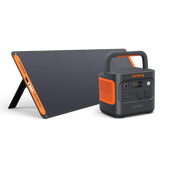
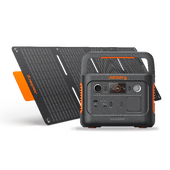
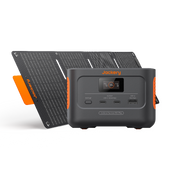
During extreme heatwaves in Europe, surging grid loads increase the risk of power outages. A reliable backup power system ensures the continuous operation of fans, portable air conditioners, portable fridges, and medical equipment, serving as a crucial lifeline for staying cool and safe. Here are two recommended high-performance solar power systems:
Jackery Solar Generator 2000 v2
It features a substantial 2042Wh capacity and a rated output of 2200W (with a 4400W peak). Utilizing highly safe LiFePO4 battery cells, it offers a lifespan of over 4,000 charge cycles. Weighing approximately 17.5 kg, it is one of the lightest and most portable energy storage units in the 2kWh class. It also supports a quiet operation mode (under 30dB), combining powerful performance with a comfortable user experience.
Amidst a heatwave, it can easily power small-to-medium portable air conditioners, desk fans, car coolers, and ice makers. Even during regional summer blackouts, it provides continuous power—lasting from several hours to an entire night—for the family's mobile phones, cooling devices, and refrigeration units, allowing you to create a cool environment anywhere without relying on an unstable grid.
Jackery Solar Generator 3000 v2
This model boasts an ultra-large 3072Wh capacity and a robust 3600W continuous output (peaking at 7200W). It supports up to 1000W of solar input, allowing for a full charge in just about 3.5 hours under ample sunlight. Additionally, it features smart app remote monitoring and a millisecond-level UPS function for seamless power switching.
During crises where extreme heat overloads the urban grid, it can simultaneously power high-wattage portable air conditioners, household refrigerators, and various daily appliances, ensuring food stays fresh and indoor temperatures remain within a safe range. When paired with solar panels, it provides you with uninterrupted, independent off-grid power.

What Measures Should European Countries Take to Tackle the Heatwave?
In response to increasingly frequent and intense extreme heatwaves, European governments have gradually shifted their approach to heat protection from ad-hoc emergency measures to normalised disaster prevention.
Response Measures Already Adopted by Governments and Cities
Some European countries and cities have demonstrated how to prepare for heatwaves and high temperatures. These are just a few examples of practical, scalable interventions.
- Expanding Climate Refuges: Barcelona, Spain, has expanded its network of climate refuges to over 500 locations—including public libraries, civic centers, shaded parks, and even community pharmacies—providing the public with free, accessible spaces to escape the heat.
- Establishing Health Screenings for High-Risk Groups: Paris, France, has launched health screening and routine registration mechanisms for the elderly and vulnerable populations; simultaneously, it restricts the sale of alcoholic beverages in public places during heatwaves to reduce the risk of heatstroke and alleviate pressure on emergency services.
- Implementing Labor Protection and Economic Compensation Policies: Italy has introduced restrictions on outdoor work during the hottest hours of the day in some regions, with furlough arrangements so workers do not lose income.
Further Actions Required
In the face of increasingly severe challenges posed by extreme heat, nations should intensify their efforts in the following areas:
- Strengthen Early Warning Systems: Establish and optimise early warning systems for extreme heat to alert residents promptly about impending heatwaves, and promote the "Keep Cool" behavioral recommendations issued by WHO/Europe.
- Retrofit Hospitals and Medical Facilities: Address crises such as cooling system failures, equipment malfunctions, and deteriorating ward conditions caused by extreme heat by comprehensively upgrading cooling and emergency systems in medical institutions, thereby better protecting medical staff and patients from heat stress.
- Reduce the Use of High-Risk Refrigerants and Fossil Fuels: Accelerate the phase-out of fossil fuels, rapidly curtail the use of refrigerants—such as hydrofluorocarbons (HFCs)—that contribute to global warming, and invest in sustainable, highly energy-efficient green cooling initiatives.

Why is Europe So Hot Right Now, and How Long Will It Last?
From late May 2026 onwards, Europe has been struck by multiple severe heatwaves, with intense heat domes progressively affecting different regions of the continent. So, what exactly triggered the heatwave in Europe? And how long will it last? Here is an analysis:
What Triggered the European Heatwave?
Meteorologists say the extreme temperatures in Europe this were caused by a heat dome, which formed over a large area of Western Europe. The phenomenon is sustained by what is known as an omega block, a weather pattern named after the Greek letter due to the shape it takes in the atmosphere.
Under normal conditions, the jet stream moves weather systems from west to east across the earth. During an omega block, however, the flow is twisted, trapping a ridge of high pressure between two low-pressure regions. As a result, hot, stagnant air remains trapped over the same area for days or even weeks.
On a larger scale, climate change caused by the combustion of oil, coal, and gas is changing how and when heatwaves occur. This is because the extra heat trapped in the atmosphere alters large-scale weather patterns, which typically move from west to east, allowing more slow-moving high-pressure systems to form. This raises the likelihood of heatwaves.
How Long Will the European Heatwave Last?
The high temperatures of 2026 are not merely a single, isolated event; rather, they are unfolding as a series of waves characterised by prolonged duration and widespread impact.
Although the peaks of the first two intense heatwaves shifted toward Central Europe and the Balkans (including Poland, Hungary, and Romania) between late June and early July, persistent high-pressure systems brought a third heatwave to Western and Southern Europe during the latter half of July.
Despite brief periods of cooling, the overall pattern of hot, dry weather has not been completely broken. However, weather conditions are subject to change; for the most accurate information, please continue to monitor weather forecasts and heatwave warnings.
FAQs
The following are the frequently asked questions about the heatwave map Europe 2026:
1. Why is there a heatwave in Europe?
Since late May 2026, Europe has been hit by many severe heatwaves, with powerful heat domes gradually affecting different sections of the continent. The present phase is characterised by a stagnant heat dome supplied by hot Saharan air that has accumulated in certain areas. Sinking air compresses and warms under the high-pressure system, the skies remain clear, and the ground bakes day after day with little relief at night.
2. What countries in Europe are hot right now?
Southern Europe is currently the warmest region, with inland Spain, Italy, and Greece facing the most extreme weather. If you want to see real-time forecasts or compare exact temperatures across these destinations, visit the AccuWeather Europe page.
3. Why is it so hot in Europe now?
Europe's current warmth is caused by persistent "heat dome" high-pressure systems that act as a lid, trapping hot air and raising temperatures significantly. Baseline global warming has increased extreme temperatures, making early and intense heatwaves much more common across the continent.
4. Which countries are under the highest heat warnings?
France, the Netherlands, Germany, Belgium, and sections of Switzerland have been the worst hit.
5. Where is the hottest temperature in Europe?
In several places of Western Europe, the heat continues in July. On July 8, Spain's Fabra Observatory in Barcelona, one of WMO's long-term weather observation stations, recorded 40.5°C, the highest temperature in over a century of data.
6. Where in Europe will be hottest next week?
Temperature anomaly maps at the end of July show vast areas of Portugal, France, Spain, and Italy tinted dark red and black. (Source: Mirror) This indicates locations where temperatures are expected to rise significantly above the seasonal average.
7. What are the warning signs of heatstroke?
Feeling faint, dizzy, or bewildered, a racing heart, and heated, dry skin with no perspiration. It's an emergency; get the individual somewhere cool and dial 112.
8. Is it safe to travel to Spain, Italy or France right now?
Cities are still open, but the heat is dangerous. Avoid midday activity, heed local red and amber signals, and stay away from high-risk wildfire woods and mountain regions.
Conclusion
In summary, navigating Europe's severe heatwaves demands both strategic daily habits and resilient energy infrastructure. As extreme heat events become longer and more frequent across the continent, taking proactive measures—such as using climate shelters, staying hydrated, and securing off-grid power—is crucial.
Equipping your home with dependable energy systems like the compact Jackery Solar Generator 2000 v2 or the robust, high-capacity Jackery Solar Generator 3000 v2 ensures your cooling devices, fans, and essentials remain operational even during grid breakdowns, providing long-term peace of mind, comfort, and safety in an increasingly unpredictable climate.


