
























Quick Answer: Running a modern TV for one hour costs €0.01–€0.05, depending on screen size and electricity rate; a 100W TV consumes 0.1 kWh, costing about €0.029 at the EU average rate of €0.29/kWh.
Key Takeaways:
- Hourly cost range across Europe spans €0.01–€0.05, driven by TV wattage and local electricity rates.
- Monthly cost example — a 100W TV used four hours/day at the EU average price costs roughly €3.48 per month.
- Price variance — household electricity prices range from €0.108/kWh in Hungary to €0.404/kWh in Ireland.
TV is rarely a significant electricity drain for most households, but with European electricity prices diverging more than ever, knowing exactly what an hour of viewing costs helps separate real savings opportunities from distractions. This article breaks down the numbers by screen size, technology, and country.
TV Power Consumption: Screen Size and Technology
Screen size and display technology primarily determine a TV's power draw: a 32-inch LED uses 30–50 watts, while a 65-inch OLED can draw 120–200 watts. Understanding where your set falls in that range is the first step toward an accurate cost calculation.
- 32-inch LED: draws 30–50 watts per hour, the most energy-efficient option for small rooms or secondary viewing spaces.
- 50–55-inch range: the most common household size across Europe, consumption lands between 70 and 130 watts per hour.
- 65-inch OLED: uses 120–200 watts per hour, roughly four times the power of that 32-inch LED and about twice what a 55-inch LED demands.
Display technology adds a second layer of variation that matters more than most people assume.
|
Technology |
Efficiency vs. same-size OLED |
Power behaviour |
|
LED / QLED |
20–30% more efficient |
Backlights, especially edge-lit designs, draw more consistent — and often lower — power regardless of content |
|
OLED |
Baseline for comparison |
Self-emissive pixels; bright content pushes consumption higher |
If you're choosing between a 55-inch OLED and a 55-inch QLED and electricity cost is a concern, the QLED will save you roughly €15–25 per year at average European rates.
One quiet cost regardless of screen size is standby power. Modern TVs draw 1–3 watts continuously when plugged in but not actively displaying content, adding €2–6 annually across Europe — not a budget-breaker, but worth knowing. A home power station with passthrough charging can eliminate this phantom load entirely by letting you physically disconnect the TV when it's not in use.
How to Calculate Your TV's Hourly Cost
To calculate your TV's hourly cost, multiply its wattage in kilowatts by your electricity rate per kWh. You need two numbers: your TV's power draw in watts and your electricity price per kWh.
(TV Wattage ÷ 1000) × Electricity Price per kWh = Hourly Cost
Example: A 100W TV at the EU average rate of €0.29/kWh costs €0.029 per hour — just under three euro cents for an evening movie. If you watch one hour daily, the monthly total comes to about €0.87, negligible on its own but useful context when comparing appliances or deciding whether a new TV's efficiency gains justify the purchase.
Use your TV's real wattage, not the marketing figure:
- Energy label or manual: look for “power consumption” or “rated power” in watts.
- If you’ve lost the manual: online databases such as the EU Energy Label product registry list typical consumption for common models.
- Caution: two TVs of the same screen size can differ by 40% in power draw depending on panel technology and feature set, so a database average is a starting point, not a final answer.
Smart meters provide the most accurate verification.
- Smart meter check: if you have one installed, check your real-time usage display with the TV off, then again with it on — the difference is your actual draw.
- What it catches: picture settings, connected peripherals, and content-dependent fluctuations.
- Alternative: for households managing multiple devices on the go, a portable power station with a built-in display can serve the same function, showing live wattage for anything plugged into it.
Electricity Rates Across Europe: A Country Comparison
Household electricity rates vary widely across Europe:
- Range: from €0.108/kWh in Hungary to €0.404/kWh in Ireland — a nearly fourfold spread.
- Trend: the spread has widened since 2022 as energy mix and tax policy diverged across member states.
- Main takeaway: where you live changes the answer more than what TV you own.
At the extremes:
- Highest rates: Ireland sits at €0.404 per kWh, making a 100W TV cost €0.040 per hour — nearly double the EU average. Germany and Belgium follow closely at approximately €0.39 and €0.35 per kWh respectively, placing them among the most expensive markets in the EU [1].
- Lowest rate: Hungary offers the cheapest household electricity at €0.108 per kWh, where that same 100W TV costs just €0.011 per hour.
- EU average: €0.29 per kWh, including all taxes and levies, according to recent Eurostat data [1].
|
Country |
Electricity Rate (€/kWh) |
Hourly TV Cost (100W) |
Monthly Cost (4 hrs/day) |
|
Hungary |
0.108 |
€0.011 |
€1.30 |
|
Netherlands |
0.251 |
€0.025 |
€3.01 |
|
EU Average |
0.290 |
€0.029 |
€3.48 |
|
Belgium |
0.350 |
€0.035 |
€4.20 |
|
Germany |
0.390 |
€0.039 |
€4.68 |
|
Ireland |
0.404 |
€0.040 |
€4.85 |
The monthly column assumes four hours of daily use and shows that even in Ireland, TV electricity costs remain modest compared to heating, cooling, or refrigeration. The real insight: country-to-country variance dwarfs the difference between TV models.
Taxes and levies account for 28.9% of the average EU household electricity bill, but that figure conceals enormous national variation [1]. In Germany, taxes and surcharges make up roughly half the total rate; in Hungary, government price caps keep the end-user rate artificially low. Policy choices, not generation costs alone, explain most of the spread in the table above.
Factors That Influence Your TV's Actual Power Draw
Brightness settings, resolution, smart features, and TV age all influence your TV's actual power draw beyond its rated wattage; real-world use depends on settings, content, and features that the energy label doesn't fully capture.
Brightness settings have the largest single impact on consumption.
- Brightness 100% → 50%: can cut power use by up to 30% — a difference that translates directly to your hourly cost.
- Default settings: most TVs ship at maximum or near-maximum brightness for showroom conditions, not living rooms; if you've never adjusted yours, you're likely paying for brightness you don't need.
- Ambient light sensors: found on mid-range and premium models, these detect room light levels and dim the backlight accordingly, reducing power draw in darker rooms by 10–20% without manual intervention.
Resolution and smart features add load in ways spec sheets rarely isolate.
- 4K processing: requires more computational power than 1080p.
- Streaming over Wi-Fi: draws additional watts compared to playing content from a local source.
- Quick-start or instant-on modes: keep the TV in a higher-power standby state to reduce boot time — convenient, but they can double or triple standby consumption from the baseline 1–3 watts. In a high-rate country like Germany or Ireland, that feature alone might cost an extra €5–10 per year.
TV age matters more than most people expect.
- Post-2020 models: typically 15–25% more efficient than those from 2015, driven by tighter EU ecodesign standards and improvements in LED backlight efficiency [1].
- Example: a 2015-era 55-inch LED might draw 120 watts, while a 2023 equivalent draws 85–95 watts — a gap that saves roughly €10–15 annually at average rates.
- Upgrade note: that's not enough to justify replacing a working TV on cost grounds alone, but it's relevant when you're already in the market for an upgrade.
Energy-Saving Tips to Cut TV Costs
Enable Eco Mode, turn off at the mains, reduce brightness, and choose ENERGY STAR models to cut TV electricity costs by €20–40 per year. Several adjustments together can trim that amount, and most take under a minute to implement.
- Enable Eco Mode or Energy Saving settings in your TV's picture menu. These presets reduce backlight intensity and cap peak brightness, cutting power consumption by 15–25% with a picture-quality trade-off that most viewers stop noticing after a few days. On a 100W TV at EU-average rates, that saves roughly €10–15 annually for a typical four-hour daily viewing habit.
- Turn off at the mains when away — holidays, weekends away, or even overnight if you're disciplined. This eliminates the 1–3 watt standby draw entirely. A smart power strip automates the process by cutting power to connected devices when the TV is off, preventing phantom loads from the TV, soundbar, and game console simultaneously.
- Reduce screen brightness manually to 40–60% of maximum. This single change often delivers the largest savings of any non-automated adjustment. If your TV has an ambient light sensor, enable it — it adjusts brightness dynamically as room light changes, saving power during evening viewing when reduced backlight levels are least noticeable.
- Choose ENERGY STAR certified models or their EU equivalent when upgrading. These units use up to 30% less energy than standard models of the same size, with third-party verification rather than manufacturer claims. The price premium is typically modest, and the payback period at European electricity rates is often under five years for daily viewers.
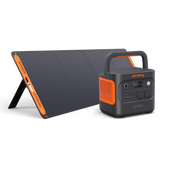
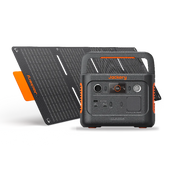
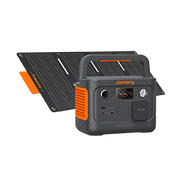
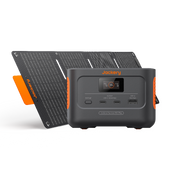
For households looking to decouple TV power costs from grid prices entirely, a backup power solution with solar input can run entertainment devices during daytime hours from stored solar energy, though the economics depend on your overall energy strategy rather than TV savings alone.
Limitations
Keep these limitations in mind when applying the figures above:
- Assumes constant wattage: real-world consumption fluctuates with content brightness and features like HDR. A dark scene in a film draws less power than a bright sports broadcast, and HDR content can push an OLED's consumption noticeably higher than the rated figure. The numbers here are averages — your actual cost will vary scene by scene.
- Time-of-use pricing: several European countries, including Spain, the UK, and parts of Scandinavia, have dynamic or time-of-use pricing that makes evening viewing more expensive than daytime use. On such a tariff, your TV's hourly cost during prime time could be 20–50% higher than the headline rate suggests.
- Model variability: two TVs of the same screen size can differ by 40% in power draw depending on technology generation and feature set. The only way to know your exact cost is to measure your specific TV's draw with a smart meter or plug-in power monitor. Database averages and spec-sheet figures are estimates, not guarantees.
Product Recommendation: Jackery Explorer 3000 v2 Portable Power Station
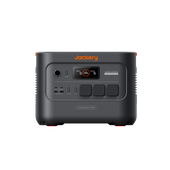
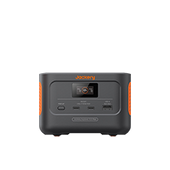
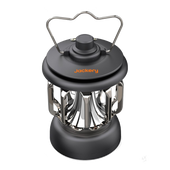
 The Jackery Explorer 3000 v2 Portable Power Station delivers 3,072Wh of backup power — enough to run a 100W TV for over 30 hours without grid power — making it a solution for grid reliability or energy independence. Its 3,600W output can simultaneously power a TV, refrigerator, lights, and router without grid reliance, and the unit supports solar recharging for ongoing off-grid use. For off-grid setups where every watt counts, the ability to monitor real-time consumption on the unit's display helps you track exactly what each device draws.
|
Feature |
Specification |
Key Benefit |
|
Capacity |
3,072Wh |
Powers a 100W TV for 30+ hours |
|
AC Output |
3,600W continuous |
Runs TV, fridge, router simultaneously |
|
Cycle Life |
4,000+ cycles to 70% |
Designed for years of regular use |
Frequently Asked Questions (FAQ)
Does watching TV during peak hours cost more?
Yes, in countries with time-of-use pricing, peak evening rates can increase your hourly TV cost by 20–50% compared to off-peak periods.
How does TV cost compare to other household appliances?
A typical 55-inch TV costs about €0.03 per hour, while a refrigerator runs €0.15–€0.30 per day and a dishwasher uses €0.50–€0.80 per load.
Does leaving a TV on overnight damage the screen?
Leaving a modern LED or OLED TV on overnight will not damage the screen, but it wastes electricity and may slightly reduce the backlight's lifespan over many years.
Why are electricity prices so different across Europe?
Price differences are driven by each country's energy generation mix, tax policies, transmission infrastructure costs, and renewable energy subsidies [1].
Can a small portable power station run a TV during an outage?
Yes, a portable power station with at least 300Wh capacity can power a 100W TV for roughly 3 hours, enough for short grid interruptions.
Sources & References
[1] Electricity price statistics, Eurostat, https://ec.europa.eu/eurostat/statistics-explained/index.php?title=Electricity_price_statistics, accessed 2025.


