























Quick Answer: 10 kW inverter capacity comfortably handles the 5–6 kW peak demand of a standard European home, providing significant operational headroom. Annual solar generation from a 10 kW system reaches 8,500–11,000 kWh, far exceeding the average European household consumption of 2,800–3,500 kWh [1]. Battery storage is essential for nighttime power, as a 10 kW solar system without a battery achieves only 30–50% self-consumption.
Key Takeaways:
· A 10 kW inverter provides roughly 67–100% headroom above typical peak demand, preventing overload tripping during normal appliance use.
· A 10 kW solar system generates 8,500–11,000 kWh annually, exceeding the 2,800–3,500 kWh average European household consumption.
· Fully electrified homes with heat pumps and EV charging can push peak demand to 8–10 kW, which argues for load management even with a 10 kW inverter.
· Winter production drops to 20–30% of summer output, so grid backup or a larger battery reserve is essential in northern Europe.
A standard European home rarely pulls 10 kW for more than a few minutes. The real sizing question is not whether the inverter can survive a normal evening, but whether the solar array produces enough energy across the year and whether the battery can carry you through the night. The answer depends on how electrified the home is, where it sits, and how it connects to the grid. One clarification helps before turning to the details:
· 10 kW is a power rating—the rate at which energy can be delivered at any moment—not an energy quantity.
· A system that can deliver 10 kW for a few minutes is very different from one that can supply 10 kWh after dark; both limits must be checked separately.
What "10 kW" Actually Means for Home Power
A 10 kW inverter can deliver 10,000 watts continuously, with a short surge of 11–12 kW for a few seconds depending on the unit—but it is essential to distinguish inverter output from solar panel capacity.
· The average European home draws 2–4 kW continuously, with brief peaks of 5–6 kW when multiple appliances run simultaneously.
· That makes a 10 kW inverter roughly 67–100% larger than typical peak demand, which is why it rarely trips during normal use.
· At the inverter level the headroom calculation is direct: a 5 kW peak leaves 5,000 W spare, while a 6 kW peak leaves 4,000 W spare.
· The short surge rating is not for running a larger load permanently; it exists to start motors and compressors, which draw several times their running current for only a moment.
The headroom is not theoretical. To see what a real winter evening looks like, consider this load stack:
|
Load |
Typical draw |
|
Heat pump |
3,500 W |
|
Oven |
2,800 W |
|
Kettle |
2,200 W |
|
LED lights and router |
150 W |
|
Total |
8,650 W |
From this stack, the implications are clear:
· With the heat pump on, only about 1,350 W of headroom remains—no room for a 7 kW EV charger unless something else switches off.
· Without the heat pump the total falls to 5,150 W, barely half the inverter’s continuous rating.
· The deciding variable is electric heating or EV charging, not lighting or electronics.
· A 10 kW inverter is ample for a conventionally electrified home, but fully electrified homes with heat pumps, electric heating, and EV charging can push peak demand to 8–10 kW, testing the limit.
· Grid-tied setups can lean on the grid for excess demand, but off-grid systems require strict load management to stay inside the 10 kW envelope.
How Much Energy a 10 kW Solar System Actually Produces
A 10 kW solar system produces 8,500–11,000 kWh annually, with the exact output depending on location, roof space, orientation, and shading. The same 10 kWp array in Hamburg will produce roughly 8,500 kWh in a typical year; in Madrid it can pass 11,000 kWh.
Against the average European household consumption of 2,800–3,500 kWh [1], that is a substantial surplus. But annual averages mask the seasonal squeeze. Winter production can drop to 20–30% of summer output, which means a December day in northern Europe may yield only 5–9 kWh instead of 25–30 kWh.
The basic daily production formula looks like this:
Annual generation ÷ 365 = average daily production
Example: 10,000 kWh ÷ 365 = 27.4 kWh per day average.
The daily average is useful for sizing, but it is not what you get in January. Key points:
· The system needs enough summer surplus exported or stored to carry the low-production months; without a battery, most surplus leaves the house.
· The 30–50% self-consumption band mentioned above translates into 3,000–5,000 kWh of directly used solar power on a 10,000 kWh year.
· Measured against the 2,800–3,500 kWh average household consumption, direct self-consumption alone can cover typical consumption at the upper end of that band on an annual basis—but only if the loads are shifted toward midday, because without a battery most evening demand is met from the grid.
Roof space is another hard constraint.
· A 10 kW system requires approximately 45 m² of usable roof area using 22 panels; many standard detached homes simply do not have this space once dormers, vents, and shading are excluded.
· That panel count works out to roughly 455 W per panel if the array is exactly 10,000 W.
· Orientation and shading can reduce actual output by 10–25%, which is why professional site assessment matters before purchasing.
· On a sunny-limit 11,000 kWh array, a 10–25% reduction removes roughly 1,100–2,750 kWh per year—enough to erase much of the nominal surplus for a high-consumption household.
· On top of that, export limitations under gross settlement rules in some EU countries cap the financial benefit of feeding surplus power to the grid, so overproduction does not automatically mean a lower bill.
When 10 kW Falls Short: High-Demand Scenarios
For most average households, 10 kW is over-provisioned. But the exceptions are predictable and concentrated in a handful of high-demand scenarios:
· Electric vehicle charging at 7–11 kW alone can consume the entire inverter capacity, requiring load management or scheduled charging. A 7.4 kW charger leaves almost no room for an oven or a heat pump unless one is switched off.
· Electric resistance heating for a whole home can draw 6–10 kW continuously, leaving no capacity for other appliances. This is the most demanding common European retrofit scenario and the one most likely to trip a 10 kW system.
· Heat pump with backup heater may spike to 8–9 kW during defrost cycles, briefly exceeding a 10 kW inverter’s continuous rating. Most inverters handle short surges, but off-grid systems may not.
· Multiple high-draw appliances running simultaneously — oven, dryer, EV charger, water heater — can easily exceed 10 kW peak. The likely outcome is nuisance tripping rather than equipment damage, but it still means the system was undersized for a fully electrified lifestyle.
· Off-grid winter operation in northern Europe may require a generator or second inverter to supplement reduced solar production. A 10 kW inverter cannot fix a 2.5 kW solar yield.
The shared solution in the first four cases is:
· Load management: rather than allowing every large appliance to start at once, a smart controller rotates high-priority loads within the 10 kW ceiling, preserving the inverter headroom without reducing annual generation.
· When the grid goes down, a solar array alone won’t help you unless the inverter supports islanding and a battery is present. That is a separate design question; power backup solutions for grid outages covers the priority-load side.
· For smaller standalone installations, off-grid power solutions for outdoor enthusiasts in the EU shows how the same logic scales down to a cabin or portable kit.
Limitations
Even before committing, the regulatory and technical constraints can shrink a 10 kW system’s apparent advantage.
· 10 kW is inverter capacity, not solar panel capacity. A 10 kW inverter paired with fewer panels will never reach its full potential, and the array size determines how much energy you actually get.
· Gross settlement regulations in countries like Hungary mean you sell electricity at lower rates than you buy, reducing the financial benefit of exporting surplus power. The more you export, the less attractive the economics become unless self-consumption is high.
· Planning permission may be required for inverters over 3.68 kW in some EU jurisdictions, adding time and cost to installation even before the first panel goes up.
· Professional installation is mandatory for grid-connected systems above 3.68 kW in most European countries, with certified electrician requirements. This is not a DIY project at this scale.
· Three-phase supply is required for 10 kW+ in many ESB Networks because single-phase export limits are typically 6 kVA. If your connection is single-phase, you may need an upgrade rather than just a bigger inverter. The single-phase ceiling is an export limit, not a hard cap on household consumption, so it can still constrain a 10 kW inverter’s grid-feed path.
If you want to start smaller and still manage loads carefully, power management guide for overland campers shows the load-shedding discipline that scales down to a portable kit.
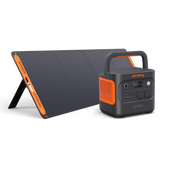
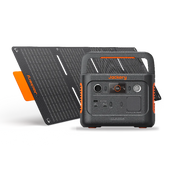
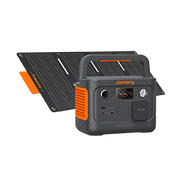
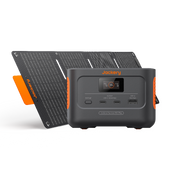
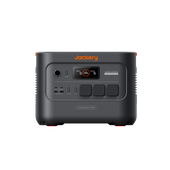
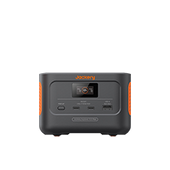
Product Recommendation: Jackery Explorer 3000 v2 Portable Power Station

A 10 kW solar setup needs stored energy to carry essential loads through nights and outages. The Jackery Explorer 3000 v2 Portable Power Station is not a replacement for a 10 kW inverter, but it covers the overnight gap and emergency backup loads for a medium European home.
· It runs fridges, lights, and electronics for 8–12 hours on a single charge.
· Its 3,600 W continuous output sits inside the 2–4 kW average demand band shown earlier, so it can handle ordinary backup circuits, although it is not designed to carry the 8,650 W worst-case evening stack on its own.
|
Feature |
Specification |
Key Benefit |
|
Capacity |
3,072 Wh |
Covers a full night of essential loads for a medium European home |
|
Continuous output |
3,600 W |
Handles typical 2–4 kW household loads |
|
Surge capacity |
7,200 W |
Starts refrigerators and pumps |
|
Battery chemistry |
LiFePO4 |
Long lifespan of 4,000 charge cycles to 70%+ capacity |
For details on extending that runtime, see tips for maximizing the runtime of Jackery’s solar generator.
Sources & References
[1] Eurostat — Energy consumption in households, European Commission, accessed 2025.
Frequently Asked Questions (FAQ)
Can a 10 kW system run an electric water heater and oven simultaneously?
Yes. A 10 kW inverter can supply up to 10,000 W continuously, so the two appliances may run together as long as their combined draw stays below that ceiling and no third large load—such as a dryer or EV charger—starts at the same time. In practice the oven alone draws 2,800 W in the load stack above, leaving roughly 7,200 W for everything else, which is why this combination rarely trips a 10 kW unit in a conventional home.
How much roof space do I need for a 10 kW solar system?
You need approximately 45 square meters of usable, unshaded roof space for the 22–25 panels required. The key word is usable: dormers, vents, and shade can reduce both the available area and the system output by 10–25%, so a site survey should confirm the exact layout before ordering.
Will a 10 kW system work during a power outage?
Only if paired with a battery and a hybrid inverter that supports islanding. Standard grid-tied systems shut down for safety during blackouts because they must not export into a grid that workers may be repairing. With islanding and storage, the inverter can form a local microgrid and keep selected loads running.
How long does it take to install a 10 kW solar system?
Professional installation typically takes 2–4 days, with an additional 2–6 weeks for grid connection approval and paperwork. The install itself is usually the fast part; the wait depends on the network operator, inspection schedule, and whether a meter or supply upgrade is required.
Can I add more panels later if 10 kW isn't enough?
Yes, but you must oversize the inverter initially or replace it, as most 10 kW inverters have a maximum DC input limit that caps expansion. The cheaper route is usually to install the larger inverter now and add panels later, although the grid application may need to be reassessed if export capacity changes.


