Off-grid tiny homes offer a self-sufficient lifestyle that blends minimalism, sustainability, and freedom. With Jackery, you can create your own off-grid haven and embrace a simpler, more sustainable way of life.
Off-Grid Tiny Homes EU
Jackery Solar Generators for Off-Grid Tiny Homes
Off-grid tiny homes offer a self-sufficient lifestyle that blends minimalism, sustainability, and freedom. With Jackery, you can create your own off-grid haven and embrace a simpler, more sustainable way of life.
What is an Off-Grid Tiny House
Off-grid tiny homes are small, portable houses designed to function independently of public utilities like electricity, water, and sewage systems. These homes often use solar energy, rainwater harvesting, and composting systems for a self-reliant lifestyle, making them ideal for remote locations or eco-friendly living.
Benefits
Power Station
Applications
Benefits of Tiny Houses
Compact and Flexible
Resource Efficiency
Eco-Friendly
Independence
Off-grid tiny homes maximize space with multifunctional features, innovative designs with furniture and layouts adapting to different needs and lifestyles. Moreover, their compact and flexible design makes them easy to move and adapt to various environments.
Off-grid tiny house prioritize resource efficiency, utilizing sustainable practices to minimize environmental impact. These off-grid tiny homes use less energy and water, making them highly sustainable and cost-effective over time.
Living off the grid greatly reduces reliance on traditional power sources, leading to a minimal environmental impact that preserves delicate non-renewable energy like fossil fuels.
Living off-grid makes you more independent and lets you choose any place to live. You don’t have to rely on city water or electricity. So you can control your own power, water, and waste, giving you full control over your home.
Solar Generator vs. Gas Generator
Solar Generator
Green
Solar power with zero emissions
Quiet
Operates silently under 40 dB
Simple
Power at the press of a button
Affordable
Only an initial cost with no fuel or maintenance
Gas Generator
Pollution
Gas and oil fuelled at 371g CO2 per wH
Noisy
Motor operates consistently over 50 dB
Complicated
Multipart machine with high malfunction chance
Costly
Endless costs for gas, oil, and maintenance
Best Tiny Home Solar Generators
Jackery Solar Generator 3000 v2
Jackery Solar Generator 3000 v2
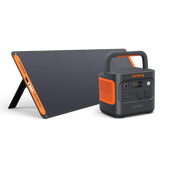
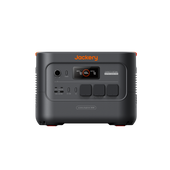
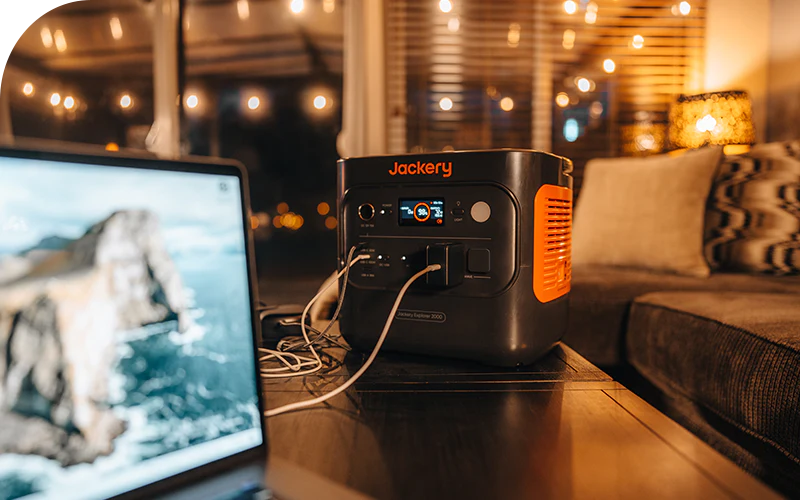
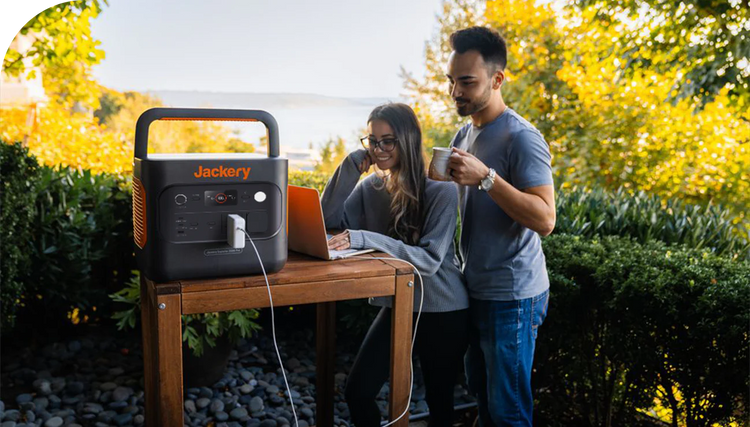
The Jackery Solar Generator 3000 v2 is great for small homes without power lines, offering good power and is easy to carry. It can run important things like lights, small fridges, and small cookers. You can charge it with solar panels, using clean energy for your off-grid life.
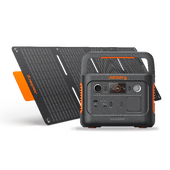
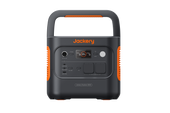
The Jackery Solar Generator 2000 v2 is a great choice for living off the grid in small spaces. It can power big appliances like refrigerators and cookers, keeping your home comfortable. Its ability to charge many devices at once and quickly charge from the sun means you always have power, even when it’s sunny.
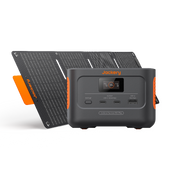
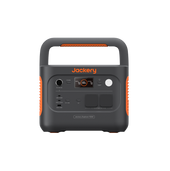
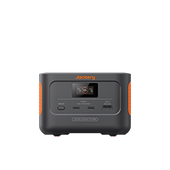
The Jackery Solar Generator 1000 v2 is ideal for off-grid tiny house, delivering 1070Wh capacity in a lighter, faster, and more powerful design. It runs essentials like LED lights, mini fridges, and fans, and charges easily with solar panels. A smart, clean energy solution for flexible, mobile living.
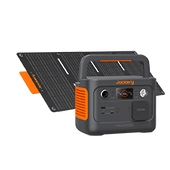
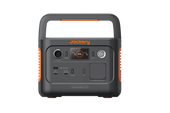
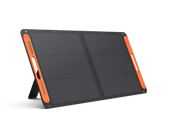
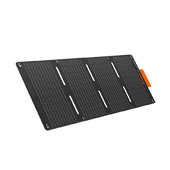
A perfect off-grid power solution, featuring a SolarSaga 100W folding panel and a portable power station. With a 512Wh capacity, it powers lights, appliances, and essential devices, ensuring reliable energy for sustainable tiny home living.
Note: The pass-through charging feature allows you to power appliances while recharging the power station simultaneously.
Solar Generator 3000 v2
Solar Generator 2000 v2
Solar Generator 1000 v2
Running Time Simulator
Please enter the wattage of the appliance
W
Input power does not exceed {productWattage} W
0Hrs
Expected uptime
Note: This is a calculation for reference. Please take the actual use for accuracy.
Off-Grid Tiny Home Topology
House Structure
Electrical Appliances
Energy Systems
Water Management System
Waste Disposal System
The off-grid tiny home is typically compact, with an area ranging from 100 to 400 square feet. The design optimizes space with a layout that includes sleeping areas, a kitchen, and a bathroom. The structure may also incorporate features like retractable decks or roof-mounted solar panels to expand living space and utility.
The off-grid tiny home is typically compact, with an area ranging from 100 to 400 square feet. The design optimizes space with a layout that includes sleeping areas, a kitchen, and a bathroom. The structure may also incorporate features like retractable decks or roof-mounted solar panels to expand living space and utility.
Off-grid tiny homes typically feature energy-efficient electrical appliances designed to minimize power consumption. Commonly used appliances include energy-efficient lighting, a small refrigerator, a portable induction cooker, and a compact washing machine.
Off-grid tiny homes typically feature energy-efficient electrical appliances designed to minimize power consumption. Commonly used appliances include energy-efficient lighting, a small refrigerator, a portable induction cooker, and a compact washing machine.
The energy system of an off-grid tiny home typically relies on renewable sources, primarily solar power. Solar panels convert sunlight into electricity, which is stored in batteries for use during cloudy days or at night. Other sustainable energy, like wind turbines, may also be incorporated for additional energy generation.
The energy system of an off-grid tiny home typically relies on renewable sources, primarily solar power. Solar panels convert sunlight into electricity, which is stored in batteries for use during cloudy days or at night. Other sustainable energy, like wind turbines, may also be incorporated for additional energy generation.
The water management system of an off-grid tiny home includes rainwater harvesting systems that collect and store rainwater from the roof, which can be filtered and used for drinking, cooking, and bathing. Additionally, some setups may feature water storage tanks to maintain an adequate supply.
The water management system of an off-grid tiny home includes rainwater harvesting systems that collect and store rainwater from the roof, which can be filtered and used for drinking, cooking, and bathing. Additionally, some setups may feature water storage tanks to maintain an adequate supply.
These off-grid tiny homes feature a composting toilet and a greywater management system to safely dispose of wastewater. Composting toilets turn human waste and toilet paper into compost, which can be used as fertilizer. Greywater, or used water from sinks and showers, can be cleaned and used for things like watering plants.
These off-grid tiny homes feature a composting toilet and a greywater management system to safely dispose of wastewater. Composting toilets turn human waste and toilet paper into compost, which can be used as fertilizer. Greywater, or used water from sinks and showers, can be cleaned and used for things like watering plants.
How Does a Solar Generator Work?
Step 1
Connect solar panel to battery to make a solar generator
Step 2
Charge and store power using solar panels
Step 3
Power all your appliances!
Step 1
Connect solar panel to battery to make a solar generator
Step 2
Charge and store power using solar panels
Step 3
Power all your appliances!
PC MAG
The Jackery Explorer 240, an entry-level portable power station equipped with a 240 Wh lithium-ion battery pack, weighs a mere 6.6 pounds, and comes with a solid handle for carrying to outdoor adventures.
KOA
Thankfully, technology has changed that. Modern-day portable power stations are now super light and easy to transport, which is why they are perfect for camping. (Solar Generator 1500 Pro)
Tech Republic
The giant-lunch box format of the device makes it easy to store and carry from room to room. This is helpful in an extended power outage where you could place the device in a home office or kitchen during the day, and relocate it to a bedroom in the evening. (Explorer 1500 Pro)
Blog Recommendation
Knowledge
European Electricity Prices 2026: How Volatile Costs Are Driving the Home Backup Power Revolution
1. What is the most expensive part of a tiny home?
The most expensive part of a tiny home is usually its energy setup, especially if it’s off-grid. Good solar panels and portable power stations can make it expensive yet cost-effective for a long time. Also, using custom materials or fancy finishes during building can raise costs. Other expensive items are water purification systems, composting toilets, or other special off-grid gear needed for living independently.
2. How do I power my off-grid tiny house?
To run a small, off-grid house, you usually rely on green energy like solar panels, which turn sunlight into power. This power is saved in batteries, so it’s available when it’s cloudy or dark. Solar generators, like the Jackery portable power stations with solar panels, are popular because they work well and are easy to use. It’s important to figure out how much power you need to make sure the system can handle all your daily needs, like lights, appliances, and charging your devices.
3. How many watts do I need for an off-grid cabin?
The power required for a small off-grid cabin with simple needs like lights, a fridge, and some electronics usually ranges from 1,000 to 2,000 watts of capacity. To figure out how much power is needed each day, add up the wattage of all devices and how long they're used. For instance, a fridge uses 100-200 watts an hour, and lights use 10-20. Having enough battery storage helps keep power going when there’s little sunlight.
4. How long is the warranty if I buy a Jackery Portable Power Stations?
All our Portable Power Stations come with a 2-year or 3-year warranty, with an additional 1 or 2 years if purchased directly from https://eu.jackery.com/
5. Can I return my Portable Power Stations?
Yes, there's a 30 day return window after purchase.