


















Quick Answer: A 20,000mAh power bank is overkill if you only need a single daily phone top-up. It is the ideal choice for travelers, remote workers, or anyone charging multiple devices away from outlets for 2–3 days. Real-world usable capacity is roughly 13,000–14,000mAh after efficiency losses, delivering 3–4 smartphone charges or one full laptop charge.
Key Takeaways
- Usable capacity is only 13,000–14,000mAh due to 30–35% efficiency losses from voltage conversion and heat.
- A 20,000mAh pack is overkill for daily commuters but essential for travelers charging multiple devices or a laptop.
- Airline compliance: a 20,000mAh pack sits at roughly 74Wh, under the FAA’s 100Wh carry-on limit.
- Fast charging, poor cables, and heat each reduce the number of charges you actually get.
So is a 20,000mAh power bank overkill for you? The answer depends on the devices you carry and how long you stay away from a wall outlet; the rest of this article gives you the real capacity math, the use cases that justify the size, and the point where a power bank stops being the right tool.
What "20,000mAh" Actually Means in Real-World Use
A milliampere-hour rating is not the charge you can draw from the USB-C port. The rating describes the internal 3.7V cell capacity, and your phone or laptop charges at a higher voltage, so conversion losses are built into the design.
Once the bank converts to 5V USB output and pays for circuit resistance and heat, roughly 30–35% of the advertised capacity disappears. A realistic usable figure is 13,000–14,000mAh at the port. For a 4,000–5,000mAh smartphone, that works out to 3–4 full charges; a simple 20,000 divided by 4,000 suggests five, but voltage conversion and charge-management overhead mean you never see that.
|
Device |
Real-world charge expectation |
|
Smartphone, 4,000–5,000mAh |
3–4 full charges |
|
Tablet, 32–40Wh |
1–2 charges |
|
13-inch laptop, 50–60Wh |
1 near-full charge or less |
|
15-inch laptop, 70–80Wh |
60–70% charge |
Laptop and tablet charging expectations with a 20,000mAh bank (≈74Wh raw, ≈48–51Wh delivered):
- 13-inch ultrabook (50–60Wh battery): one near‑full charge.
- 15-inch laptop (70–80Wh battery): 60–70% charge.
- 10.2-inch iPad (~32Wh): one full charge.
- 12.9-inch iPad Pro (~40Wh): close to one charge.
Fast charging worsens the loss. Running Power Delivery at 18W or 45W generates more heat than a slow 10W charge, and heat converts stored energy into waste. In hot conditions — a backpack in summer, a car dashboard — usable capacity can fall by another 5–10%, pushing a 20,000mAh unit below 12,000mAh of actual output.
When 20,000mAh Is Overkill vs. the Right Choice
|
Scenario |
Verdict |
Why |
|
Daily commute |
Overkill |
5,000–10,000mAh covers one phone charge with less bulk |
|
Weekend trip |
Right choice |
Phone, earbuds, and tablet for 2–3 days |
|
Remote work |
Minimum viable |
Laptop, phone, and hotspot can drain one full bank in a day |
|
Group trip |
Right choice |
3–4 shared phone charges from one pack |
|
Minimalist use |
Overkill |
Smaller bank covers a phone and returns home nightly |
Here’s a closer look at each scenario:
- Daily commuter: A 5,000–10,000mAh bank covers one full phone charge and fits in a pocket or small bag; carrying a 400g block every day to recover a 40% phone drain is more weight than the task requires.
- Weekend traveler: A phone, wireless earbuds, and a tablet used over two or three days can consume roughly 9,000–12,000mAh of usable power — a 20,000mAh bank covers that without hunting for wall outlets. If your weekends also involve camp cooking or refrigeration, that demand moves into a different category — see how to power your EU camping trips.
- Remote worker: 20,000mAh should be treated as the minimum, not the maximum. A laptop drawing 45–65W, a phone on video calls, and a mobile hotspot can drain small banks before lunch; a full workday away from mains power might require 35–50Wh for the laptop alone, so a second unit may be the practical choice for all-day use.
- Group trip: One 20,000mAh bank is often more useful than three pocket-size banks: you get roughly 3–4 shared phone charges, letting two adults top up at the end of the day without each carrying a separate battery.
- Minimalist user: If you only carry a phone and return home nightly, a 5,000mAh model — about the size of a lipstick — still delivers one full charge for most phones, and the extra 15,000mAh you never use is wasted bulk.
How to Calculate the Right Capacity for Your Devices
The right capacity comes from three inputs: each device’s real daily mAh draw, a 1.3x efficiency buffer, and days away from an outlet.
Start by listing each device and its rated battery capacity: iPhone 15 (3,349mAh), Galaxy S24 (around 4,000mAh), wireless earbuds cases (often 300–500mAh). Count only the portion you actually use; a phone that gets a 40% top-up doesn't require its full battery rating.
Required capacity = (Daily device mAh total × 1.3) × Days away
Example calculation step by step:
- Device list and daily use: 4,000mAh phone (one charge), 2,500mAh tablet (partial top-up), 400mAh earbuds charge → daily total 6,900mAh.
- Apply the 1.3x buffer: 6,900mAh × 1.3 = 8,970mAh.
- Multiply by days away: 2 days → 17,940mAh → a 20,000mAh pack fits. A third day would exceed that.
- The 1.3x buffer is not a safety margin; it is the 30–35% conversion loss expressed as a multiplier. If you also use fast charging or charge in warm conditions, use 1.4.
- Scaling up: 4 days of the same usage pattern needs 35,880mAh, which would mean two 20,000mAh packs or a portable power station.
For laptops, convert the bank’s mAh rating to watt-hours:
Battery Wh = mAh × 3.7V ÷ 1,000
A 20,000mAh bank is 74Wh; after losses, expect roughly 48–51Wh delivered, matching one charge of a 50Wh ultrabook battery but not a 70Wh mobile workstation.
Key Specs Beyond Capacity That Matter Most
Capacity tells you how much stored energy you have; output wattage and port design decide whether you can actually use it on the devices in your bag.
|
Specification |
Minimum target |
Why it matters |
|
Output wattage |
18W–20W PD for phones; 45W–65W PD for laptops |
Speed and compatibility |
|
USB-C Power Delivery |
Yes |
Fast bidirectional charging |
|
Ports |
2–3 |
Simultaneous device charging |
|
Input speed |
30W+ |
Recharges in 3–4 hours instead of 6–8 |
|
Safety marks |
CE, FCC, or UL |
Overcharge, short-circuit, overheating protection |
Details behind the table:
- 18W–20W PD: An 18W–20W Power Delivery port takes a modern phone from 0 to about 50% in roughly 30 minutes; a 10W charger will still be working past lunch.
- 45W–65W PD for laptops: Anything below 45W usually fails to charge while the machine is running — 45W–65W PD is the realistic floor.
- USB-C Power Delivery: This protocol negotiates voltage and current; without it, you may be stuck at 5V charging, which limits phones and rules out most laptops.
- 2–3 ports: A two- or three-port bank lets you charge a phone and earbuds simultaneously, which matters when you have one wall outlet and two devices.
- Input speed: A 20,000mAh bank with an 18W input recharges in 6–8 hours; 30W+ input cuts that to 3–4 hours — the difference between walking with a full pack or a half-dead one for an early flight.
- Safety certifications: CE, FCC, or UL marks mean the pack has been tested for overcharge, short-circuit, and overheating protection.
Portability, Travel Rules, and Longevity Trade-Offs
A 20,000mAh bank is generally travel-friendly, but the rules differ by airline and the lifespan depends heavily on how you store it.
- FAA rules: Spare lithium-ion batteries rated up to 100 watt-hours may go in carry-on baggage. A 20,000mAh bank is 74Wh, clearing the limit without special approval. Keep it in hand luggage; many airlines ban loose power banks in checked baggage.
- Size and weight: Expect 350–450 grams and a footprint similar to a large smartphone, roughly twice as thick. It fits in a bag, not a pocket.
- Battery lifespan: Typically 2–3 years for a daily user; lithium-ion cells degrade after roughly 300–500 full charge cycles, and high temperatures accelerate the decline.
- GaN technology: Gallium nitride components can shrink a power bank by up to 40% while improving heat dissipation, so a GaN-based 20,000mAh pack may be noticeably smaller than a traditional silicon version.
- Storage temperature: Keeping the bank in a hot car or direct sunlight permanently reduces its maximum capacity over time.
Limitations
Even a well-specified 20,000mAh bank has three real-world failure points, none a dealbreaker but each capable of costing a charge.
- Auto-shutoff: Many banks cut power when charging smartwatches or wireless earbuds drawing under 50–150mA, leaving earbuds at 80% unless the bank has a low-current mode.
- Fast charging reduces total charges: Using 65W PD generates more heat and may deliver one fewer phone charge than a standard 10W charge.
- Cable quality: A cheap or damaged cable can add 10–20% more energy loss, and a cable that works for data transfer is not automatically right for 65W charging.
Beyond the Power Bank: A Full-Featured Portable Power Solution
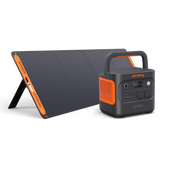
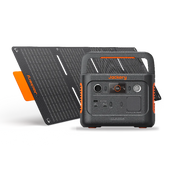
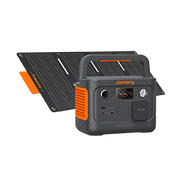
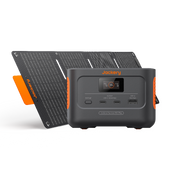
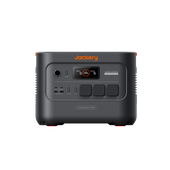
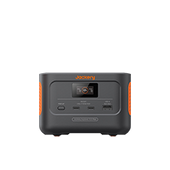
When your power needs go beyond phones and tablets, the Jackery Explorer 3600 Plus Portable Power Station offers high-capacity energy storage and powerful AC output for home backup and off-grid use.

| Feature | Specification | Key Benefit |
|---|---|---|
| Capacity | 3,584Wh, expandable to 21.5kWh with up to 5 battery packs | Flexible capacity for everyday essentials and longer backup needs |
| AC output | 3,600W rated output with 7,200W surge power | Runs demanding appliances such as microwaves, electric heaters and power tools within its output limits |
| Solar recharging | Compatible with Jackery SolarSaga solar panels | Recharge with solar energy when a wall outlet is unavailable |
If the target is home backup during grid outages, the decision process is different — see power backup solutions for grid outages. For outdoor enthusiasts, larger units like this fit into dedicated off-grid power solutions. For households in the Nordics, the backup-generator question is worth working through separately — why every Nordic household should have a backup power generator.
Frequently Asked Questions (FAQ)
Can I bring two 20,000mAh power banks on a plane?
Yes. Two 20,000mAh banks sit at roughly 74Wh each, well under the FAA’s 100Wh carry-on limit, so most airlines allow both in hand baggage. Confirm with your airline, since total spare-battery policies can vary.
How do I know if my power bank's capacity is fake?
Check the watt-hour rating on the label (mAh × 3.7V ÷ 1,000) and compare it to the manufacturer's claim. A USB power meter can measure real-world output, but it will only tell you delivered capacity, not the full internal cell rating.
How to prevent auto-shutoff when charging earbuds?
Use a low-current charging mode if your bank offers one, or charge a second device simultaneously to keep the power draw above the shutoff threshold.
Is charging with a power bank cheaper than a wall outlet?
No. Because the battery adds roughly 30% conversion loss, you pay for about 1.3 times the electricity to fill the bank compared with charging a device directly from the wall.
What is pass-through charging on a power bank?
Pass-through charging lets you power your devices while the bank itself is recharging. It increases heat and may shorten battery lifespan, so it's best used only when necessary.


