





















Key Takeaways:
- Charging time depends on battery Ah, depth of discharge, and daily peak sun hours (PSH) – not just panel wattage – with a 100Ah battery needing 600–1,200Wh and a 200W panel delivering 800–1,000Wh on a good day.
- Lithium (LiFePO₄) batteries charge faster by accepting full current until nearly full and offering 80–100% usable depth of discharge, cutting total charge time by 30–50% versus lead‑acid.
- A 200W panel generates 800–1,000 Wh per day under good conditions, matching the usable energy of a 100Ah 12V battery, making 200W of solar per 100Ah a reliable rule of thumb.
- MPPT controllers improve energy harvest by 15–30% over PWM, though the gain shrinks if the panel is flat or heavily shaded, making an MPPT controller the sensible default for a 200W panel.
- Always use a charge controller because direct panel connection (18–22V) will overcharge and damage a 12V battery, while a controller with float mode keeps it safe once full.
That 200W panel on your shed roof or RV: how long until the battery is full? The answer hinges on battery chemistry, usable capacity, and the sunlight actually hitting the panel. This article walks through the real numbers, with worked examples, so you can plan a solar setup that delivers.
Battery Capacity and Depth of Discharge
The usable energy in watt-hours determines how long a 200W panel takes to charge a 12V battery. A 12V 100Ah battery holds 1,200Wh (12V × 100Ah).
But you cannot use all of it without damaging the battery. Depth of discharge (DoD) limits usable capacity: lead‑acid batteries should rarely be discharged below 50% (600Wh usable), while lithium iron phosphate (LiFePO₄) can safely deliver 80–100% (960–1,200Wh). That difference alone can halve or double the energy you need to replenish.
Smaller batteries charge faster. A 50Ah lead‑acid battery at 50% DoD needs only 300Wh—achievable in 2–3 peak sun hours with a 200W panel. A 200Ah bank holds 2,400Wh total; at 50% DoD you must replace 1,200Wh, which exceeds a single panel’s daily yield in most locations.
|
Battery Capacity (12V) |
Usable Wh (Lead‑Acid, 50% DoD) |
Usable Wh (LiFePO₄, 80% DoD) |
|
50Ah |
300 Wh |
480 Wh |
|
100Ah |
600 Wh |
960 Wh |
|
200Ah |
1,200 Wh |
1,920 Wh |
A reliable rule of thumb: pair 200W of solar per 100Ah of battery to replenish daily moderate loads. If your daily consumption is higher, you’ll need more panel wattage.
Battery Type: Lead‑Acid vs. Lithium
Beyond capacity, chemistry dictates how quickly a battery accepts charge. Lead‑acid batteries take bulk current until about 80% state of charge, then demand a long absorption phase at reduced current. That last 20% can take as long as the first 80%, effectively doubling total charge time.
LiFePO₄ batteries accept full current until nearly full—often to 99%—before the battery management system (BMS) tapers off, cutting total charge time by 30–50% compared to an equivalent lead‑acid bank. A lead‑acid battery cycled daily may last 3–5 years, whereas a LiFePO₄ battery can deliver over 10 years of service—a difference explored in our detailed look at power station lifespan.
Lead‑acid also requires a minimum charge rate to avoid sulfation. If the solar input is too low—say, a 200W panel on an overcast day producing only 20W—the battery may never reach the voltage threshold needed to desulfate the plates, sulfate crystals harden, and capacity fades permanently. Lithium charges happily at any rate the panel can deliver.
|
Feature |
Lead‑Acid |
LiFePO₄ |
|
Charge acceptance |
Slow; long absorption phase |
Fast; full current to ~99% |
|
Usable DoD |
50% typical |
80–100% |
|
Cycle life |
300–800 cycles |
3,000–5,000+ cycles |
|
Sulfation risk |
High if undercharged |
None |
|
Weight per kWh |
~25–30 kg |
~10–12 kg |
|
Upfront cost |
Lower |
Higher, but lower per cycle |
Real‑World Sunlight and Efficiency Factors
A panel’s nameplate wattage is measured under standard test conditions—1,000W/m² irradiance, 25°C cell temperature—which your roof or campsite rarely matches. Three factors dominate real‑world output:
- Peak sun hours (PSH): the equivalent number of hours per day when solar irradiance averages 1,000W/m². In central Europe, a fixed panel tilted at latitude receives 3–5 PSH in summer and 1–2 PSH in winter; northern Europe can drop below 1 PSH in December. A 200W panel in 4 PSH produces roughly 800Wh before losses; in 1.5 PSH, only 300Wh. For a deeper look at panel performance across setups, see our guide on the applications of solar panels.
- Panel orientation and tilt: can swing output by 20–50%. Pointing the panel toward the equator at an angle equal to your latitude maximizes annual yield. A flat‑laid panel on an RV roof loses 15–25% compared to optimal tilt, and more in winter.
- System losses: wiring, charge controller inefficiency, and heat typically eat 15–25% of the panel’s output. A 200W panel in peak sun realistically delivers 160–180W to the battery after an MPPT controller, or 130–150W through a PWM controller. MPPT controllers capture 15–30% more energy than PWM by converting excess voltage into additional current, making them a must for any 200W panel installation. The gain shrinks if the panel is flat or heavily shaded, because the voltage difference between panel and battery shrinks.
- Cloud cover: slashes output to 10–25% of rated power: a day yielding 800Wh on a clear sky might yield only 80–200Wh, stretching lead‑acid charge time from one sunny day to four or more.
Step‑by‑Step Charging Time Calculation
Use this formula as a starting point, then adjust for your local PSH and system efficiency.
Charge time (hours) = (Battery Wh × DoD) ÷ (Panel W × PSH × Efficiency)
Let’s work a lead‑acid example:
- You have a 100Ah 12V battery at 50% DoD, so you need 600Wh.
- Your 200W panel, after 20% system losses, effectively delivers 160W in peak sun.
- Under 4 PSH, daily generation is 640Wh—just enough in theory.
- But lead‑acid’s absorption phase adds a 20% time buffer, so budget 5–6 peak sun hours.
- With only 3 PSH, daily generation drops to 480Wh, and the battery needs roughly 1.5 days of sun.
- For a lithium battery of the same capacity but 80% DoD (960Wh needed), the faster charge acceptance means no absorption buffer. In 4 PSH, a 200W panel with MPPT delivers 640–800Wh per day, recharging the battery in about 1.2–1.5 days.
|
Battery (12V) |
Usable Wh |
PSH |
Daily Panel Yield (160W net) |
Estimated Charge Time |
|
50Ah lead‑acid (50% DoD) |
300 Wh |
4 |
640 Wh |
~0.5 day |
|
100Ah lead‑acid (50% DoD) |
600 Wh |
4 |
640 Wh |
1 day (with absorption) |
|
100Ah lead‑acid (50% DoD) |
600 Wh |
2.5 |
400 Wh |
1.5–2 days |
|
100Ah LiFePO₄ (80% DoD) |
960 Wh |
4 |
640 Wh |
1.5 days |
|
200Ah lead‑acid (50% DoD) |
1,200 Wh |
4 |
640 Wh |
2+ days |
Always add a 20% buffer for lead‑acid’s absorption phase and daily variability. If your location averages 3 PSH in spring, design for 2.5 PSH.
Charge Controller and Overcharging Prevention
Solar panels output 18–22V open‑circuit. Connecting one directly to a 12V battery pushes voltage far above the safe absorption limit—typically 14.4–14.8V—causing gassing, plate corrosion, and permanent damage. A charge controller is non‑negotiable.
- MPPT controllers track the panel’s maximum power point and convert excess voltage into additional charging current.
- PWM controllers simply switch the panel on and off, wasting the voltage difference as heat.
- 200W panel example: with a Vmp of ~18V charging a 12V battery at 13.5V, a PWM controller delivers only about 75% of the panel’s rated current; an MPPT controller recovers most of that lost power.
- Float mode holds the battery at a safe maintenance voltage—typically 13.2–13.8V for lead‑acid—after bulk and absorption are complete.
- Lithium BMS adds protection against overvoltage and cell imbalance, but does not replace a solar charge controller: the controller manages the solar input, the BMS protects the cells.
|
Controller Type |
Typical Efficiency Gain vs. Direct |
Best For |
|
PWM |
0–5% (wastes excess voltage) |
Small, low‑voltage panels (<100W) |
|
MPPT |
15–30% more energy harvested |
200W+ panels, partial shade, cold climates |
Limitations
A single 200W panel has real limits:
- 200Ah bank limitation: A single 200W panel cannot fully recharge a 200Ah battery bank in a day under typical European sunlight—you’d need 400–600W of solar or two full days of sun.
- Winter output: plummets to 1–2 PSH in northern Europe, making a 200W panel almost useless without grid backup.
- High daily consumption: If your daily consumption exceeds 1kWh, plan for at least 400W of solar to recover from consecutive cloudy days.
- Lead‑acid equalization: Lead‑acid batteries need periodic equalization—a controlled overcharge at 15.5V+ to stir the electrolyte and reverse sulfation. Basic PWM controllers often lack this function, so you may need a manual equalization charge from a grid charger every few months. Lithium has no such requirement.
- Shading: Even small shadows cut panel output by 20–30%; keep the panel clean and unshaded.
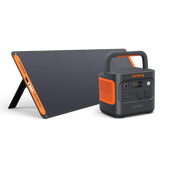
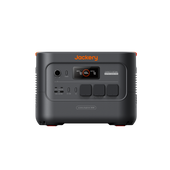
- Buffer planning: If your setup regularly falls short, consider a portable power station as a buffer. When a single 200W panel isn’t enough, stepping up to a larger portable power station like the Jackery Solar Generator 2000 v2 can provide a buffer; our comparison of the 500 v2 and 2000 v2 explains the capacity jump and what it means for real‑world runtime.
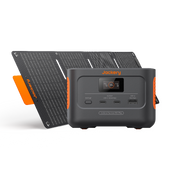
Product Recommendation: Jackery Solar Generator 2000 v2
If you’re already thinking about a portable power station to charge your 12V battery multiple times or run AC loads while off‑grid, the Jackery Solar Generator 2000 v2 offers a self‑contained solution with built‑in MPPT. Its 2,042Wh LiFePO₄ battery can power a 12V battery charger multiple times—recharging a 100Ah lead‑acid battery up to three times from a full charge—and its expandable solar input supports multi‑day autonomy.
- 2,042Wh LiFePO₄ battery – recharges a 100Ah lead‑acid battery up to 3 times; 4,000+ cycle life to 70% capacity.
- Built‑in MPPT controller – up to 95% conversion efficiency when paired with Jackery SolarSaga panels.
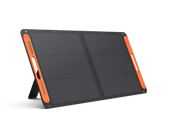
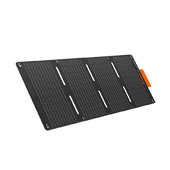
- 200W SolarSaga panel – refills the station in ~6 hours with four 200W panels (800W total solar input).
- Expandable to 800W solar input – connect extra panels to charge faster while running AC loads simultaneously.
- Multiple output ports – AC, USB‑C, and 12V carport to directly power a battery charger or small appliances.

For camping and outdoor adventures, a portable power station like this can keep a 12V fridge running indefinitely when paired with solar—see our guide to the best portable power stations for camping.
Sources & References
[1] JRC Photovoltaic Geographical Information System (PVGIS), European Commission, joint-research-centre.ec.europa.eu, accessed April 2026.
[2] Battery University, "BU-804b: Sulfation and How to Prevent It," batteryuniversity.com, accessed April 2026.
Frequently Asked Questions (FAQ)
Can I charge a battery and power loads at the same time?
Yes, a solar charge controller with a load output can manage both, but the panel's total wattage is shared between charging and powering loads—so the battery will charge more slowly.
How do I connect multiple 200W panels for faster charging?
Wire the panels in series to increase voltage or in parallel to increase current, ensuring the combined output stays within the charge controller's maximum input voltage and current ratings.
Is a deep-cycle battery necessary for solar charging?
While a starting battery can work, a deep-cycle battery is strongly recommended because it is designed for repeated deep discharges without damage.
What is the best tilt angle for a solar panel?
The ideal tilt angle equals your latitude, and you can adjust it by up to ±15° seasonally to capture more sunlight in summer or winter.
How often should I clean my solar panels?
Clean your panels every 2–4 weeks in dusty conditions or after a long dry spell to prevent dirt from reducing their output.


